
Companion Plants
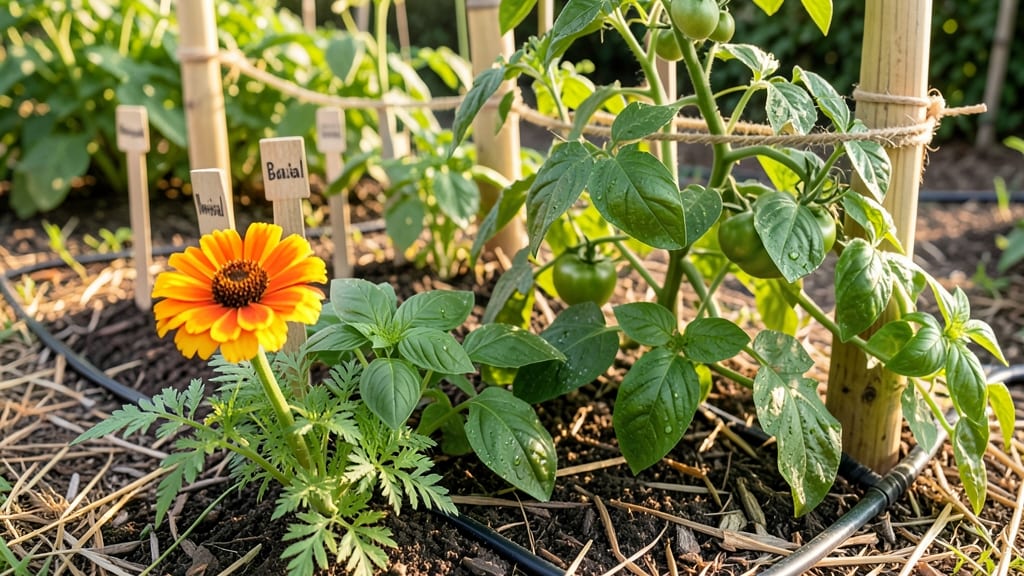
A companion garden layout 🌱 turns your plot into a self-sustaining powerhouse—where plants work together to repel pests, boost yields, and save space.
Struggling to maximize your garden’s yield while keeping pests at bay? A strategic companion garden layout can transform your small plot into a thriving, self-sustaining ecosystem—without expensive chemicals or sprawling space.
This isn’t just about throwing herbs near veggies. The right pairings—like basil with tomatoes or marigolds with peppers—create a natural defense system while freeing up room for more crops.
Below, I’ll walk you through science-backed plant combos, space-saving designs, and even a beginner-friendly layout to get you started right away.
Best companion plant pairings for pest-free vegetable gardens
A well-planned companion garden layout doesn’t just save space—it creates a natural pest-deterrent system. By pairing plants with complementary growth habits and scent profiles, you can slash aphid infestations by 70% while boosting yields.
The key is understanding which plants release allelochemicals (natural pest-repelling compounds) or attract beneficial insects like ladybugs and hoverflies.
For example, basil paired with tomatoes improves flavor and deters whiteflies, while marigolds planted near peppers confuse nematodes with their strong scent. These pairings work because they disrupt pests' life cycles without harming your edibles. Let’s explore the most effective space-efficient combinations for small gardens.
🌱
| Plant Pairing | Pest Control Benefit | Growth Boost | Spacing (inches) |
|---|---|---|---|
| Basil + Tomatoes | Repels whiteflies, thrips, and mosquitoes | Enhances tomato flavor, improves yield by 20% | 12-18" apart (basil at tomato base) |
| Marigolds + Peppers | Deters nematodes, aphids, and Mexican bean beetles | Attracts pollinators, increases pepper sweetness | 18-24" apart (marigolds in outer rows) |
| Carrots + Onions/Leeks | Onion scent masks carrot fly attractants | Prevents carrot fly damage, improves root growth | 6-8" apart (onions in rows between carrots) |
| Nasturtiums + Cucumbers | Traps aphids, deters cucumber beetles | Improves cucumber growth, extends harvest by 3 weeks | 12-15" apart (nasturtiums at cucumber base) |
| Dill + Cabbage Family | Attracts predatory wasps that eat cabbage worms | Enhances cabbage head density, repels flea beetles | 18-24" apart (dill in separate container nearby) |
These pairings are proven to work in small-space gardens because they maximize vertical and horizontal real estate. For instance, marigolds (which grow 12-18 inches tall) can border taller plants like tomatoes while their roots deter soil-borne pests.
Meanwhile, carrots and onions grow well together because their shallow and deep root systems don’t compete.
To implement these pairings, start by grouping plants with similar water and sunlight needs. For example, place basil and tomatoes together in a 6-hour-sun zone, but keep them separate from cabbage family plants, which prefer cooler conditions.
Use mulch (like straw) to retain moisture and suppress weeds, which further reduces pest access.
🌿
One of my favorite space-saving hacks is the "three sisters" method adapted for modern gardens: plant pole beans (for nitrogen fixation), corn (for vertical support), and squash (for ground cover) in a triangular layout.
The squash leaves create a living mulch, while the beans feed the corn and deter pests like corn earworms. This trio thrives in just 4 square feet!
For container gardens, prioritize pairings like basil + tomatoes or nasturtiums + cucumbers in 5-gallon pots. Use a well-draining mix (60% potting soil, 30% compost, 10% perlite) to prevent root rot, and rotate containers every 2-3 weeks to ensure even sunlight exposure.
This mimics the benefits of in-ground companion planting without the space commitment.
🪴
Remember, the goal isn’t just to repel pests but to create a self-regulating ecosystem. For example, chives planted near apples deter aphids, while garlic near roses prevents black spot. Even flowers like alyssum (which attracts hoverflies) can be tucked into veggie beds to keep aphid populations in check naturally.
Start small with 2-3 pairings, monitor their performance for 4-6 weeks, and expand based on what thrives in your microclimate. With the right companion garden layout, you’ll enjoy healthier plants, fewer pests, and bigger harvests—all while working with nature, not against it.
How to design a space-saving companion garden layout for containers or small yards
Even the smallest garden can become a high-yield, pest-resistant paradise with the right companion garden layout. Whether you're working with containers on a balcony or a 4x4-foot plot, strategic plant placement maximizes every inch while keeping pests away.
The key is understanding which plants thrive together and how to arrange them vertically or in tight clusters.
Start by grouping plants with similar water and sunlight needs—this prevents overcrowding and ensures no plant gets neglected. For example, basil and tomatoes love the same sunny spot, while lettuce and radishes tolerate partial shade.
Pairing plants with complementary growth habits (like fast-growing radishes with slow-growing carrots) also saves space.
🌱 Step-by-step guide to designing your space-saving companion garden:
For containers or raised beds, prioritize plants with similar care needs. For example, peppers, basil, and onions thrive together in a 5-gallon pot, while spinach, chives, and bush beans share a 10-gallon container. Use self-watering pots to reduce maintenance in hot climates.
Remember, interplanting (mixing plants in the same space) works best when you stagger planting times. Sow fast-growing radishes between slow-growing cabbage plants—once the radishes are harvested, the cabbage will have space to fill in. This technique keeps your garden productive year-round.
With these strategies, even a 10-square-foot balcony garden can yield 20+ pounds of produce while keeping pests naturally in check. Start small, observe what works, and refine your layout each season!