
Tools
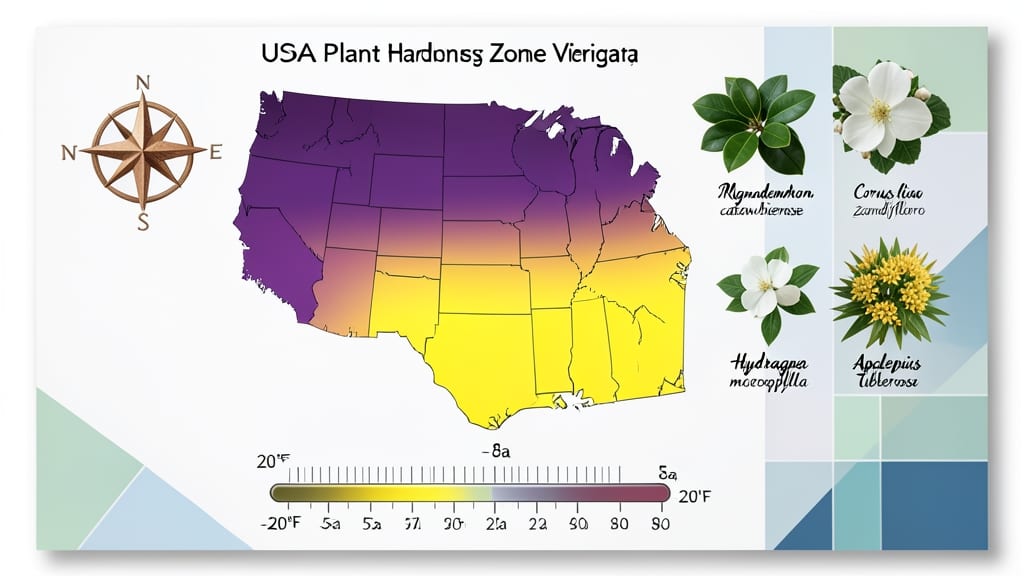
Understanding Virginia garden zones helps you select plants that thrive in your specific area, ranging from USDA Hardiness Zones 5b to 8a. Coastal regions typically fall into Zones 7-8, while mountainous areas lean toward Zones 5-6, directly impacting which perennials, trees, and annuals will survive winter's chill. The USDA Plant Hardiness Map is your go-to tool for pinpointing your exact zone.
Virginia's diverse geography creates these distinct growing conditions—think of the Appalachian Mountains' cooler temperatures versus the milder coastal plains. 🌿 These variations mean a plant perfect for Zone 5b in the Shenandoah Valley might struggle in Zone 8a near Norfolk.
For example, peonies thrive in colder zones, while bougainvillea flourishes in warmer coastal areas. Knowing your zone helps you avoid costly mistakes when selecting plants for your landscape.
What's particularly useful is that these zones also influence planting timing. In colder regions, you might wait until after the last frost (typically late April to early May), while coastal gardeners can start earlier.
The key is matching plant hardiness ratings to your zone—always check the USDA map before making purchases, as even a one-zone difference can mean the difference between a thriving garden and a sad, frost-bitten disappointment.
💡 In This Article
- How Virginia’s Climate Creates Unique Garden Zones
- Best Plants for Each Virginia Garden Zone
How Virginia’s climate creates unique garden zones
Virginia’s garden zones are shaped primarily by its dramatic elevation changes and proximity to the Atlantic Ocean.
The Appalachian Mountains create a natural barrier that traps cold air, pushing temperatures in western regions like Roanoke (Zone 6b-7a) to drop 10-15°F colder than coastal areas like Virginia Beach (Zone 8a).
This is because higher elevations experience 3.5°F temperature drops per 1,000 feet—a phenomenon called adiabatic cooling. 🌄 The result? Mountainous areas get frost-free seasons that are 3-4 weeks shorter than coastal plains.
The Atlantic Ocean acts as a temperature regulator, moderating coastal zones with its heat capacity. Water absorbs and releases heat slowly, keeping areas like Hampton Roads 5-10°F warmer in winter and cooler in summer compared to inland cities.
This maritime influence creates microclimates where Zone 7b might exist just 20 miles inland from Zone 8a near the Chesapeake Bay. Even within cities, urban heat islands can push temperatures up by 2-5°F, creating localized growing conditions that don’t match the official zone designations.
These climate variations directly impact plant survival through frost timing and heat exposure. In Zone 5b areas (like the Shenandoah Valley), average annual minimum temperatures hover around -15°F, which eliminates tender plants like hibiscus or bougainvillea.
Meanwhile, coastal Zone 8a areas rarely see temps below 10°F, allowing year-round growth of citrus and palm trees. The growing season also stretches differently—coastal areas enjoy 240-260 frost-free days, while mountainous regions get only 160-180 days, drastically affecting planting schedules.
What makes Virginia particularly interesting is the delayed spring warming in mountainous regions. While coastal gardeners can plant tomatoes by April 15th, mountain gardeners often wait until May 15th or later due to late frosts.
This timing difference explains why some plants (like peonies) thrive in Zone 5b but struggle in Zone 7a—they need that extended cold period to properly bloom.
The same principle applies to summer heat: coastal areas can experience 90°F+ temperatures for 3+ months, while inland regions stay cooler and more humid.
Understanding these patterns helps explain why some plants perform unexpectedly. For example, Zone 6a in the Piedmont region might support hydrangeas that fail in Zone 7b because of summer heat stress, while Zone 8a coastal gardens can grow olive trees that would freeze in Zone 7a.
The key is matching plant hardiness ratings to your specific microclimate—always verify with the USDA map and consider local gardening groups for firsthand insights.
One often-overlooked factor is soil temperature, which can vary 5-10°F from air temperature. In Zone 5b, soil may stay 10°F colder than the air in winter, delaying spring planting. Meanwhile, coastal soils warm faster in spring, allowing earlier planting.
This explains why Zone 7a gardeners can start seeds indoors by February 1st, while Zone 6b gardeners wait until March 15th. These nuances are why Virginia gardeners must think beyond simple zone numbers and consider their specific elevation, aspect (north vs. south-facing slopes), and proximity to water bodies.