Planting
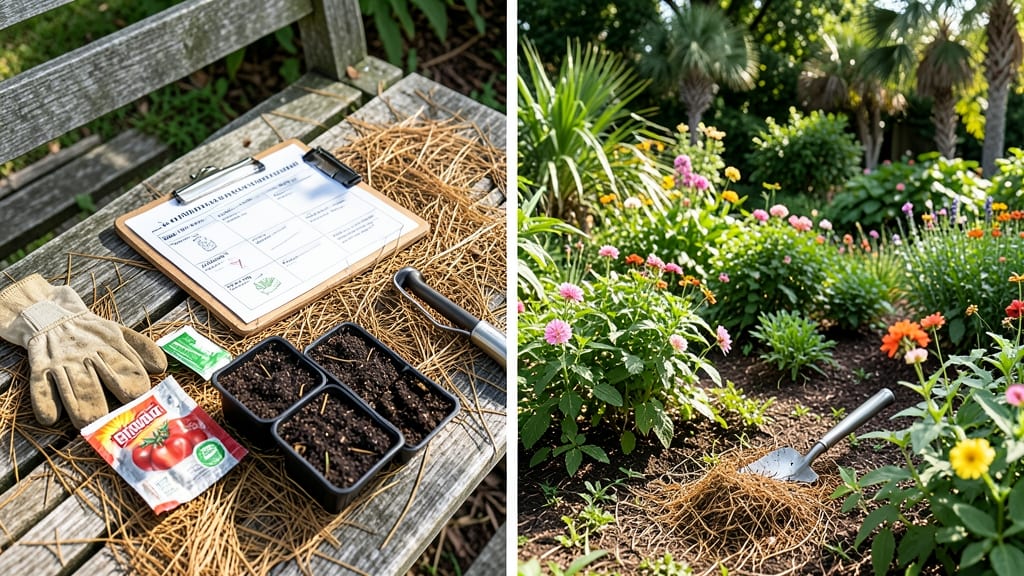
Planting a garden in Florida year-round is possible, but timing still matters to beat the heat, pests, and unpredictable weather patterns.
You might think frost-free Florida means you can toss seeds in the ground anytime, but that’s a recipe for stressing out your plants—or worse, inviting pests like aphids to throw a party in your basil.
The key is matching your crop to the monthly heat waves, monsoon seasons, and even humidity shifts that can turn your garden into a sauna or a swamp overnight.
Below, I break down the exact frost-free planting windows for Florida’s most-loved vegetables, herbs, and flowers—plus how to adjust for North vs. Central vs. South Florida’s quirks. No more guessing whether your tomatoes will bolt in July or your lettuce will wilt by noon.
Ready to grow smarter? Here’s when to plant what, so your General Florida Garden 🌿 thrives all year—without the trial-and-error headaches.
Florida planting calendar by month: best times for vegetables, herbs, and flowers
Florida’s frost-free climate lets you plant almost year-round, but timing still matters for avoiding heat stress or pest outbreaks. Unlike northern climates, Florida’s three distinct regions—North, Central, and South— have subtle differences in humidity and heat intensity that affect planting windows.
For example, North Florida’s cooler winters allow cool-season crops like broccoli, while South Florida’s tropical heat favors year-round tropicals like hibiscus.
This month-by-month guide covers vegetables, herbs, and flowers with regional adjustments. Use it to align your planting with Florida’s rainy season (June–October) and dry season (November–May), which influence soil moisture and pest activity. Pro tip: Always check soil temperature (use a soil thermometer)—most seeds need 60–70°F to germinate.
| Month | North Florida | Central Florida | South Florida |
|---|---|---|---|
| January | Cool-season veggies (broccoli, cabbage), onions, peas | Cool-season veggies, herbs (parsley, cilantro), pansies | Tropicals (ginger, turmeric), sweet potatoes, okra |
| February | Warm-season starts (tomatoes, peppers), carrots, lettuce | Warm-season starts, basil, marigolds, snapdragons | Year-round planting (eggplant, melons, bougainvillea) |
| March | Direct-sow tomatoes, cucumbers, squash; transplant herbs | Direct-sow beans, corn, zucchini; plant flowers (hibiscus, sunflowers) | Succession plant okra, sweet corn, peppers |
| April | Peppers, eggplant, sweet potatoes; mulch heavily | Peppers, tomatoes, okra; plant vining plants (squash, cucumbers) | Plant mango, avocado, or tropical flowers (plumeria) |
| May–August | Succession plant beans, cucumbers; shade-sensitive crops | Succession plant greens (kale, collards) for fall; mulch | Plant heat-tolerant greens (malabar spinach, amaranth) |
| September | Cool-season prep: transplant broccoli, cabbage, onions | Direct-sow carrots, beets, radishes; transplant herbs | Plant sweet potatoes, pumpkins, and fall flowers (mums) |
| October–December | Winter greens (spinach, lettuce), garlic, onions | Winter greens, peas, pansies; transplant spring-blooming bulbs | Tropicals (banana, citrus), cool-season flowers (petunias) |
In North Florida, where temperatures dip slightly in winter, focus on cool-season crops January–March and warm-season crops April–October. For example, I plant broccoli in January and tomatoes in March to avoid bolting. Use row covers for extra protection if nights drop below 40°F.
Central Florida’s transition zone lets you grow both cool- and warm-season crops year-round with succession planting. My trick? Plant basil in February for early harvests and kale in September for fall/winter greens. Avoid planting heat-sensitive crops like lettuce in July—it bolts in days.
South Florida’s tropical climate means you can grow year-round heat lovers like okra, sweet potatoes, and eggplant. I direct-sow okra every 2 weeks from March–October for continuous harvest
How to adjust planting times for Florida’s microclimates and heat zones
Florida’s heat zones (8A–10A) and microclimates can make your neighbor’s planting schedule seem useless for your garden. A coastal home in Miami might thrive with summer tomatoes, while inland Orlando could struggle with heat stress if planted too early.
Even urban heat islands raise temperatures by 5–10°F, altering planting windows. Understanding these variations ensures your vegetables, herbs, and flowers grow optimally.
Your USDA zone is just the starting point. Humidity levels, soil drainage, and wind exposure further refine when to plant.
For example, North Florida’s 8A zone may handle cool-season crops like broccoli in early spring, while South Florida’s 10A zone can grow warm-season okra year-round. Urban gardens often need earlier plantings due to higher heat, while rural areas might delay until soil warms fully.
- 1
- 2
- 3
- 4
- 5
Start by identifying your local microclimate. Coastal areas experience cooler temps and higher humidity, while inland regions face intense heat.
For instance, Gainesville (Zone 8B) can plant spinach in October–March, but Miami (Zone 10B) risks bolting if planted before September. Urban heat islands in cities like Tampa may require earlier cool-season plantings by 2–3 weeks.
Soil temperature is often overlooked but critical. Warm-season crops like sweet potatoes or okra need soil at 60°F+ to germinate, while cool-season crops like kale grow best at 50–65°F.
Use a soil thermometer to avoid delays—North Florida soils may stay cool into April, while South Florida can plant warm-season crops as early as February.
Don’t forget humidity’s role. High humidity accelerates fungal diseases like powdery mildew on cucumbers or black spot on roses.
In South Florida, provide afternoon shade or improved airflow with trellises. North Florida’s lower humidity allows longer outdoor growing seasons for herbs like cilantro, which bolts quickly in Miami’s heat.
For urban vs. rural differences, note that paved surfaces in cities raise temps by 5–10°F, making heat-sensitive crops like lettuce struggle. Rural gardens may delay warm-season plantings until May to avoid spring frost risks, even in Zone 9A.
Always observe your garden’s unique conditions—what works for your neighbor may not for you.