Watering
How often do I need to water my garden? The right answer—knowing when and how much—is the difference between lush, thriving plants and wilting disappointment.
Overwatering or underwatering your garden can stifle plant growth—or worse, kill your hard-earned crops. But how do you know when it’s time to water? The answer lies in the soil, not the calendar.
Many gardeners guess based on time or weather, but plants like General Garden 🌱 (and most others) actually tell you what they need through simple soil checks. A quick finger test or observing leaf color can save you from both drowning and dehydrating your plants.
In this guide, I’ll break down the soil-moisture test method, seasonal watering schedules, and common mistakes that waste water—or worse, harm your plants. By the end, you’ll water with confidence, no guesswork required.
The soil-moisture test method: how to check water needs without a guess
Skipping the guesswork about when to water your garden starts with understanding what’s happening below the surface. Most gardeners overwater because they rely on time-based schedules instead of checking the soil’s actual moisture level.
But here’s the secret: healthy plants thrive when their roots have access to consistent moisture, not when you follow a rigid calendar.
Think about it—your tomatoes might need daily watering in July, while your lavender could survive on just a sip every two weeks. The key is learning to read your soil’s moisture signals so you can water with confidence, not confusion. Ready to master the soil-moisture test? Let’s dig in.
Pick one of these three foolproof ways to check soil moisture:
- Finger Test – Stick your finger 1-2 inches into the soil. If it feels dry, water.
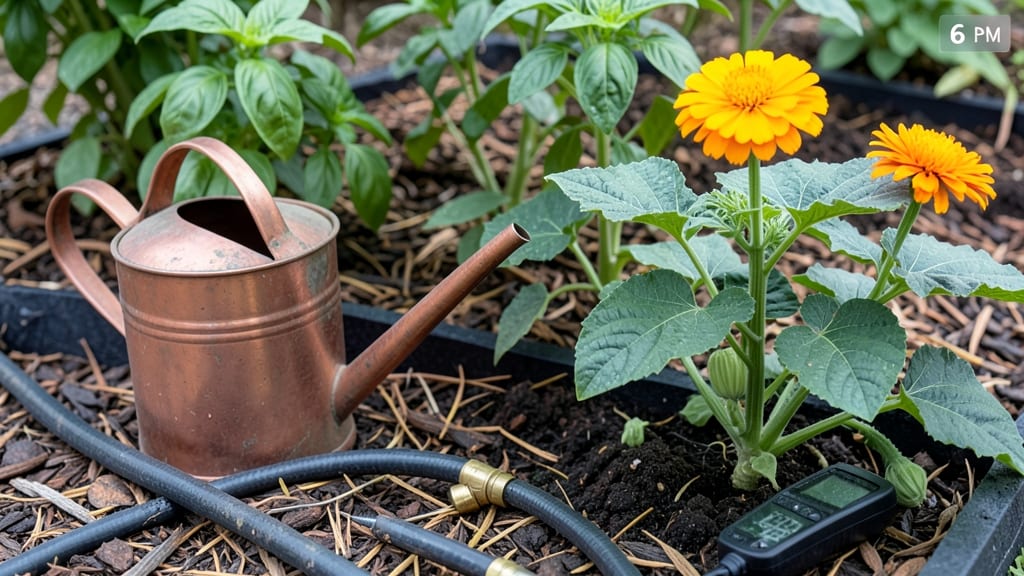
- Moisture Meter – Use a digital probe for precise readings (ideal for container gardens).
- Visual + Touch – Lift a clump of soil; if it crumbles easily, it’s time to water.
Most plant roots absorb water from the top 1-3 inches of soil. For deeper-rooted plants like roses or fruit trees, check 4-6 inches down. Pro tip: Test near the plant’s drip line (where leaves extend) for accuracy.
Morning is always best—watering between 6 AM and 10 AM gives roots time to absorb moisture before the heat of the day. Avoid evening watering to prevent fungal diseases like powdery mildew.
Soil doesn’t dry out evenly! Sandy soil drains fast (water more often), while clay soil holds moisture longer (water less frequently). Amend your soil with compost to improve water retention naturally.
Pair soil tests with these visual cues:
- Wilting leaves (especially in the afternoon) = thirsty plants.
- Yellowing leaves = often overwatered or poor drainage.
- Dull, grayish soil = compacted and needs aeration.
Here’s the game-changer: timing matters more than frequency. A deep watering once a week beats shallow daily sprinkles because it encourages deep root growth. Use a soaker hose or drip irrigation to deliver water slowly and directly to the roots, minimizing waste and evaporation.
Let’s say you’re growing basil in your container garden. Instead of watering every day, check the soil with your finger. If the top inch feels dry, give it a thorough drink.
For succulents, wait until the soil is bone-dry before watering—overwatering is their #1 killer. The soil-moisture test removes the guesswork and puts you in control.
Pro tip: Keep a garden journal to track when and how you water. Note the weather, soil type, and plant responses. Over time, you’ll spot patterns—like your tomatoes needing more water after a heatwave or your roses thriving on less during rainy spells.
This personalized approach beats generic advice every time.
Remember, healthy soil = healthy plants. By mastering the soil-moisture test, you’ll save water, prevent root rot, and give your garden the perfect balance of moisture—no more, no less. Your plants will thank you with vibrant growth and bountiful harvests.
Watering frequency by plant type: a seasonal guide for vegetables, flowers, and herbs
Your garden thrives when you match watering frequency to each plant’s needs—not just the season. A tomato plant in full sun demands daily watering, while succulents can survive on bi-weekly moisture. Soil type and climate also play critical roles.
Sandy soil drains fast, while clay holds moisture longer. Let’s break down the ideal watering schedules for common plants and how to adjust for your growing conditions.
Understanding seasonal adjustments is key. In summer, most plants need 20-30% more water than spring or fall. Herbs like basil wilt quickly in heat, while perennials like lavender thrive on neglect.
Even shade-loving plants like ferns require consistent moisture. Below, I’ve organized a plant-by-plant guide to help you water efficiently without guesswork.
For clay soil, water deeply but less frequently—it holds moisture longer. In sandy soil, water lightly daily to prevent runoff. Container gardens dry out faster, so check soil moisture daily.
Use your finger: if the top 1 inch feels dry, it’s time to water. Pro tip: Morning watering reduces evaporation and fungal risks.
Regional climate zones matter too. In Zone 9, summer watering may be daily, while Zone 4 gardens need less in winter. Always adjust for rainfall—skip watering if you’ve had 1 inch of rain in 24 hours.
Mulching with straw or wood chips helps retain moisture and cuts down on weekly watering needs by up to 30%.
Don’t overlook visual cues. Drooping leaves often mean thirst, while yellowing leaves can signal overwatering. Tomatoes with cracked fruit? You likely missed consistent moisture. Herbs like cilantro bolt in heat if underwatered.
Tailor your schedule to your garden’s unique conditions, and your plants will reward you with lush growth and bountiful harvests.
Start with this guide, then refine based on your garden’s response. Happy watering—your plants will thank you! 💧🌿