
Light Requirements
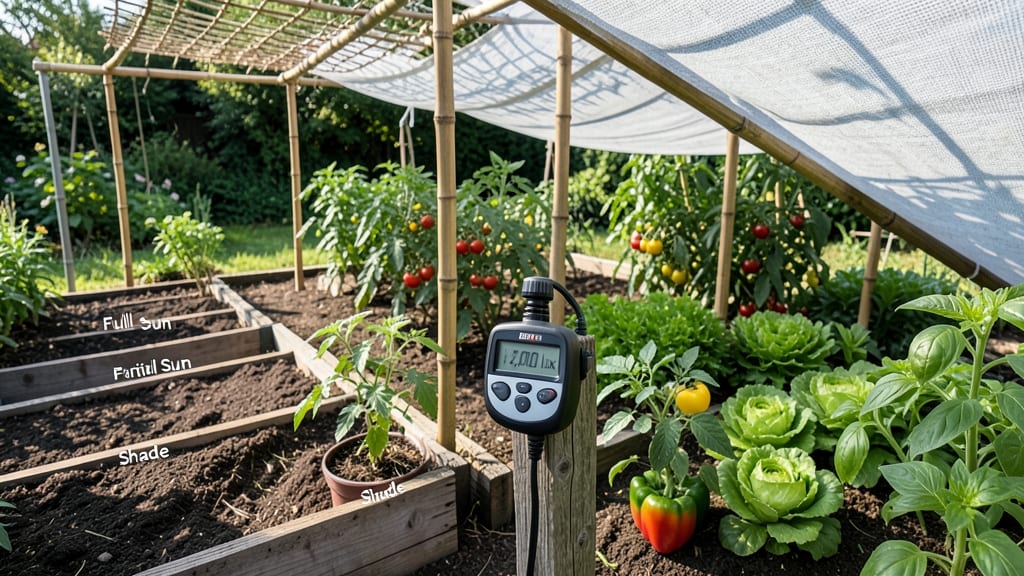
Vegetable gardens need full sun, but most crops actually require 6 to 8 hours of direct sunlight daily for peak growth, with exceptions like lettuce and spinach thriving in 4 to 6 hours. Leafy greens tolerate partial shade better than fruiting plants, which need abundant light to produce flavorful yields.
Sunlight isn't just about quantity—it's about quality. 🌱 The 6-8 hour guideline comes from photosynthesis science: most vegetables hit their light saturation point around that range, meaning extra sun won't boost growth but insufficient light will stunt development.
Leafy greens like kale and Swiss chard can handle partial shade because they prioritize leaf production over fruit development. For fruiting plants like tomatoes and peppers, even 4 hours of shade can reduce yields by 30-50%.
What's fascinating is how different crops interpret "sunlight." For example, broccoli and cabbage need full sun for sweet flavor development, while bush beans can adapt to 50% shade if given consistent moisture.
The key is matching your garden layout to your microclimate—south-facing beds get more direct light than north-facing ones, and urban gardens often need creative solutions like reflective mulches or vertical trellises to maximize exposure.
💡 In This Article
- Sunlight Requirements for Common Vegetable Crops
- Maximizing Garden Productivity in Low-Sun Spaces
Sunlight requirements for common vegetable crops
Photosynthesis is where the magic happens, and different vegetables have unique light needs based on their growth priorities. Leafy greens like spinach and lettuce thrive in 4 to 6 hours of sunlight because they focus energy on leaf production rather than fruit development.
These crops have a lower light saturation point—meaning they don't need as much light to reach maximum growth.
In contrast, fruiting plants like tomatoes and peppers demand 6 to 8 hours of direct sunlight to develop their characteristic flavors and yields, as their energy goes toward fruit production rather than foliage.
The science behind this lies in chlorophyll efficiency. Leafy greens have a higher chlorophyll-to-light conversion rate in lower light conditions, while fruiting plants require more intense light to trigger flowering and fruit set.
For example, a tomato plant exposed to only 4 hours of sun will produce smaller, less flavorful fruits because the plant prioritizes survival over reproduction. 🌿 The light spectrum matters too—blue light (6-8 hours of direct exposure) promotes vegetative growth, while red light (more abundant in full sun) triggers flowering in many crops.
Root vegetables present another fascinating case. Carrots and beets need 5 to 6 hours of sunlight to develop their sweet, crisp textures, but too much heat can cause them to split or become woody. The key is balanced light exposure that encourages steady root growth without stressing the plant.
Herbs like basil and cilantro also fall into the 6 to 8 hour category, but they can tolerate partial shade if given consistent moisture, as their aromatic compounds develop best in moderate light conditions.
What most gardeners overlook is how light quality changes with the seasons. Morning sunlight (cooler and less intense) is gentler on plants than afternoon sun (hotter and more direct), which is why some crops like lettuce can handle partial shade in summer but need more light in cooler months.
The angle of the sun also matters—plants growing in northern hemisphere gardens receive more direct light in summer when the sun is higher in the sky, while winter light is softer and less effective for photosynthesis.
Consider these specific examples to visualize the differences:
- Full Sun Lovers (6-8 hours): Tomatoes, peppers, eggplants, corn, and most herbs—these need maximum light for flavor and yield.
- Partial Sun Tolerators (4-6 hours): Leafy greens (spinach, kale), bush beans, and root vegetables (carrots, beets)—these can adapt but may bolt or become bitter in too much heat.
- Shade Specialists (<4 hours): Lettuce, arugula, and spinach varieties like 'Baby's Leaf Hybrid'—these thrive in dappled light and can even handle indoor growing with grow lights.
Understanding these distinctions lets you design a garden that maximizes productivity without overcrowding. For instance, pairing shade-tolerant lettuce with sun-loving tomatoes in the same bed creates a natural microclimate where both crops get their ideal light exposure. 💫