
Light Requirements
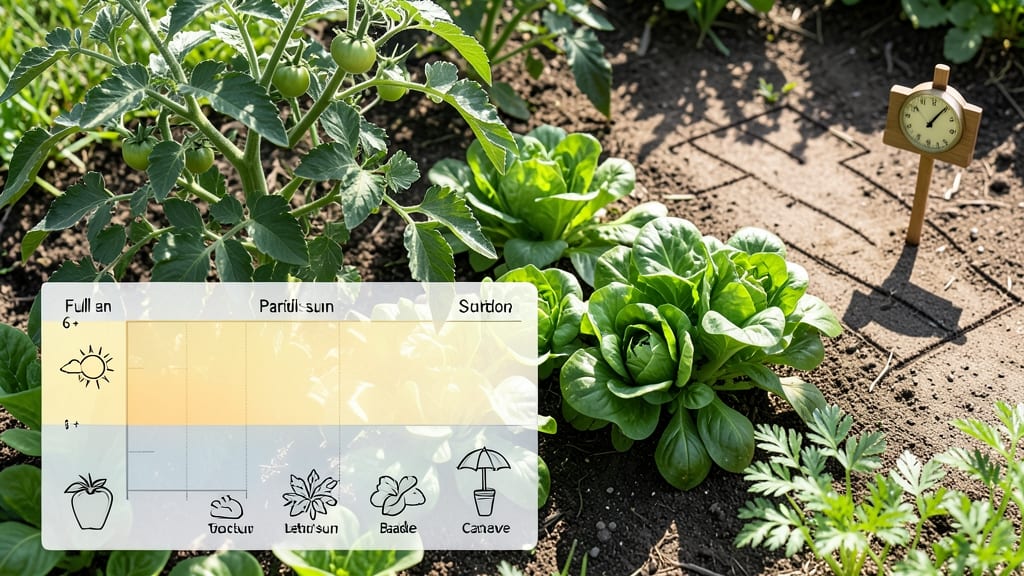
Your vegetable garden needs how much sun for vegetable garden to thrive—specifically, 6 to 8 hours of direct sunlight daily—though some crops can handle less.
Picture this: You’ve spent weeks preparing your soil, planting seeds, and nurturing young sprouts, only to watch them wilt because they’re not getting enough light. The truth is, sunlight isn’t just about quantity—it’s about matching the right exposure to each plant’s needs.
From sun-loving tomatoes and peppers to shade-tolerant leafy greens, every crop has its own ideal light requirements. Below, I’ll break down exactly how much sun your vegetable garden needs, how to measure sunlight in your space, and which plants can thrive in partial shade.
By the end, you’ll know how to position your garden for maximum success—no more guesswork, just a thriving 🥕 harvest.

Sunlight requirements by vegetable type: full sun vs partial shade
Getting your vegetable garden's sunlight right is like giving your plants the perfect spot on the couch—they’ll either thrive or sulk. Most vegetables need 6-8 hours of direct sunlight daily, but some are happy with just 3-4 hours of morning sun.
The key is understanding each plant’s needs to avoid stunted growth or bitter flavors. For example, tomatoes and peppers crave full sun, while leafy greens tolerate partial shade better.
Sunlight isn’t just about hours—it’s also about timing. Morning sun (6 AM–12 PM) is gentler and helps prevent scorching, while afternoon sun (12 PM–6 PM) can be intense. If your garden has dappled shade (like under fruit trees), pair it with shade-tolerant crops.
Below, I’ve broken down the exact sunlight needs for 20+ common vegetables so you can map your garden like a pro.
| Vegetable | Sunlight Needs | Ideal Hours/Day | Notes |
|---|---|---|---|
| Tomatoes | Full Sun | 8+ hours | Needs afternoon sun; staked varieties tolerate heat better. |
| Peppers | Full Sun | 6-8 hours | Hot peppers need consistent sun; avoid soggy soil. |
| Cucumbers | Full Sun | 6-8 hours | Vining types need trellises; tolerate partial shade in hot climates. |
| Zucchini | Full Sun | 6-8 hours | Produces more in full sun; space plants 2-3 feet apart. |
| Lettuce | Partial Shade | 3-4 hours | Bolt-resistant varieties tolerate morning sun; avoid afternoon heat. |
| Spinach | Partial Shade | 3-5 hours | Thrives in cool weather; harvest leaves to prolong growth. |
| Carrots | Partial Shade | 4-6 hours | Loose soil prevents forking; avoid full sun in hot climates. |
| Radishes | Partial Shade | 3-4 hours | Fast-growing; harvest in 30-40 days to avoid bitterness. |
| Green Beans | Full Sun | 6-8 hours | Bush types need less space; pole beans need trellises. |
| Basil | Full Sun | 6-8 hours | Pinch flowers to encourage leaf growth; avoid wet foliage. |
| Kale | Partial Shade | 4-6 hours | Sweeter after frost; harvest outer leaves first. |
| Onions | Full Sun | 6-8 hours | Bulbs need consistent sun; space 4-6 inches apart. |
| Potatoes | Full Sun | 6-8 hours | Hill soil as vines grow; avoid wet conditions. |
| Swiss Chard | Partial Shade | 4-6 hours | Cut-and-come-again harvest; tolerates heat better than spinach. |
How to measure and adjust sunlight in your garden layoutSunlight isn’t just about placing your tomatoes in a sunny spot—it’s about understanding hourly patterns across your entire yard. Many gardeners assume a spot gets 6 hours of sun when it might only receive 4 hours of direct light due to morning shade from a fence. To avoid this, I recommend using a sunlight journal for at least 2 weeks to track real-time exposure. Start by marking your garden grid with stakes or spray paint, then observe sunlight shifts throughout the day. Notice how trees cast moving shadows—what seems like full sun at noon might turn into partial shade by afternoon. This is especially critical for heat-loving crops like peppers and eggplants, which need consistent 8+ hours of sunlight. ⚠️ callout warning ⚠️ Sunlight Myth Busted: "My Garden Gets Full Sun"Most gardeners overestimate sunlight hours. A spot with 4-6 hours of sun is actually partial shade—ideal for leafy greens like spinach but deadly for tomatoes. Use a sunlight meter or smartphone app (like Sun Surveyor) to measure accurately. Even a 2-hour difference can mean the difference between a bountiful harvest and stunted plants. Once you’ve mapped your sunlight zones, group plants by their needs. Place full-sun lovers (like cucumbers and okra) in the sunniest spots, while partial-shade plants (such as bush beans) can thrive in 4-6 hours of light. Pro tip: Rotate your crop layout annually to prevent soil depletion and adjust for changing shade patterns from growing trees. For areas with too much sun, use shade cloth (30-50% coverage) to protect delicate plants like lettuce from scorching. Conversely, if a spot gets less than 4 hours of sun, consider reflective mulch or moving plants to a south-facing window for container gardens. Even a white wall can bounce extra light onto plants during cloudy days. Don’t forget to account for seasonal changes. A spot might get full sun in summer but only partial shade in winter due to lower sun angles. Adjust your planting timeline accordingly—start cool-season crops (like kale) in early spring when sunlight is less intense, then transition to heat lovers as days lengthen. Finally, troubleshoot common mistakes: Overcrowding blocks sunlight between plants, while tall plants can shade smaller ones. Use trellises for vining crops like pole beans to keep them off the ground and maximize light exposure for nearby plants. With these adjustments, you’ll create a balanced garden where every plant gets exactly what it needs to thrive. 🌱 |