
Light Requirements
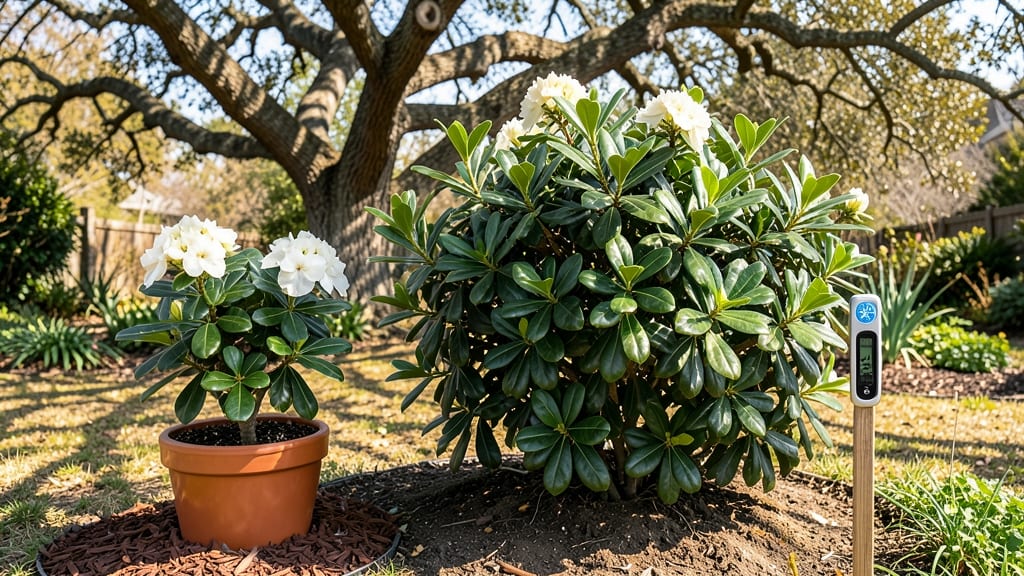
A frost-proof gardenia’s sun requirements hinge on 4-6 hours of bright, indirect light daily—too much scorches its delicate 🌸 blooms, while too little stunts growth and dims those signature white flowers.
If your gardenia’s leaves are yellowing or flowers refuse to open, you’re probably getting it wrong. The key? Morning sun and afternoon shade, especially in hotter zones like 6a, where summer heat can turn a thriving plant into a crispy mess.
But here’s the twist: frost-proof varieties handle a little more sun than tropical cousins, as long as you protect them from harsh afternoon rays. I’ll show you how to balance light for year-round blooms—no guesswork, just science-backed placement tips.
From east-facing windows to microclimates in your yard, you’ll learn exactly where to position your gardenia for stronger stems, bigger blooms, and zero sunburn—even when winter rolls around.

How much sun do frost-proof gardenias need for optimal growth?
Frost-proof gardenias (Gardenia jasminoides) are prized for their fragrant white blooms, but their sunlight needs shift dramatically with the seasons.
Unlike tropical gardenias, these cold-hardy varieties adapt to USDA Zone 6a climates, but their sun exposure must be carefully managed to prevent leaf scorch or bud drop. The key is balancing morning sun with afternoon shade, especially during peak summer heat.
In spring and summer, your frost-proof gardenia thrives with 4-6 hours of filtered sunlight daily. This means placing them where they receive gentle morning rays (6 AM–12 PM) but avoiding harsh afternoon sun (after 2 PM).
Too much direct sun can cause yellowing leaves or dropped buds, while too little light leads to sparse blooming and leggy growth.
During fall and winter, the rules relax slightly. These resilient shrubs tolerate 3-4 hours of sunlight as days shorten, but they still need bright, indirect light to maintain dormant health.
In Zone 6a, where frost arrives by late October, gardenias enter a resting phase—reducing sunlight stress helps them recover in spring.
| Season | Ideal Sunlight | Time Window | Signs of Stress | Care Adjustments |
|---|---|---|---|---|
| Spring | 4-6 hours partial sun |
6 AM–12 PM | Brown leaf edges bud drop |
Use lattice shade Water deeply |
| Summer | 3-4 hours morning sun |
5 AM–10 AM | Wilting leaves leaf scorch |
Add mulch layer Prune leggy growth |
| Fall | 3-4 hours bright shade |
9 AM–1 PM | Yellowing leaves weak stems |
Reduce watering Apply winter mulch |
| Winter | 2-3 hours south-facing |
10 AM–1 PM | Dormant buds no new growth |
Avoid pruning Protect from early frost |
To spot sun stress early, watch for crispy leaf edges or bleached petals—clear signs your gardenia is getting too much direct sun. On the flip side, pale green leaves and fewer blooms mean it’s not getting enough light.
In Zone 6a, where winters are cold but not extreme, gardenias can handle partial shade from nearby trees, but avoid deep shade, which stunts growth.
For container gardenias, rotate pots every 2 weeks to ensure even sunlight exposure on all sides. If your patio or balcony only offers afternoon sun, use a lightweight shade cloth (30-50% coverage) to diffuse harsh rays.
This mimics their natural understory habitat in tropical forests, where they thrive under dappled sunlight.
One pro tip: If your gardenia’s buds fail to open despite proper sunlight, check your soil pH—gardenias need acidic soil (5.0-6.0). Combine balanced sunlight with regular feeding (every 6 weeks in spring/summer) to encourage vibrant blooms from June through September.
In urban gardens with limited space, place your frost-proof gardenia near an east-facing wall or under a large tree with sparse canopy. This setup provides filtered light while protecting roots from heat stress.
Remember, these plants are adaptable, but consistency in light exposure is key to year-round blooming.
Before winter arrives, prune back any dead or weak branches to improve air circulation and light penetration for next year’s growth. Wrap young plants in burlap if frost warnings appear, but avoid heavy mulch that could smother roots during dormancy.
With the right sunlight balance, your frost-proof gardenia will reward you with scented blooms even in Zone 6a winters. Start by observing your plant’s
Best locations for frost-proof gardenias based on sun exposure
Finding the perfect spot for your frost-proof gardenia starts with understanding how sunlight interacts with your space. These fragrant shrubs thrive in partial shade but need morning light to trigger blooming.
Urban balconies, shaded patios, and garden beds all work—if you choose wisely. Let’s explore the best locations and how to adapt them for your gardenia’s needs.
Microclimates play a huge role in success. A south-facing wall might get too hot, while a north-facing corner could leave your plant starved for light. Even small adjustments—like adding a lattice screen or moving a potted gardenia—can make all the difference.
The key is balancing morning sun with afternoon shade, especially in hotter zones.
- 🌞 Balconies: East-facing with 3-4 hours morning sun; avoid west exposure (too intense)
- 🪴 Patios: Place under dappled shade from trees or pergolas; test light spots first
- 🌳 Garden Beds: North or east sides of structures; mulch heavily to retain moisture
- 🏡 Urban Spaces: Use reflective surfaces (light-colored walls) to amplify indirect light
- 🌧️ Shade Structures: 50% shade cloth for afternoon sun; adjust seasonally (remove in winter)
For container gardenias, flexibility is your best friend. Rotate pots every few weeks to ensure even light exposure, and use lightweight containers (like terracotta) to prevent overheating. If your space gets less than 3 hours of sun, supplement with a grow light for 4-6 hours daily during winter.
This mimics natural conditions and keeps buds forming.
Watch for sunburn signs—yellowing leaves or crispy edges—on south or west-facing spots. If this happens, move your gardenia to a shadier location immediately. Conversely, pale leaves or sparse blooms signal light deprivation.
In these cases, trim nearby trees or relocate to a sunnier microclimate. Even a 1-foot difference in planting location can change your gardenia’s health dramatically.
Don’t overlook seasonal adjustments. In summer, your gardenia might need more shade (like a temporary umbrella), while winter’s weaker sun means you can push it slightly sunnier.
Grouping gardenias with companion plants like hydrangeas or impatiens also helps create natural shade layers. Just avoid competitive neighbors that steal nutrients or light.
With the right spot, your frost-proof gardenia will reward you with year-round blooms and intoxicating fragrance. Start by testing your space with a temporary placement—like a movable pot—and observe how your plant responds. Within weeks, you’ll spot the perfect balance of light and shade that makes all the difference. 🌸