
Advice
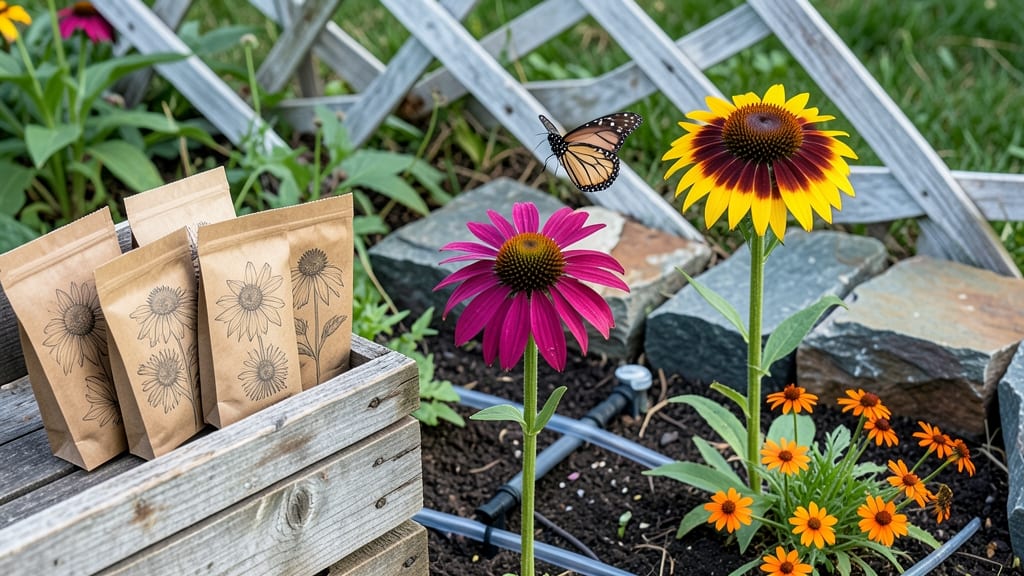
High Country Gardens Nursery offers drought-resistant, native, and ornamental plants perfectly suited for Western gardens, providing expert guidance for water-wise landscaping in high-altitude, dry environments. Their standout selections—like Colorado blue spruce, penstemon, and hardy yucca—thrive with minimal care, making them ideal for arid landscapes.
This specialty nursery focuses on plants that naturally flourish in Western climates, where water conservation is key. 🌵 Their curated collection includes species with deep root systems that access moisture efficiently and foliage adapted to prevent water loss.
I’ve seen firsthand how these plants reduce maintenance while adding beauty—perfect for gardeners balancing aesthetics with sustainability in regions like Colorado or New Mexico.
Their care tips often emphasize mulching and strategic planting to maximize soil moisture retention. For example, pairing yucca’s drought tolerance with penstemon’s vibrant blooms creates striking contrasts while minimizing irrigation needs. Whether you’re a novice or seasoned gardener, their resources help transform even the driest landscapes into thriving ecosystems.
💡 In This Article
- Why High Country Gardens Plants Excel in Arid Climates
- Top High Country Gardens Varieties for Western Landscapes
Why high Country Gardens plants excel in arid climates
High Country Gardens plants thrive in arid conditions thanks to their evolutionary adaptations. Many species develop deep taproot systems that reach up to 6 feet underground, accessing moisture far below the surface where evaporation is minimal.
For example, the Colorado blue spruce's roots spread widely to stabilize soil while conserving water—critical in high-altitude regions where summer temperatures can exceed 90°F and humidity drops below 20%. 🌿
Another key adaptation is waxy leaf coatings that reduce water loss through transpiration. Plants like yucca and penstemon have thick, fleshy leaves that store moisture, while their narrow shapes minimize surface area exposed to the sun.
These features allow them to survive with as little as 1 inch of water per month once established—far less than traditional lawn grasses, which often require 2-3 inches weekly. The nursery's selection prioritizes these traits, ensuring plants remain lush even during droughts.
Botanically, these adaptations also improve soil health. Deep roots prevent erosion by anchoring soil particles, while drought-resistant plants reduce the need for irrigation, which can degrade soil structure over time. In Colorado's Zone 5-7 climates, this means gardens stay vibrant without the chemical runoff common in water-intensive landscapes.
The nursery's care guides often recommend mulching with gravel or bark to further lock in moisture—a technique that can cut water use by up to 30%.
What sets High Country Gardens apart is their focus on native species that have co-evolved with local conditions. For instance, penstemon flowers attract pollinators while their roots improve soil aeration, creating a self-sustaining ecosystem.
Unlike non-native plants that may require constant intervention, these species support local biodiversity while demanding minimal resources. 🌍 This dual benefit makes them ideal for eco-conscious gardeners in the West.
Consider the yucca plant as a prime example: its sword-like leaves store water like a succulent, while its architectural form adds visual interest without competing for resources.
When planted in full sun with well-draining soil, a single yucca can thrive for decades with occasional deep watering—making it a low-maintenance star in xeric (dry) landscapes. The nursery's plant tags often include watering charts that align with regional rainfall patterns, helping gardeners avoid overwatering.
For gardeners in high-altitude areas, these adaptations translate to tangible benefits. Plants like the Colorado blue spruce not only survive but flourish in thin air (where oxygen levels drop at elevations above 5,000 feet), thanks to their efficient photosynthesis.
Their ability to photosynthesize at lower light levels means they can thrive in partial shade, expanding design possibilities in rocky or sloped terrains where other trees might struggle. 🌲