
Tools
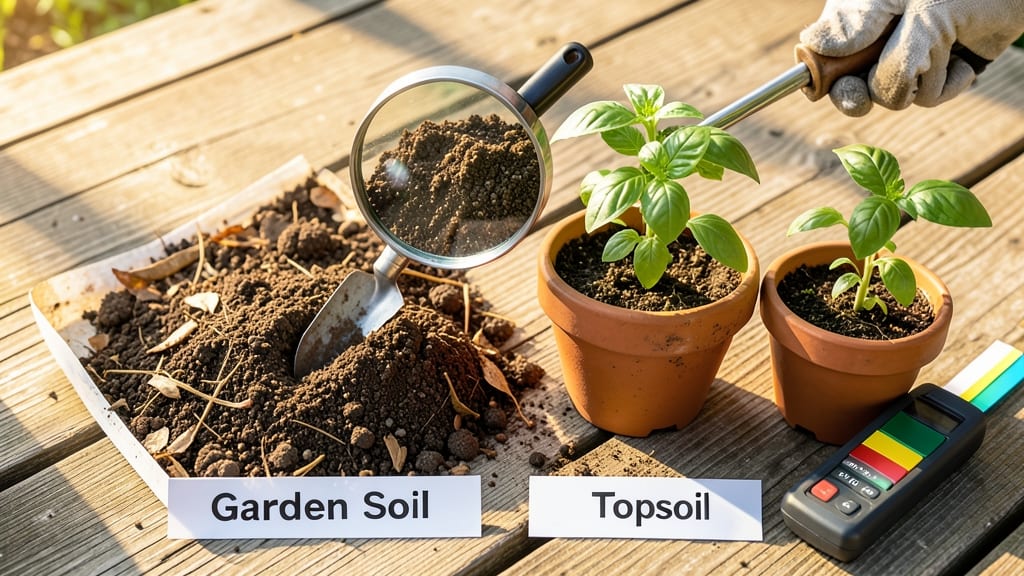
Garden soil and topsoil are not the same: garden soil is a customized blend designed for planting, while topsoil is the natural, unaltered upper layer of earth found in nature.
Garden soil is specifically formulated for plant growth, combining topsoil with compost, sand, and organic amendments to improve fertility and drainage. 🌱 Unlike topsoil, which comes straight from the earth with its natural composition, garden soil is tailored to support root development and nutrient absorption.
For instance, topsoil might lack the balanced nutrients needed for vegetables, while garden soil is enriched to meet those demands.
This distinction matters when planning your garden. Topsoil is ideal for leveling landscapes or establishing new lawns, while garden soil is better suited for planting beds where you'll grow flowers, herbs, or vegetables.
Understanding the difference helps you choose the right material for each project, ensuring healthier plants and better yields.
💡 In This Article
- Key Differences Between Topsoil and Garden Soil Composition
- When to Use Topsoil vs Garden Soil in Your Yard
Key differences between topsoil and garden soil composition
The most fundamental difference lies in their organic matter content. Topsoil forms naturally through centuries of rock weathering, decomposed plant material, and microbial activity—typically containing 5-10% organic matter.
This layer is where plants naturally establish roots in the wild, but its nutrient profile varies widely depending on climate and location.
In contrast, garden soil is an engineered mix where organic matter is intentionally boosted to 20-40% through added compost, peat moss, or well-rotted manure, creating a more consistent growing medium.
Particle size distribution also sets them apart. Topsoil contains a mix of sand, silt, and clay particles in whatever ratio nature provided, often resulting in uneven drainage and aeration. For example, clay-heavy topsoil might hold too much water, while sandy topsoil could drain too quickly.
Garden soil, however, is often amended with perlite or vermiculite to achieve an ideal loamy texture—about 40% sand, 40% silt, and 20% clay—that promotes both water retention and root penetration.
The pH levels differ too: natural topsoil can range from 4.5 (acidic) to 8.5 (alkaline), while garden soil is typically adjusted to 6.0-7.0 for optimal plant uptake.
Nutrient density reveals another critical distinction. Unaltered topsoil provides basic minerals like nitrogen, phosphorus, and potassium, but these are often locked in forms that plants can't immediately access. Garden soil, however, includes slow-release fertilizers or microbial inoculants that actively convert nutrients into plant-available forms.
This is why a 1-gallon bag of garden soil might contain 3-5 times more available nitrogen than the same volume of topsoil, making it far more effective for seed germination and vigorous growth.
The formation process highlights their divergence. Topsoil develops over millennia as bedrock fractures and organic debris accumulates, while garden soil is created through deliberate layering and mixing—often within weeks.
For instance, professional garden soil blends might include 50% topsoil, 30% compost, 10% perlite, and 10% worm castings, each component playing a specific role in moisture control, microbial activity, and nutrient cycling. This human intervention transforms raw earth into a precision-growing medium tailored to specific plant needs.
Consider this comparison: If topsoil is the earth's natural foundation, garden soil is the premium top layer of a high-performance sports field—designed for optimal performance rather than just basic functionality. The added amendments don't just improve conditions; they create an environment where plants can thrive with minimal supplemental feeding.
For example, tomatoes grown in properly mixed garden soil might yield 20-30% more fruit than those planted in unamended topsoil, thanks to better root oxygenation and nutrient availability.
One often-overlooked factor is microbial diversity. Garden soil's carefully balanced composition supports a more active and diverse microbial community, including beneficial bacteria and fungi that break down organic matter and suppress plant diseases.
Studies show garden soil can contain 10-100 times more beneficial microbes per gram than natural topsoil, which directly impacts plant health and disease resistance. This biological advantage is why gardeners often see fewer pests and stronger plants when using properly formulated mixes.