Picking
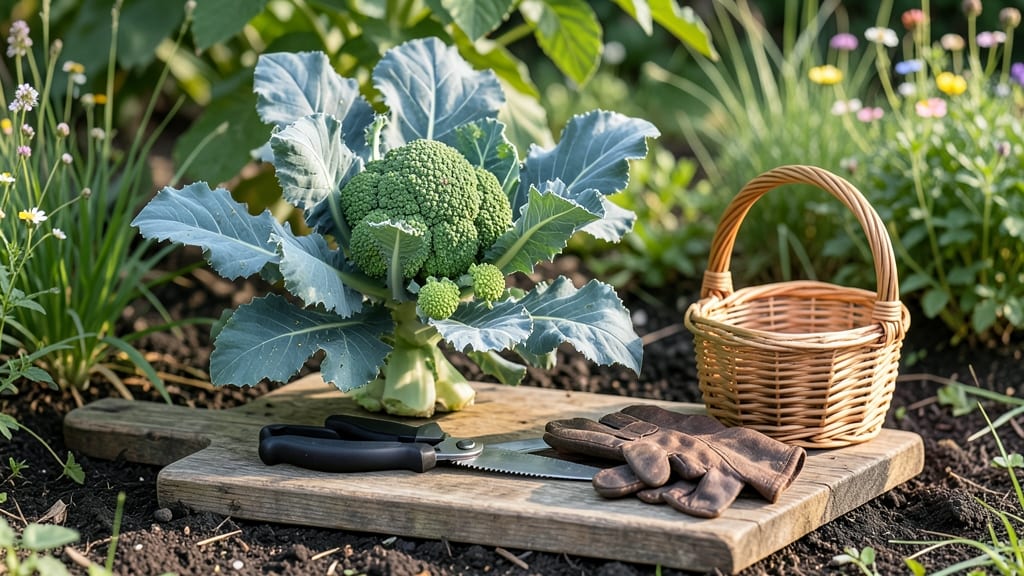
To pick broccoli from the garden at its peak flavor and texture, wait until the main head reaches 4-6 inches and stays tightly packed like a closed green fist 🥦.
Knowing the exact moment to harvest broccoli can mean the difference between a flavorful, tender crown and bitter, woody stalks—so timing is everything. One day too late, and those tight florets start loosening, signaling the plant is redirecting energy to seed production.
Most gardeners miss the window because they focus on size alone, but color and firmness are just as critical. A head that’s turning yellow or starting to open? That’s your cue to grab the shears—before the texture turns tough and the taste goes flat.
Below, I’ll walk you through the visual cues to watch for, the best tools to use, and how to encourage your broccoli to keep producing side shoots for weeks of harvests. No more guessing—just perfect timing every time.

How to identify the perfect broccoli harvest time by visual cues
Timing your broccoli harvest correctly ensures you enjoy tender, flavorful crowns instead of bitter, woody stalks. The key lies in observing three critical visual cues: head tightness, bud color, and stalk thickness.
When these signs align, you’ve hit the ideal harvest window—typically 50-80 days after transplanting, depending on the variety.
First, focus on the head’s compactness. A perfectly ripe broccoli head should be firm and tightly packed, with florets that haven’t started spreading. If you see even a hint of yellowing buds or loose florets, you’ve missed the window.
These are clear signals that the plant is shifting energy toward seed production, making the head less flavorful and tougher.
Bud color is your second clue. The florets should be a vibrant deep green, not fading to yellow or brown. Even a single yellow bud means the head is overripe. Pay attention to the outer leaves too—they should remain dark green and healthy, not wilting or turning yellow. This indicates the plant is still thriving and hasn’t been stressed.
The stalk’s thickness and strength are your third visual cue. A ripe broccoli stalk should feel firm and sturdy when you gently squeeze it. If it’s thin or hollow-sounding, the head is underdeveloped.
Remember, you’ll need about 5-6 inches of stem to support future side shoots, so avoid cutting too close to the base—this can weaken the plant.
Seasonal variations can slightly alter these cues. In cooler climates, broccoli may mature faster, so check heads every 2-3 days starting at 50 days after transplanting. In warmer regions, growth slows, and heads may take up to 80 days to reach harvest size.
Always prioritize head tightness over size—a smaller but perfectly compact head is far superior to a large, loose one.
Avoid the common mistake of waiting until the head is fully mature just because it’s big. Once the florets start yellowing or blooming, the broccoli becomes bitter and fibrous. Even a single yellow bud signals the end of peak flavor.
If you’re unsure, cut open a floret—if the center is yellow or starting to flower, it’s past its prime. The goal is to harvest when the head is at its most vibrant and compact.
Pro tip: After harvesting the main head, watch for side shoots to develop along the stalk. These secondary harvests can produce 3-5 additional heads over 4-6 weeks. To encourage them, keep the plant well-watered and fertilized with a balanced 5-10-10 NPK mix.
Side shoots will follow the same visual cues as the main head, so stay vigilant for tight, green buds.
Finally, time your harvest for the coolest part of the day, ideally in the early morning. This minimizes stress on the plant and keeps the broccoli crisp and fresh.
Use a sharp knife or pruners to cut the stalk at a 45-degree angle, about 5-6 inches below the head. This technique promotes faster healing and encourages stronger side shoots.
Mastering these visual cues will transform your broccoli harvest from hit-or-miss to consistently perfect. The more you practice, the easier it becomes to spot the ideal moment—when your broccoli is tender, flavorful, and at its peak. 🥦
Step-by-step guide: harvesting broccoli without damaging future growth
Harvesting broccoli at the right time ensures tender, flavorful heads while encouraging your plants to produce secondary side shoots for a longer harvest. The key is cutting correctly—too much stem or damage can stunt future growth.
I’ll walk you through the exact steps, from identifying the perfect moment to using the right tools and techniques to maximize your yield.
Broccoli plants are surprisingly resilient, and with the right approach, you can extend your harvest by 3-4 weeks beyond the main crop. Start by checking for these visual cues: a head that’s 4-6 inches wide, tightly packed florets, and a deep green color.
If you see yellowing or flower buds starting to open, you’ve waited too long. Timing is everything!
✂️ Step-by-Step Broccoli Harvesting Guide
- Step 1: Choose the Right Tool – Use a sharp knife or pruners (sterilized with rubbing alcohol) to make a clean cut. Avoid dull tools that can crush stems.
- Step 2: Cut at the Right Angle – Hold the broccoli head firmly and cut the main stem 5-7 inches below the head. This leaves enough stem for side shoots to grow.
- Step 3: Remove Only the Main Head – Never pull the entire plant. Cutting the main head encourages 3-5 side shoots to form in 2-3 weeks.
- Step 4: Harvest Side Shoots – Once side shoots reach 2-3 inches wide, cut them individually using the same technique. Repeat every 1-2 weeks for continuous harvests.
- Step 5: Store Properly – Place harvested broccoli in the fridge with plastic wrap to retain moisture. Use within 5-7 days for best flavor.
After harvesting, your broccoli plant will focus energy on producing side shoots from the leaf axils. To maximize growth, keep the soil moist but not soggy and fertilize lightly with a balanced 5-10-10 NPK formula every 4-6 weeks.
Avoid over-fertilizing, which can lead to leafy growth at the expense of new heads.
If your broccoli plants are struggling to produce side shoots, check for these common issues: overcrowding (thin plants to 12-18 inches apart), nutrient deficiency (yellow leaves indicate nitrogen needs), or pests (like cabbage worms). Addressing these will help your plants recover and produce more harvests.
In cooler climates (USDA Zones 3-6), broccoli thrives in spring and fall, while warmer regions (Zones 7-10) can grow it year-round with proper watering. Always harvest in the morning after dew dries to ensure crispness. With these techniques, you’ll enjoy a longer harvest season and fewer wasted plants.
Pro tip: Mark your calendar 60-80 days after planting as your first harvest window. Most varieties like ‘Calabrese’ or ‘De Cicco’ will reward you with 2-3 harvests per plant if cared for properly. Happy harvesting! 🥦