
Picking
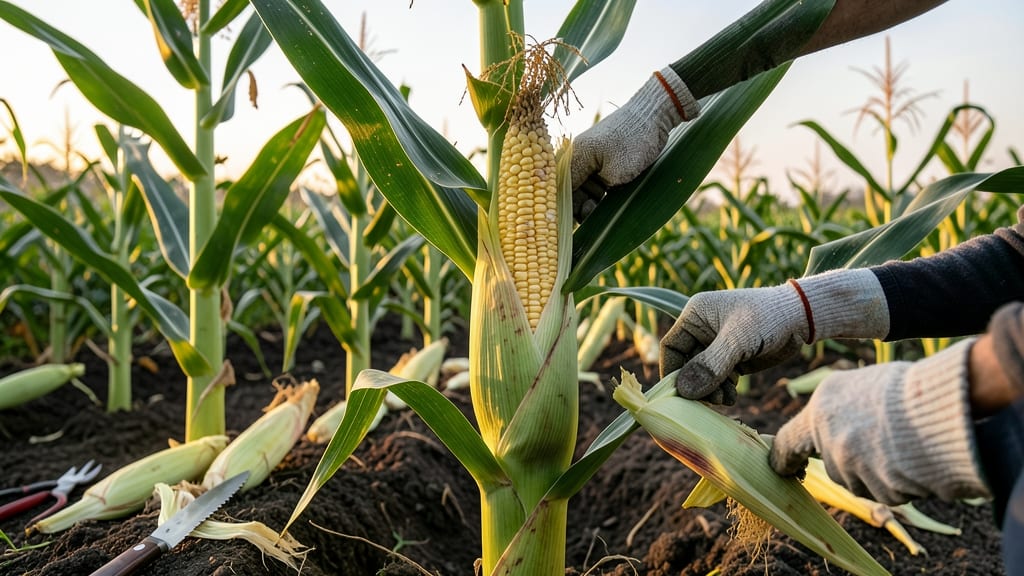
Picking corn from your garden at the right time means the difference between buttery-sweet kernels and tough, starchy disappointment.
There’s nothing worse than biting into sweet corn only to find it tough and starchy—yet picking it too early means missing out on peak flavor. Timing is everything, and mastering the silk color and kernel milk stage will transform your garden harvest into restaurant-quality ears every time.
Most gardeners wait until the silks turn brown, but that’s just the beginning. The real secret lies in the kernels: when they’re plump and milky white, not yet turning floury or translucent. This milk stage is your golden window, and missing it means sacrificing sweetness.
In this guide, I’ll walk you through how to check for readiness—from the silk pull test to the squeeze method—plus regional timing tips for USDA Zone 6a and beyond. By the end, you’ll know exactly when to pick your 🌽 for maximum flavor and texture.

How to identify the perfect silk color for picking sweet corn
Picking sweet corn at the right moment means watching the silk color closely—it’s your first clue about kernel development. When silks turn from bright green to brown, that’s nature’s signal that the ears are nearing peak sweetness.
But not all brown silks mean perfect timing, and ignoring the kernel milk stage can lead to tough, starchy ears. Let’s break down what each silk color actually tells you about your corn’s readiness.
The silk progression follows a predictable pattern: starting as bright green and moist, then shifting to tan or yellowish as the kernels mature, and finally turning dry and brown.
Each stage corresponds to a different level of kernel development, and skipping over these visual cues can mean missing the sweet spot for harvest. For example, green silks indicate the corn is still growing, while brown silks suggest the kernels are nearly ready—but not quite.
Here’s the key: brown silks don’t always mean harvest time. You’ll need to pair silk color with the kernel milk stage and a simple silk pull test to confirm readiness.
For instance, if the silks are brown but the kernels are still hard when you cut into them, the corn needs a few more days on the stalk. Conversely, if the silks are brown but the kernels are already turning floury, you’ve missed the window.
| Silk Color | Kernel Stage | Harvest Readiness | Action |
|---|---|---|---|
| Bright Green | Hard & Translucent | Not Ready | Wait 5-7 days |
| Tan/Yellow | Milky White | Nearly Ready | Test with silk pull |
| Brown & Dry | Plump & Milky | Ready to Pick | Harvest immediately |
| Brown & Brittle | Floury/Starchy | Past Prime | Harvest for seeds |
The silk pull method is my go-to trick for confirming readiness. Simply grasp a silk and give it a gentle tug—if it pulls away easily, the corn is likely at its sweetest. This works because the silk detaches naturally when the kernels reach peak moisture.
However, if the silk resists or snaps off cleanly, the corn may still need a day or two. Pro tip: Do this test in the morning when the silk is least likely to be damp from dew.
Regional variations can also affect silk color timing. In hotter climates, silks may dry out faster, so you might see brown silks earlier than in cooler areas.
For example, in Zone 9 or 10, corn can mature in as little as 60 days, while in Zone 5, it may take closer to 90 days. Always adjust your expectations based on your local growing season and microclimate.
If you’re unsure, err on the side of picking slightly early—corn continues to sweeten slightly after harvest.
Another common mistake is assuming all corn varieties follow the same silk color rules. Sweet corn hybrids like ‘Silver Queen’ or ‘Peaches and Cream’ tend to have more predictable silk progression, while heirloom varieties like ‘Country Gentleman’ might show slight variations.
Always check the days to maturity listed on your seed packet and cross-reference it with silk color. For instance, if your packet says 75 days to harvest but the silks are brown at 65 days, the kernels might still need time to develop.
Light plays a crucial role too. Corn needs full sun (6-8 hours daily) for proper silk development. If your plants are shaded, the silks may stay green longer, delaying the brown stage.
I’ve seen this happen in urban gardens with tall buildings blocking sunlight—silks can take 10-14 extra days to turn brown. To fix this, prune nearby plants or relocate your corn to a sunnier spot as soon as you notice silks lingering in the green phase.
Finally, don’t overlook the ear’s weight and husk feel. A ready-to-pick ear should feel heavy for its size and have a husk that pulls back easily. If the husk resists or the ear feels light, the kernels are likely underdeveloped.
Pairing these tactile clues with silk color gives you a double-check system for foolproof harvesting. For example, if the silks are brown but the husk won’t pull back, wait another day—this often means the kernels need more time to plump up.
Mastering silk color isn’t just about timing—it’s about quality control. When you nail this step, you’ll enjoy corn that’s tender, sweet, and full of flavor, straight from your garden to the table.
And once you’ve got the silk color down, the next step is checking those kernels for the perfect milky white stage—but that’s a topic for another guide! 🌽
The kernel milk stage explained: why milk-glass kernels are key
When checking your corn for harvest readiness, the kernel milk stage is the golden ticket to perfect flavor. This stage determines whether your corn will be sweet, tender, or disappointingly starchy.
The milky white appearance inside the kernel signals peak ripeness, while other colors mean trouble. Understanding this visual cue can save you from wasting perfectly good ears.
To test for the milk stage, cut open a kernel lengthwise with a sharp knife. The ideal kernel should appear creamy white and slightly translucent, like liquid milk. This indicates the starches have converted to sugars, giving you that sweet corn taste we all love.
If you miss this window, the kernels will quickly turn floury or even hard, ruining your harvest.
Here’s the breakdown of kernel colors and what they mean:
If kernels appear clear or translucent, they’ve passed peak sweetness and are turning starchy. Worse yet, floury kernels (dry and chalky) mean the sugars have converted back to starch, leaving you with tough, unappealing corn. Harvest too late, and you’ll regret it—there’s no bringing back sweetness once lost!
Pro Tip: Test 2-3 ears daily during the final week of growth to catch the perfect milk stage.
Don’t rely solely on color—perform the squeeze test too. Gently press a kernel between your thumb and forefinger. A ripe kernel will feel plump and firm but yield slightly, like a ripe peach.
If it feels hard or hollow, it’s past its prime. This tactile check ensures you’re harvesting at the exact moment when sweetness and tenderness peak.
Common mistakes like picking based on silk color alone or ignoring kernel moisture can lead to disappointment. While brown silks often signal readiness, they don’t always align with the milk stage—especially in hot or dry conditions.
Always verify with the kernel test to avoid bitter or tough corn. Consistency is key: check ears every 1-2 days during the final harvest window.
Once you master the milk stage, your garden corn will taste like it came straight from a farm stand. The secret? Paying attention to those tiny details—because in gardening, perfection hides in plain sight. 🌽