
Tools
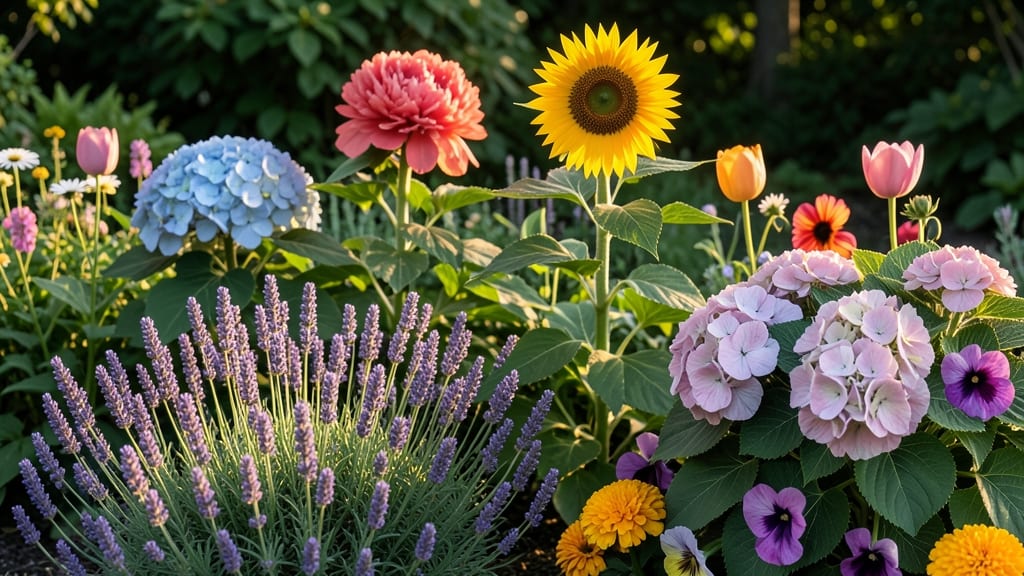
Using rich adjectives to describe a garden transforms a simple space into a living poem, evoking sights, scents, and emotions. Words like vibrant, aromatic, wildly overgrown, or tranquil help convey everything from the lushness of summer to the quiet beauty of frost-covered winter.
Adjectives breathe life into garden descriptions by highlighting what you see, smell, and feel.
For example, sun-drenched suggests warmth and brightness, while whimsical hints at playful, unexpected elements like toadstools or winding paths. 🌿 These words don’t just label—they create moods: serene gardens feel peaceful, fragrant ones invite you to linger, and wild ones spark adventure.
The right adjective turns a backyard into a story waiting to unfold.
Seasonal shifts change the palette of words you’d use. In spring, blossoming and dewy capture new growth, while autumn calls for golden and crisp to describe falling leaves. Even winter gardens deserve their moment with frost-kissed or hibernating to reflect their quiet elegance.
The key is matching the adjective to the garden’s personality and the time of year.
💡 In This Article
- How Seasonal Changes Inspire Garden Descriptions
- Best Adjectives for Different Garden Styles
How seasonal changes inspire garden descriptions
Seasonal shifts transform gardens into living canvases, and the right adjectives capture these transformations by focusing on visible traits like color, texture, and scent.
Spring gardens, for instance, burst with ethereal blooms thanks to their delicate petals and soft pastel hues—think of tulips or cherry blossoms that seem to glow against morning dew. The botanical science here is fascinating: new growth triggers increased chlorophyll production, making leaves appear verdant and almost luminous.
In contrast, autumn’s golden foliage results from chlorophyll breakdown, revealing hidden pigments like carotenoids that create fiery reds and oranges.
The climate’s role is equally critical. A frost-kissed winter garden, for example, relies on ice crystals forming on leaves or stems, creating a crystalline texture that reflects light like a natural chandelier.
This effect is most dramatic in temperate zones where freezing temperatures occur but aren’t extreme enough to kill plants entirely. Meanwhile, summer’s sun-drenched quality comes from prolonged exposure to UV light, which intensifies colors and dries out foliage to a crisp, almost papery texture—ideal for describing lavender or rosemary gardens.
The scent also shifts: spring’s fragrant air is dominated by fresh green notes, while summer brings heavy, sweet aromas from blooming jasmine or night-blooming cereus.
Understanding these seasonal cues helps you choose adjectives that resonate emotionally. A blossoming garden in spring feels alive and hopeful, while a wilted one in late summer evokes nostalgia or even melancholy.
The key is to match the adjective to the garden’s current state: lush for a thriving summer space, barren for a dormant winter plot, or wildly overgrown for a neglected corner that’s reclaiming its natural beauty. These words don’t just describe—they transport readers to the scene.
Consider the sensory details that make each season unique. Spring’s dewy quality comes from morning condensation on leaves, while autumn’s crisp air is created by cooler temperatures and dry foliage.
Even the sounds change: summer’s humming garden buzzes with bees, while winter’s silent one is punctuated only by the occasional rustle of dry leaves. These nuances allow you to paint a fuller picture—one that engages all five senses, not just sight. 🌸
For practical application, think about how light affects your garden’s appearance. A shadow-dappled garden in late afternoon, for example, uses light and shade to create intricate patterns on the ground, while a sunlit one at noon feels bold and vibrant.
The angle of sunlight changes throughout the year, altering how colors appear: blues and purples look richer in morning light, while yellows and oranges pop in the afternoon.
This is why a glowing garden in summer might describe the way sunlight reflects off hydrangeas, while a dim one in winter captures the muted tones of evergreens under a cloudy sky.
Seasonal adjectives also reflect the garden’s lifecycle. A renewed spring garden suggests rebirth, while a dying-back autumn one acknowledges the natural cycle. Even the soil tells a story: rich and dark in spring after winter rains, dry and cracked in summer, or frozen in winter.
These details ground your descriptions in reality, making them feel authentic and immersive. The more specific you get, the more vivid the image becomes in the reader’s mind.
Finally, remember that climate plays a role in word choice beyond just seasons. Coastal gardens might be described as salty or wind-swept, while desert gardens lean toward arid or sun-scorched.
Even microclimates within a single yard can inspire different adjectives—a shady corner feels cooler and more mossy, while a sunbaked patch might be parched. These distinctions help you tailor your descriptions to the unique character of your garden. 🌿