
Tools
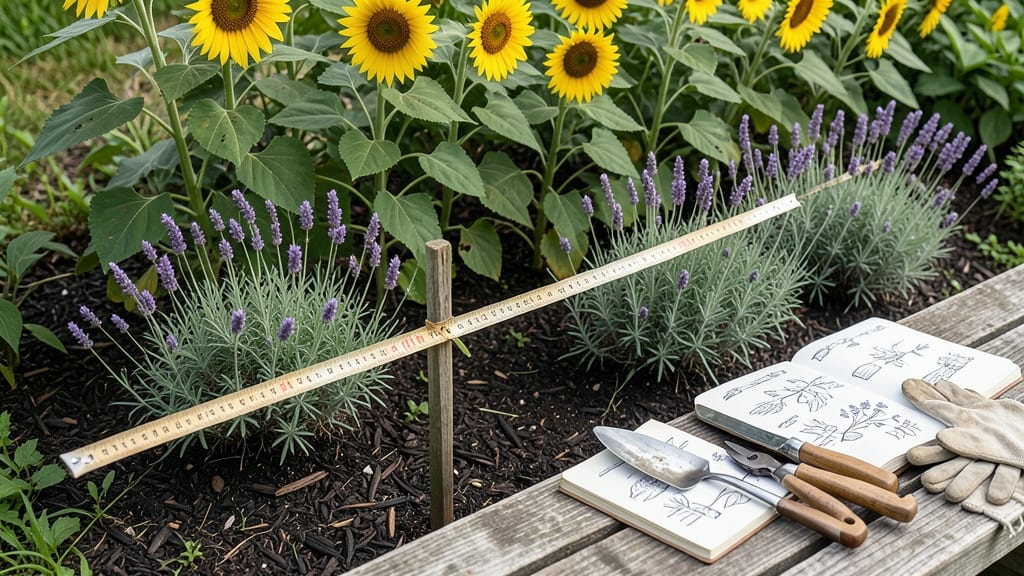
Figuring out the size of a garden requires measuring in square feet (length × width) for planting areas or linear feet (perimeter) for fencing and borders. Square footage determines how much space you have for plants, while linear footage helps you calculate materials for edges and barriers.
Understanding your garden's dimensions is the foundation of smart planning. Square footage helps you visualize planting layouts—like how many tomato plants fit in a 100-square-foot raised bed—while linear measurements ensure you buy the right length of fencing or mulch.
For example, a rectangular 10ft × 12ft garden has 120 sq ft of planting space but a 44ft perimeter for edging. This distinction becomes especially important when mixing pathways, flower beds, and vegetable plots.
Pro tip: Always sketch your design first. This visual step reveals how different areas interact—like how a 4ft-wide pathway reduces usable planting space. The key is balancing aesthetics with practicality, so you don't end up with awkward gaps or material shortages. 🌱
💡 In This Article
- Square Foot vs Linear Footage: Key Differences for Garden Layouts
- Calculating Garden Size for Plant Spacing and Material Needs
Square foot vs linear footage: key differences for garden layouts
Square footage measures the total area of your garden—think of it as the "floor space" where plants grow. This is calculated by multiplying length × width (e.g., a 10ft × 12ft garden = 120 sq ft).
This metric is crucial for determining how many plants you can fit, as most plants require specific spacing for healthy growth. For example, a tomato plant needs about 18 sq ft, while a carrot patch thrives in 1 sq ft.
Square footage also helps you calculate soil volume, compost needs, and irrigation coverage.
Linear footage, on the other hand, measures the perimeter—the total length of edges, pathways, or fencing. For the same 10ft × 12ft garden, the perimeter is 44ft (2 × (10ft + 12ft)). This measurement is essential for buying materials like mulch, edging stones, or fencing.
Imagine needing 44ft of landscape fabric to line the border or 44ft of wooden fence panels to enclose the area. Linear footage also helps plan pathways or borders that separate different garden sections, ensuring your design flows smoothly.
The key difference lies in their purpose: square footage answers "how much space do I have for plants?" while linear footage answers "how much material do I need for borders?"
For instance, a circular raised bed with a 6ft diameter has 28 sq ft of planting area but only 18.8ft of perimeter. This distinction becomes especially important when mixing shapes—like combining rectangular beds with curved pathways. 🌿
Converting between the two requires understanding geometry. For a rectangle, the perimeter formula is 2 × (length + width), while area is always length × width. For circles, use π × radius² for area and 2 × π × radius for circumference.
These formulas help you visualize how changes in shape affect both planting space and material needs. For example, doubling the length of a rectangular bed increases both its square footage and perimeter—but not proportionally.
Practical applications reveal why this matters. A 100 sq ft garden might sound spacious, but if it's a narrow 5ft × 20ft strip, its 50ft perimeter means you'll need significantly more edging material than a 10ft × 10ft square with the same area.
This is why gardeners often prioritize square shapes—they maximize planting space while minimizing perimeter materials. The trade-off between area and edge length becomes a critical design consideration.
Consider this real-world example: A 20ft × 20ft square garden has 400 sq ft of planting space and 80ft of perimeter. If you rearrange it into a 10ft × 40ft rectangle, the area stays the same (400 sq ft), but the perimeter jumps to 100ft.
This 25% increase in linear footage means you'd need 20ft more fencing—a significant difference when buying materials. This geometric principle explains why many gardeners prefer compact, square layouts for efficiency.
Here's a pro tip: When planning, always calculate both measurements. Sketch your garden layout to visualize how changes in shape affect both planting space and material needs. Use graph paper where each square represents 1ft to scale, marking dimensions clearly.
This visual approach helps you balance aesthetics with practicality, ensuring your garden design works as beautifully as it functions. 🌱