
Picking
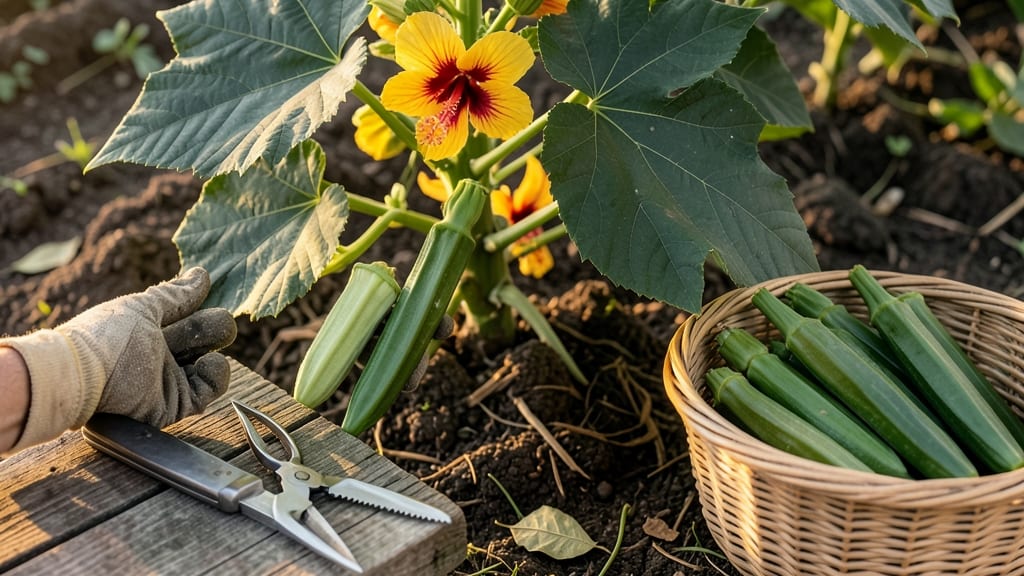
To pick okra from the garden at the perfect moment means crisp, tender pods bursting with flavor—not the tough, woody stalks that turn your harvest into a culinary disappointment.
Harvesting okra at the right moment transforms your garden from ordinary to extraordinary—crisp, tender pods packed with flavor instead of tough, fibrous stalks. But timing is everything, and missing the window by even a day can turn your harvest into a culinary misstep.
Most gardeners wait until pods reach 2-3 inches long, but the real secret lies in color, texture, and even the time of day you check. A deep green, glossy pod that snaps easily when bent is your golden ticket to peak taste and a plant that keeps producing.
Below, I’ll break down the exact visual cues to watch for, how to avoid common mistakes like waiting too long, and why picking regularly keeps your okra plant producing like a machine all season long.

Optimal okra pod size & color for harvesting: a visual guide
Harvesting okra at the perfect moment ensures you enjoy its crisp texture and mild flavor. The key lies in paying attention to pod length, diameter, and color—three telltale signs that reveal when your okra is ready to pick.
Overlooking these cues can lead to tough, fibrous pods that lack the tender quality gardeners love. Let’s break down the exact measurements and color indicators to help you time your harvest like a pro.
For most okra varieties, the ideal pod length ranges between 2 to 3 inches. This size ensures the pods are tender and packed with flavor. If you wait too long, the pods can grow up to 6 inches or more, becoming tough and seedy.
The diameter should be around ½ to ¾ inch—thinner than a standard pencil but thicker than a straw. These dimensions are your golden ticket to peak tenderness and best taste.
Color plays a crucial role in determining ripeness. Green okra is the most common variety, and the pods should be a vibrant, deep green hue. If the color starts to fade to a dull green or yellowish tone, it’s a sign the okra is overripe.
Some varieties, like purple okra, will turn a rich deep purple when fully ripe, while red okra varieties will develop a bright red color. Always harvest when the color is at its most vivid.
Don’t rely solely on size—always give your okra pods a gentle squeeze. A ripe pod should feel firm yet slightly tender, almost like a ripe cucumber. If it feels hard or woody, it’s past its prime.
Another trick is to bend the pod slightly—it should snap easily. If it resists, it’s not ready yet. These simple tests will help you avoid the disappointment of overripe okra.
Regional variations can slightly alter the ideal harvest time. In warmer climates, like the Deep South, okra may mature faster due to longer growing seasons. Conversely, in cooler regions, like the Pacific Northwest, pods might take a bit longer to reach the perfect size.
Always adjust your expectations based on your local climate, but stick to the 2–3 inch rule as your baseline. Consistency is key to a continuous harvest.
If you’re growing heirloom or specialty varieties, check the seed packet for specific guidelines. Some varieties, like Clemson Spineless or Emerald, are bred for specific pod characteristics.
For example, Clemson Spineless okra tends to produce pods that stay tender slightly longer, giving you a 1–2 day window to harvest after reaching 3 inches. Always tailor your approach to the variety you’re growing.
Harvesting okra regularly encourages your plants to produce more pods. When you pick a pod, the plant recognizes it as a signal to focus energy on new growth. Aim to harvest every 2–3 days during peak production to keep your plants productive and healthy.
This frequent picking also prevents the pods from growing too large, ensuring you always have a supply of tender, flavorful okra.
One common mistake is waiting until the pods are fully grown before harvesting. By then, the pods are often too tough and seedy, making them less enjoyable to eat. Instead, think of okra like zucchini or green beans—harvest them small and often for the best results.
The more you pick, the more your okra plants will reward you with a bountiful harvest throughout the season.
Store your freshly picked okra in the fridge for up to 5 days to maintain its freshness. For longer storage, you can blanch and freeze the pods, which preserves their texture and flavor. But nothing beats the taste of okra picked straight from the garden at its peak ripeness.
With these size and color guidelines, you’ll be well on your way to enjoying the best okra your garden has to offer.
How to check okra readiness without guessing: 5 pro tips
Okra pods mature quickly, and waiting too long turns crisp, tender harvests into tough, fibrous stalks. Beyond measuring pod length, there are subtle cues that reveal the perfect moment to pick.
I’ve learned these tricks through years of gardening—trust me, your taste buds will thank you for paying attention to details most gardeners miss.
First, touch tests are your secret weapon. Gently press a pod between your fingers—if it yields slightly but still feels firm, it’s ready. Overripe pods will feel spongy or hollow inside.
This simple test works for green okra varieties like 'Clemson Spineless' and 'Emerald,' though purple or red types may need a slightly firmer touch.
Next, check for visible seed development. When okra pods are ready, you’ll see tiny seeds forming along the inner ridges. If the seeds are already developed or the pod feels woody, you’ve missed the window.
This is especially critical for heirloom varieties like 'Red Burgundy' or 'Perennial Okra,' which develop seeds faster than standard green types.
For consistent harvests, adopt a daily monitoring routine. Okra plants produce pods rapidly, so checking every 2-3 days ensures you catch them at their peak.
I harvest mine in the morning when pods are cool and crisp—this also deters pests like aphids, which are less active early in the day. Pro tip: Use a small pruning shear to snip pods cleanly without damaging the plant.
Don’t overlook color consistency as a final check. Ready-to-harvest okra should be a deep, vibrant green (or the specific hue of your variety). Dull or mottled pods are a red flag—they’re past their prime.
This is especially important for heirloom varieties like 'Red Rambler,' where color changes dramatically as pods mature.
Lastly, adjust your approach based on okra variety. Dwarf varieties like 'Burgundy' mature faster and may need harvesting every 1-2 days, while taller types like 'Star of David' can stretch the window to 3 days.
Always refer to your seed packet for variety-specific guidance—it’s the difference between a bountiful harvest and a missed opportunity.