
Light Requirements
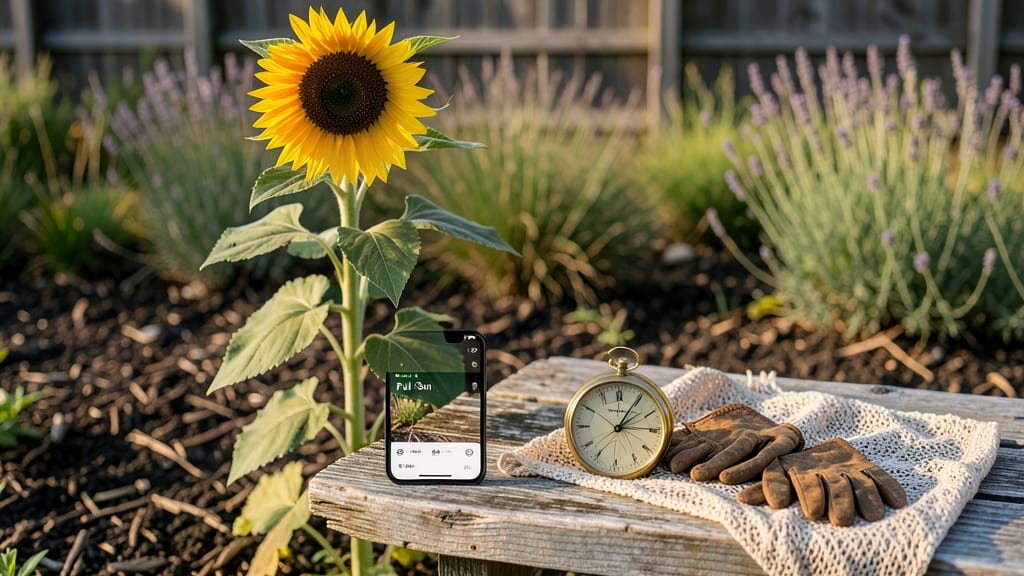
To determine full sun in gardening, aim for 6 to 8 hours of direct sunlight daily, though specific plants may need slight adjustments. Some varieties thrive with just 5+ hours, while others demand 8+ for optimal growth. Your garden's location and seasonal shifts also play key roles.
Understanding full sun requirements starts with recognizing that sunlight isn't one-size-fits-all. 🌞 The 6-8 hour guideline serves as a baseline, but factors like plant maturity and climate create variations. For example, desert plants often need more intense light than those in humid regions.
I've noticed that even within the same species, younger plants typically require slightly more sunlight than established ones to develop strong root systems.
What's often overlooked is how sunlight quality changes with the seasons. During summer solstice, those 8 hours might feel intense, while winter's shorter days can stretch sunlight's impact.
That's why I recommend tracking your garden's sunlight patterns for at least a month before making final planting decisions—this helps account for local microclimates and unexpected shade shifts.
💡 In This Article
- The Science Behind Sunlight Requirements for Plants
- Plant-Specific Full Sun Guidelines by Category
The science behind sunlight requirements for plants
Sunlight drives photosynthesis—the process where plants convert light energy into chemical energy to fuel growth. The 6-8 hour full sun guideline comes from optimal photosynthesis rates, where plants receive enough light to maximize chlorophyll production while avoiding photoinhibition (light damage).
The visible light spectrum (400-700nm) is most critical, with blue light (400-500nm) promoting leaf growth and red light (600-700nm) driving flowering. 🌱 For example, tomatoes absorb blue light efficiently to develop dense foliage, while marigolds rely on red light for vibrant blooms.
Intensity matters just as much as duration. A plant receiving 8 hours of bright midday sun gets more energy than one getting 8 hours of diffused morning light.
Sunlight intensity peaks between 10 AM and 4 PM, when UVB rays (280-315nm) help produce vitamin D in plants and stimulate protective compounds.
Coastal gardens often get more intense light due to reflection from water, while high-altitude gardens receive 10-15% more UV radiation than sea level—both factors that can push sun requirements slightly higher.
Shade affects plant physiology dramatically. In low-light conditions, plants develop thinner leaves with less chlorophyll to conserve energy, a process called etiolation. This is why shade-loving plants like ferns have delicate, broad leaves designed to capture scattered light.
Conversely, sun-loving plants like lavender produce thick, waxy leaves to prevent water loss under intense radiation. The trade-off? Too much direct sun can cause leaf scorch in sensitive varieties, where cell membranes rupture from excess energy.
Seasonal variations create another layer of complexity. During summer solstice, a 6-hour sun exposure might actually deliver more energy than 8 hours in winter due to lower sun angles.
I've observed that desert plants often need 10+ hours of summer sun to compensate for cooler nights, while tropical plants may struggle with extended exposure. This is why gardeners in temperate zones often adjust planting schedules—spring seedlings might need partial shade until they establish strong root systems.
Temperature plays a hidden role in sunlight effectiveness. Warmth increases photosynthesis rates up to a point (ideal range: 68-86°F), but excessive heat can cause photorespiration—a process where plants waste energy breaking down sugars instead of storing them.
That's why some sun-loving plants (like okra) thrive in hot climates—they've evolved to handle this trade-off better than others. 🌡️ The key is matching plant origins to your microclimate's light intensity and temperature patterns.
Consider these light spectrum effects when planning your garden:
- Blue light (400-500nm): Promotes compact growth, ideal for leafy greens like kale
- Red light (600-700nm): Stimulates flowering in tomatoes and peppers
- Far-red light (700-800nm): Encourages seed germination in many plants
- UV radiation (280-400nm): Triggers protective compounds in herbs like basil