
Watering
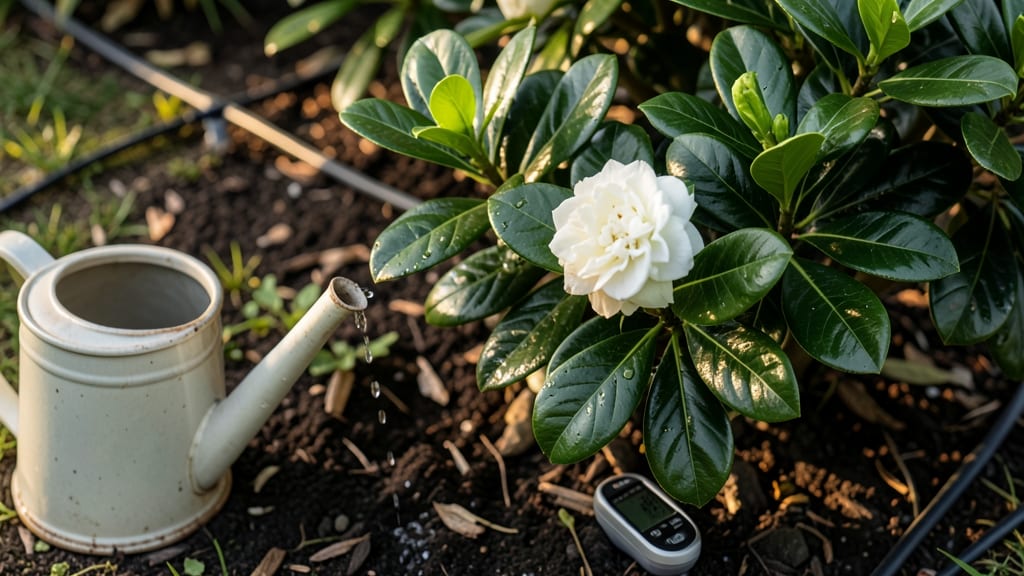
Gardenias need consistent moisture to thrive, with 1 to 1.5 inches of water per week during their active growing season—more in containers or hot climates.
Struggling to keep your gardenia blooms vibrant and fragrant? The secret often lies in mastering their watering needs—too much or too little can wilt your plant before it even reaches peak season.
These tropical beauties 🌸 hate dry soil, but soggy roots are just as deadly. The key is deep, infrequent watering that keeps the soil evenly damp without drowning the roots, especially in USDA Zone 6a where summers can be brutal.
Below, I’ll break down exactly how often to water by season, how to spot over- or under-watering, and pro tips to keep your gardenia lush without guesswork.


Gardenia watering schedule by season: exact weekly requirements
Mastering your gardenia's watering schedule is the key to those lush, fragrant blooms you dream of. These tropical beauties thrive on consistency but hate soggy roots or drought stress. The seasonal shift in temperature and humidity means your watering routine should adapt monthly—not just weekly.
Gardenias need 1-1.5 inches of water per week during active growth, but this changes dramatically between summer's heat and winter's chill. Overwatering causes root rot, while underwatering leads to droopy leaves and missed blooms. Let's break down the exact watering frequency for each season.
In spring, your gardenia wakes up from dormancy and needs frequent watering to support new growth. Water deeply every 2-3 days, ensuring the top 1-2 inches of soil dry out between sessions. This is when you'll see those buds forming, so don't skimp!
Summer is the most critical time for watering consistency. With high temperatures and low humidity, gardenias may need watering daily or every other day.
Always check the soil—if the top 1 inch feels dry, it's time to water. Morning watering is best to prevent fungal diseases from evening moisture.
As fall arrives, you can ease up slightly. Water every 3-4 days when the top 2 inches of soil dry out. This helps your gardenia prepare for winter dormancy without stress. Reduce fertilizer applications too, as new growth slows down.
Winter care is all about minimal watering. Gardenias enter dormancy, so water bi-weekly or only when the top 3 inches of soil are dry. Overwatering in winter can lead to root rot in cold, wet soil.
If you're in a warmer climate, you might need to water slightly more often.
Pro tip: Use your finger to check soil moisture before watering. Stick it into the soil—if it feels dry up to your first knuckle, it's time. Also, consider mulching with organic matter like pine bark to retain moisture and regulate soil temperature.
Container gardenias need more frequent watering than those in the ground because pots dry out faster. In summer, you might water container gardenias daily, while in-ground plants can go every other day. Always ensure your containers have drainage holes to prevent waterlogging.
Remember, humidity levels play a huge role. If you live in a dry climate, you may need to increase watering frequency. Conversely, in high-humidity areas, you can space out waterings slightly. Adjust based on your local conditions and your gardenia's response.
With this seasonal watering schedule, your gardenia will reward you with glossy leaves and abundant blooms all season. Pay attention to your plant's cues—it'll tell you when it's thirsty or getting too much love! 🌸
Signs your gardenia is overwatered or underwatered (and how to fix it)
Gardenia plants are finicky about water—too much or too little can spell disaster for those glossy leaves and fragrant blooms. The key is learning to read your plant's signals. Yellowing leaves or mushy stems often mean you're drowning your gardenia, while crispy edges or drooping foliage scream for hydration.
Let's decode these clues so you can keep your gardenia thriving.
Start by checking the soil moisture with your finger. Stick it about 1-2 inches deep—if it feels damp, hold off on watering. Gardenias prefer consistently moist (not soggy) soil, especially during their blooming season.
Overwatering is the #1 killer, often leading to root rot and fungal issues. But underwatering? That's just as bad, causing stress that stunts growth and blooms.
💧 How Much Water Do Gardenias Need?
Gardenias need 1-1.5 inches of water weekly during growing season (spring-fall). In containers, water every 1-2 days—check soil daily. In ground, water every 3-4 days. Always water at soil level, not leaves, to prevent fungal diseases.
One of the first visual signs of overwatering is yellowing leaves that start at the bottom of the plant. These leaves may also feel soft or mushy to the touch, a clear sign of root rot setting in.
If you notice white mold or black spots on the soil surface, your gardenia is definitely getting too much love. The fix? Let the soil dry out completely between waterings and improve drainage by adding perlite or sand to potting mix.
Underwatered gardenias show stress in different ways. Look for crispy brown edges on leaves or wilted foliage that doesn't perk up after watering. The leaves may also curl inward or develop a dull, papery texture.
If you see these signs, it's time to give your gardenia a deep soak. Water until you see it draining from the bottom of the pot or the soil is saturated 6 inches deep for in-ground plants.
Don't forget to check the root health if your gardenia seems off. Gently dig around the base (be careful not to damage roots) and look for dark, mushy roots (overwatered) or dry, brittle roots (underwatered).
Healthy roots should be firm and white. If roots are compromised, trim the bad ones with sterilized scissors and repot in fresh, well-draining soil. This often saves an overwatered plant.
For both issues, adjust your watering routine immediately. Use a moisture meter or your finger to check soil before watering—top 2 inches should be slightly dry. In containers, ensure pots have drainage holes and use a mix designed for acid-loving plants.
Mulch around the base with pine bark or wood chips to retain moisture and regulate soil temperature.
Remember, gardenias are tropical plants that crave consistency. They'll forgive occasional slips, but chronic over- or underwatering will stunt their growth and reduce blooms. With these signs in mind, you'll keep your gardenia's leaves glossy, its stems firm, and its blooms fragrant all season long. 🌸