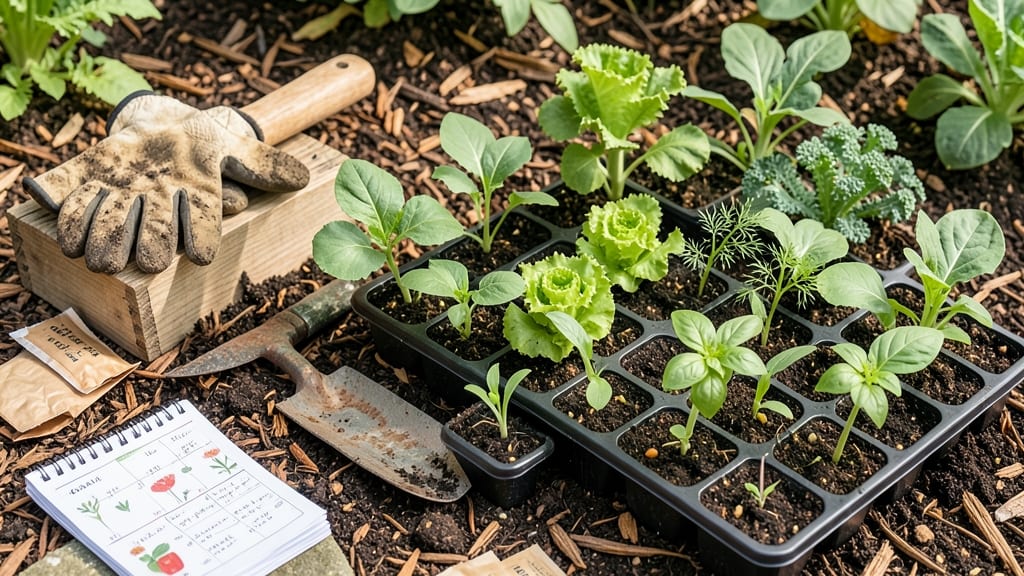
A vegetable garden planting schedule keeps your harvests coming all season long—whether you're in Zone 6 or farther north or south.
Struggling to keep your vegetable garden productive year-round? A well-planned planting schedule tailored to your hardiness zone ensures continuous harvests without wasted effort or space.
Think about it: March might be prime time for cool-season crops like lettuce and peas, while August is when tomatoes and peppers finally get their turn in the sun. Without a schedule, you risk planting too early, too late, or missing out on succession planting that extends your harvests.
Below, I break down the exact planting windows for your zone, including when to start seeds indoors, transplant seedlings, and stagger crops for nonstop fresh produce. Ready to transform your garden into a year-round feast?
Best Time to Plant in General
March - May (spring) and August - September (fall)
Plant cool-season crops 4-6 weeks before last frost; warm-season crops 2-3 weeks after last frost.
Zone-by-zone vegetable planting schedule for maximum yields
A well-structured vegetable garden planting schedule ensures you maximize your harvests by aligning plantings with your USDA hardiness zone. Each zone has unique last frost dates and growing seasons, so timing is everything.
Below, I’ve broken down the ideal planting windows for 20+ common vegetables across zones 3 through 10, including succession planting tips to keep your garden productive all season.
For example, cool-season crops like lettuce and peas thrive in early spring or fall, while warm-season crops such as tomatoes and peppers need to wait until soil temperatures rise.
Missing these windows can lead to stunted growth or poor yields. Let’s dive into the specifics for your zone to plan your garden like a pro.
| Vegetable |
USDA Zones 3-4 |
USDA Zones 5-6 |
USDA Zones 7-8 |
USDA Zones 9-10 |
| Lettuce |
March-April, Aug-Sept |
Feb-April, July-Sept |
Jan-April, July-Oct |
Oct-Feb, July-Nov |
| Tomatoes |
May-June (after frost) |
April-May (after frost) |
March-April (after frost) |
Feb-April (year-round in 10) |
| Peppers |
May-June (after frost) |
April-May (after frost) |
March-April (after frost) |
Feb-April (year-round in 10) |
| Green Beans |
May-June |
April-May |
March-April |
Feb-April, Sept-Oct |
| Carrots |
March-April, Aug-Sept |
Feb-April, July-Sept |
Jan-April, July-Oct |
Oct-Feb, July-Nov |
| Cucumbers |
May-June (after frost) |
April-May (after frost) |
March-April (after frost) |
Feb-April (year-round in 10) |
| Spinach |
March-April, Aug-Sept |
Feb-April, July-Sept |
Jan-April, July-Oct |
Oct-Feb, July-Nov |
| Broccoli |
March-April, Aug-Sept |
Feb-April, July-Sept |
Jan-April, July-Oct |
Oct-Feb, July-Nov |
| Squash |
May-June (after frost) |
How to create a year-round succession planting plan
A year-round succession planting plan keeps your garden productive without gaps. The key is staggering plantings so that as one crop finishes, another is ready to harvest. This method maximizes space and reduces waste by ensuring continuous yields of fresh vegetables from spring through fall—and even winter in mild climates.
Start by identifying your hardiness zone and last/first frost dates. These determine when to plant cool-season crops like spinach and kale (4-6 weeks before last frost) versus warm-season crops like tomatoes and peppers (2-3 weeks after last frost).
For example, in Zone 6, you might plant lettuce in early spring and again in late summer for a fall harvest.
Use this succession planting timeline to guide your schedule, adjusting for your specific zone and microclimate. The goal is to create a continuous harvest cycle with minimal downtime.
1
Plan in 3-week intervals
Stagger plantings every 3 weeks for crops like lettuce or radishes. This ensures a steady supply without overwhelming your space.
2
Use crop rotation
Rotate crop families (e.g., tomatoes after peppers) to prevent soil depletion and disease buildup. Keep a simple map to track rotations yearly.
3
Pair with companion plants
Plant basil near tomatoes to repel pests, or carrots with onions to deter carrot flies. Companion planting saves space and boosts yields.
4
Save space with vertical gardening
Use trellises for pole beans or cucumbers to free up ground space for other crops. This is ideal for small gardens or urban containers.
5
Extend seasons with row covers
Use floating row covers to protect spinach or kale from early frosts in fall or late frosts in spring, adding 2-4 weeks to your growing season.
For small gardens, focus on fast-growing crops like radishes (30 days) or bush beans (50 days) to maximize turnover. Pair them with slower growers like broccoli (60-90 days) or cabbage (80-100 days) to balance your harvest timeline. Always prioritize quick harvesters for succession planting.
Keep a gardening journal to track what works in your space. Note which crops thrive in your microclimate, which pests are persistent, and which companion pairings succeed. Adjust your plan yearly based on these observations to refine your year-round strategy.
With a little planning, your garden can provide fresh produce every month, reducing grocery bills and increasing self-sufficiency. Start small, experiment with a few crops, and gradually expand your succession planting plan as you gain confidence! 🌱
★★★★★4.7(2 reviews)