
Vegetables
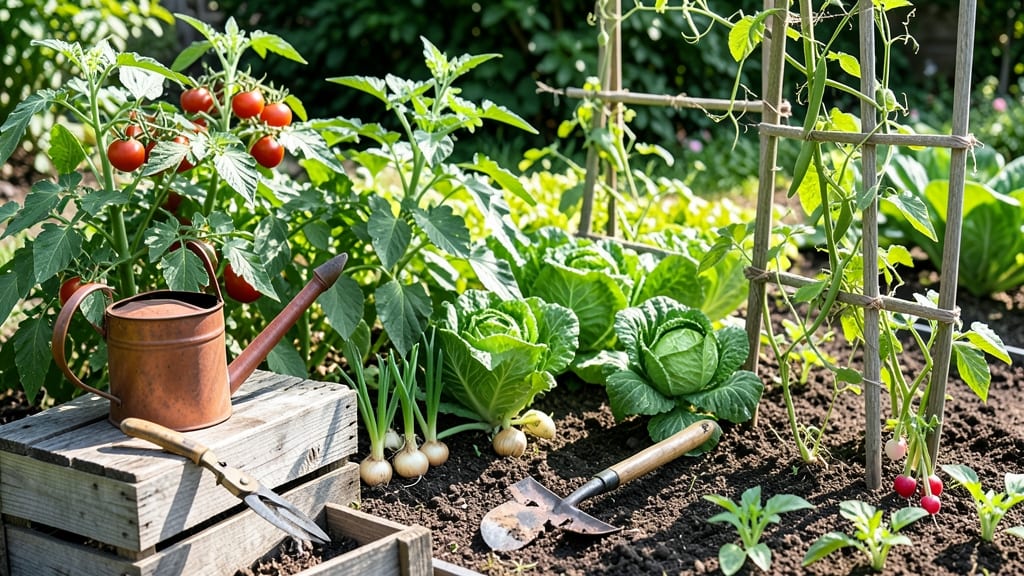
War gardens during WW1 played a crucial role as emergency food sources, with governments encouraging civilians to cultivate vegetables, herbs, and fruits in urban spaces to offset severe rationing and supply chain disruptions.
These community-driven gardens emerged as a direct response to wartime food shortages, with nations like Britain and France launching organized campaigns to distribute seeds and gardening tools. 🌱 The focus was on hardy, high-yield crops like potatoes, cabbage, and carrots that could thrive in small spaces, often using innovative techniques like trench gardening in urban areas.
What's fascinating is how these gardens weren't just about food production—they became symbols of national resilience, with women and children playing key roles in maintaining food security during the conflict.
What's particularly interesting is how these gardens operated under extreme constraints. Many families grew food in backyards, vacant lots, or even rooftops, using whatever space they had available. The British government even published gardening guides specifically for wartime conditions, teaching people how to maximize yields with minimal resources.
This approach wasn't just practical—it was revolutionary in how it demonstrated that food security could be achieved through collective community effort rather than relying solely on industrial agriculture.
💡 In This Article
- How WW1 War Gardens Boosted Food Production
- Planning Your Own Victory Garden for Modern Times
How WW1 war gardens boosted food production
War gardens during World War I weren't just patches of dirt—they were carefully engineered food production systems designed to overcome severe shortages. Governments like Britain's launched the "National War Garden Scheme" in 1917, distributing over 1.5 million packets of seeds to civilians within weeks.
These weren't random plantings; botanists selected crops that thrived in poor soil, required minimal water, and produced high yields per square foot. Potatoes, for example, delivered 3-4 times more calories per acre than wheat, making them a staple choice.
The real innovation lay in space utilization. Urban dwellers transformed balconies, window boxes, and even rooftops into productive gardens using techniques like trench gardening—digging narrow, deep furrows that preserved moisture and allowed root crops to grow vertically.
In London alone, over 1.3 million gardens produced enough food to feed 400,000 people daily by 1918. The British government even established "Dig for Victory" campaigns with posters featuring Lord Kitchener (the same figure from WWI recruitment posters) pointing at viewers with the slogan "Grow Your Own."
Labor mobilization was another critical factor. Women and children, who often couldn't work in factories or on the front lines, became the primary gardeners. Schools incorporated gardening into curricula, teaching children about plant biology while they cultivated radishes and lettuce that went straight to family tables.
The psychological impact was profound—gardening provided a tangible way to contribute to the war effort, boosting morale during food rationing that sometimes left families with as little as 1 pound of meat per week.
Crop rotation and companion planting techniques, though not as scientifically advanced as today's methods, were still employed. For instance, planting carrots between rows of onions deterred pests while improving soil structure. The gardens also prioritized perennial herbs like rosemary and thyme, which required less maintenance than annual vegetables.
These herbs weren't just for flavor—they contained antimicrobial properties that helped preserve other garden produce during the frequent blackouts when refrigeration was unreliable.
What's often overlooked is how these gardens integrated with broader food distribution systems. Local councils established "Victory Market" cooperatives where gardeners could trade surplus produce for other essentials. In some cases, gardens produced up to 30% of a household's vegetable needs, significantly reducing reliance on rationed supplies.
The success of these gardens demonstrated that food security could be achieved through decentralized, community-based agriculture—a principle that still influences modern urban farming movements today.
Perhaps most remarkably, these gardens operated with minimal chemical inputs. Compost was made from household scraps and animal manure, while natural pest controls like wood ash sprinkled around plants deterred insects.
The entire system proved that high-yield agriculture could exist without industrial fertilizers or pesticides—a lesson that resonates particularly today as we reconsider sustainable farming practices.