
Light Requirements
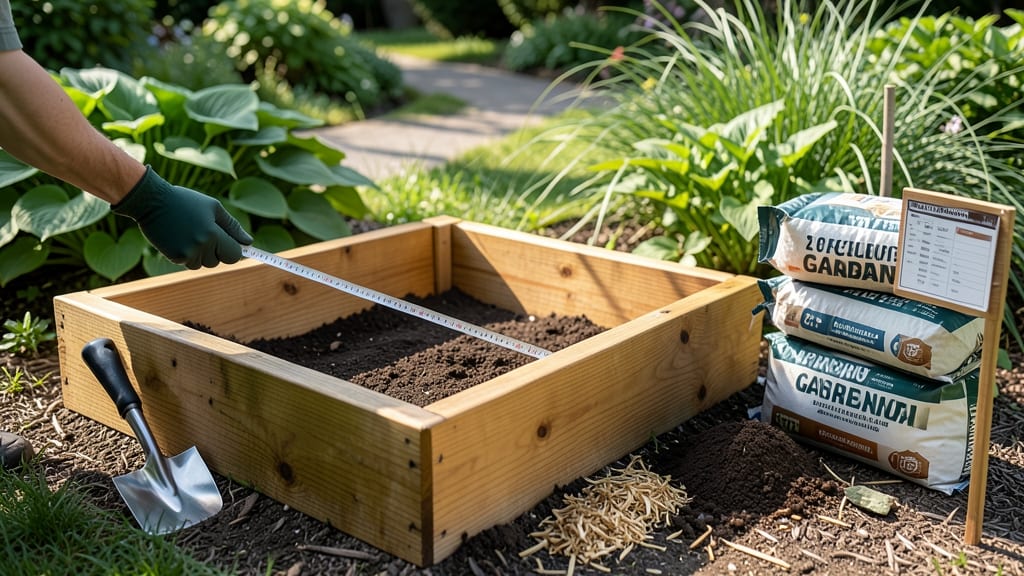
An 8x4x2 raised garden bed needs 64 cubic feet of soil, calculated by multiplying its 8-foot length by 4-foot width and 2-foot depth. Always add 10-20% extra to account for soil settling over time.
Understanding this volume helps avoid costly mistakes. A full 8x4x2 bed holds nearly 2 cubic yards of soil—enough to fill a small pickup truck.
I recommend buying 1.5 cubic yards total to ensure you have enough after accounting for settling, which can reduce usable space by up to 20% within the first growing season. 🌱 For example, a 4x8x1 bed would need only 32 cubic feet, but the same math applies.
This calculation also explains why deeper beds (like 24 inches) support larger root systems—giving plants room to thrive without competition. The extra depth improves drainage and moisture retention, which is especially helpful in hot climates or for drought-tolerant crops.
💡 In This Article
- Calculating Soil Volume for Different Raised Garden Bed Dimensions
- Best Soil Mixes for 8x4x2 Raised Beds to Maximize Plant Health
Calculating soil volume for different raised garden bed dimensions
The soil volume for your raised bed is determined by multiplying its three dimensions: length × width × depth. For an 8x4x2 bed, that’s 8 ft × 4 ft × 2 ft = 64 cubic feet.
This formula works for any rectangular bed—whether you’re planning a 4x8x1 (32 cubic feet) or a 12x6x2 (144 cubic feet) setup. The key is precision: even a 1-inch error in depth can mean 3.3 cubic feet more or less soil needed!
Depth matters more than most gardeners realize. A 2-foot depth (standard for most raised beds) allows roots to spread comfortably, while shallower beds (1 foot) restrict growth for deep-rooted plants like tomatoes or carrots.
The extra depth also improves drainage and reduces heat stress on roots during summer months. For example, a 4x8x1 bed might work for lettuce or herbs, but the same bed at 2 feet depth can support tomatoes or peppers with stronger yields.
Soil settling is another critical factor. When you first fill your bed, the soil appears fluffy and loose, but over time—especially after watering and plant growth—it compacts by 10-20%. This means your 64 cubic feet of soil might shrink to 50-58 cubic feet after the first season.
To avoid running short, always purchase 10-20% more soil than your initial calculation. For an 8x4x2 bed, that’s roughly 70-77 cubic feet of soil to start.
Here’s how settling works in practice: Imagine filling your bed with 64 cubic feet of soil. After the first heavy rain or when you plant, the soil particles shift closer together, reducing air pockets. Organic matter (like compost) breaks down further, adding to the compaction.
This is why professional gardeners often recommend using a mix of 60% topsoil, 30% compost, and 10% perlite or vermiculite—the perlite helps maintain structure and reduce settling over time.
For visual clarity, think of your raised bed as a giant box. The volume formula (length × width × depth) is like measuring how many 1-foot cubes fit inside. If your bed were filled with 1-foot cubes of soil, you’d need 64 of them for an 8x4x2 setup.
However, real soil isn’t perfectly packed—it’s more like a loose pile of sand. That’s why you need extra to account for gaps and settling before everything compacts naturally.
Pro tip: If you’re using pre-mixed bags of soil, check the label for "cubic feet per bag." A typical 40-pound bag covers about 0.75 cubic feet.
For an 8x4x2 bed, you’d need roughly 85 bags to account for settling, but buying in bulk (like 1 cubic yard = 27 cubic feet) is often cheaper. Weighing your soil before and after filling the bed can also help you fine-tune future calculations.