
Vegetables
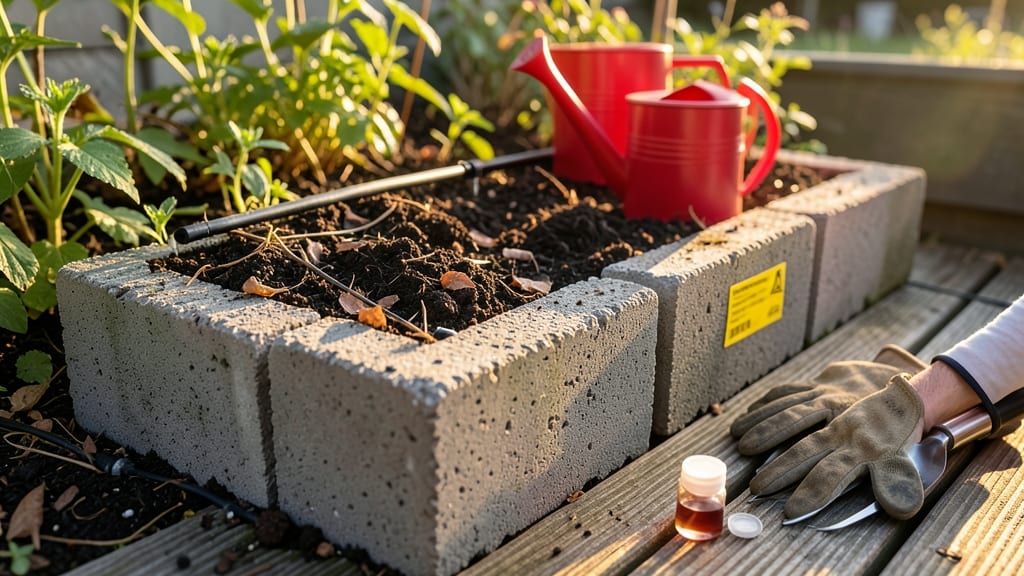
Cinder blocks are not safe for vegetable gardens because they leach alkaline minerals, raising soil pH and creating inhospitable conditions for most edible plants. Their porous structure also retains moisture unevenly, risking root rot or dehydration. Use only as temporary barriers if lined with landscape fabric and replaced with organic materials for planting beds.
Cinder blocks may seem like a sturdy, low-cost option for garden borders, but their chemical makeup poses serious risks to plant health.
The alkaline minerals they release can push soil pH into the 8.0+ range, which locks out essential nutrients like phosphorus and iron that vegetables need to thrive. 🌱 Many gardeners unknowingly create a hostile growing environment when they use cinder blocks directly in planting areas, even if the blocks themselves don't touch the soil.
For temporary solutions, consider using them as edging only with a thick barrier of landscape fabric between the blocks and planting soil.
Instead of cinder blocks, opt for untreated wood, bricks, or composite lumber that won't alter your soil chemistry. These materials maintain consistent moisture levels and allow for better root development.
If you're committed to using cinder blocks, you can mitigate some damage by amending the soil with compost or sulfur to counteract the pH shift—though this requires careful monitoring and isn't a permanent fix. The key is to prioritize materials that support, rather than compromise, your garden's long-term productivity.
💡 In This Article
- How Cinder Blocks Alter Soil Chemistry in Vegetable Gardens
- Safe Alternatives to Cinder Blocks for Raised Garden Beds
How cinder blocks alter soil chemistry in vegetable gardens
Cinder blocks release alkaline minerals like calcium carbonate and silica when exposed to moisture, which gradually raises soil pH beyond the ideal 6.0–7.0 range for most vegetables.
Studies show pH levels can spike to 8.0 or higher near the blocks, creating a basic environment where essential nutrients like phosphorus and iron become chemically unavailable to plants. 🌱 This nutrient lockout causes stunted growth, yellowing leaves, and poor fruit development—common signs gardeners mistake for general plant stress.
The porous nature of cinder blocks also contributes to uneven moisture distribution. Their rough, honeycombed surface absorbs water unevenly, creating dry pockets where roots struggle to access hydration while other areas become waterlogged.
This inconsistency forces plants to expend energy seeking moisture, leaving them vulnerable to diseases like root rot or wilting during dry spells. Unlike organic materials, cinder blocks don't decompose or integrate with soil, maintaining their chemical impact for years.
Vegetables like tomatoes, peppers, and leafy greens—all with ideal pH needs between 5.8–6.8—suffer most from cinder block exposure. The alkaline shift disrupts microbial activity in the soil, reducing beneficial bacteria and fungi that help break down organic matter.
Even with regular compost additions, the persistent mineral leaching from cinder blocks can overwhelm soil amendments, making it difficult to restore balance without complete soil replacement.
For gardeners who've already used cinder blocks, the damage isn't always irreversible. Testing soil pH with a home test kit can reveal the extent of the problem.
If levels exceed 7.5, amendments like elemental sulfur (applied at 1 pound per 100 square feet) or peat moss can help lower pH over time. However, these solutions require consistent monitoring and aren't a substitute for removing the blocks entirely when possible.
What makes this particularly insidious is how subtle the damage appears at first. Young seedlings may grow fine initially, but as they mature, the stress becomes visible through poor flowering or fruiting.
Unlike organic materials that break down and contribute to soil health, cinder blocks act as a silent disruptor, altering the very foundation of your garden's ecosystem without obvious warning signs until it's too late for the growing season.
Consider this real-world example: A home gardener using cinder blocks for raised bed borders noticed their tomato plants thriving in the first year, only to see a 40% reduction in yield the following season. Soil tests revealed pH levels at 8.2 near the blocks, despite regular compost applications.
The solution required removing the blocks and replacing them with untreated cedar planks, along with extensive soil amendment to restore balance.