
Vegetables
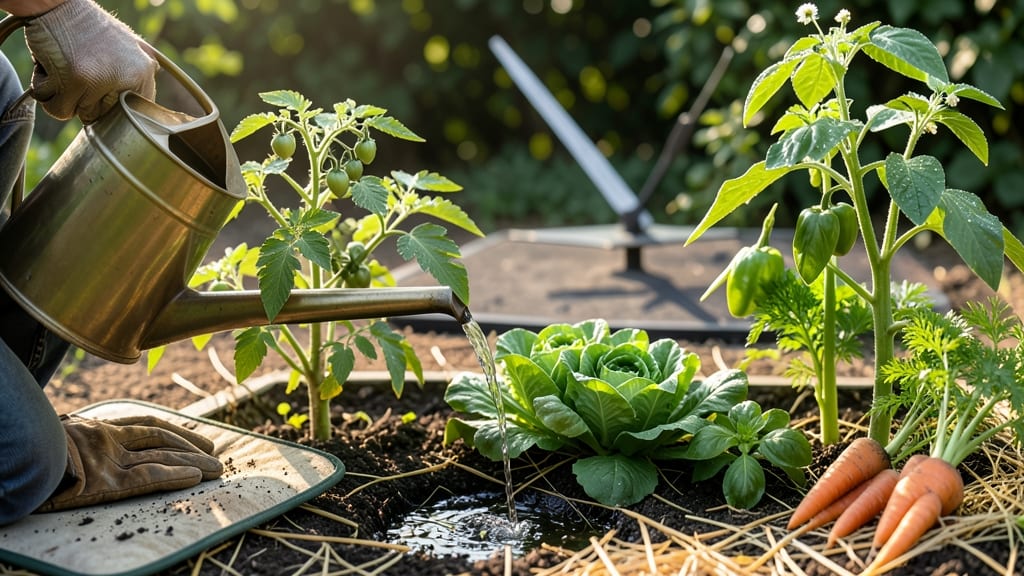
Watering your vegetable garden at the best time of day makes all the difference—morning watering cuts evaporation loss by up to 30% while evening sessions invite fungal diseases 🥬.
Picture this: You step outside at noon, hose in hand, only to watch the water vanish into thin air before it even reaches the roots. That’s why timing isn’t just about convenience—it’s about maximizing every drop for healthier plants and bigger harvests.
Most gardeners swear by early morning watering, but the truth is more nuanced. Hot climates? Evening might work. Cool, damp regions? Stick to sunrise. I’ll break down the science, share my 5-year trial-and-error lessons, and show you how to adjust for your local weather—no guesswork required.
By the end, you’ll know exactly when to water for stronger roots, fewer pests, and vegetables that taste fresher straight from the vine. Let’s dive in.


Morning watering vs. evening watering: which wins for plant growth?
Deciding whether to water your vegetable garden in the morning or evening isn’t just about convenience—it’s a science-backed choice that affects your plants' health, water efficiency, and even pest control.
Studies show that morning watering gives vegetables a head start for the day, while evening watering can leave foliage damp overnight, inviting fungal diseases like powdery mildew. Let’s break down the key differences so you can make the best choice for your garden.
The ideal watering time depends on your climate, but most gardeners agree that early morning (before 10 AM) is the gold standard. This timing allows water to soak into the soil gradually, reducing evaporation losses of up to 30% compared to midday watering.
Plus, plants have all day to dry out, minimizing fungal risks. However, evening watering isn’t always a disaster—it just requires adjustments for specific conditions.
| Factor | Morning Watering (6-9 AM) | Evening Watering (6-8 PM) |
|---|---|---|
| Evaporation Loss | Low (10-20%) | Moderate (20-30%) |
| Fungal Risk | Low (foliage dries quickly) | High (damp foliage overnight) |
| Water Efficiency | High (soil absorbs deeply) | Moderate (surface evaporation) |
| Root Growth | Optimal (encourages deep roots) | Slower (shallow moisture) |
| Pest Attraction | Low (less standing water) | High (mosquitoes, slugs) |
One of the biggest advantages of morning watering is how it promotes deep root growth. When you water in the early hours, the moisture penetrates the soil gradually, encouraging roots to extend deeper in search of water.
This is especially critical for root vegetables like carrots and potatoes, which need strong, deep roots to thrive. In contrast, evening watering often leads to shallow moisture retention, keeping roots near the surface where they’re more vulnerable to heat stress.
If you’re in a hot, dry climate, morning watering becomes even more critical. During the day, temperatures can soar, causing water to evaporate rapidly—sometimes up to 50% faster than in cooler mornings.
For example, in USDA Zone 9 or 10, where summer temps often exceed 90°F (32°C), watering in the evening can feel like throwing money away. The heat turns your water into vapor before it even reaches the roots.
That said, evening watering isn’t entirely off the table—it just requires strategic adjustments. If you must water in the evening, aim for 6-8 PM when temperatures have dropped, and avoid wetting the foliage. Use drip irrigation or soaker hoses to deliver water directly to the soil, reducing fungal risks.
This method is particularly useful for container gardens or potted herbs, where water evaporates quickly regardless of timing.
Another factor to consider is your local humidity levels. In humid climates, evening watering increases the risk of fungal diseases like blight or rust, which thrive in damp conditions.
For instance, if you’re in the Southeast U.S., where humidity often hovers above 70%, morning watering is a non-negotiable for healthy tomatoes and peppers. These plants are particularly susceptible to fungal infections when their leaves stay wet overnight.
For leafy greens like lettuce or spinach, timing matters less because they have shorter growing cycles and tolerate more moisture. However, even these plants benefit from morning watering, as it reduces the risk of leaf spot diseases.
A quick test: Check your garden after watering. If the leaves are still damp by sunset, you’re increasing your risk of fungal issues. The goal is to give plants enough time to dry out completely before nightfall.
Pro tip: If you’re short on time in the mornings, consider setting up a smart irrigation timer or a simple hose timer to automate watering between 6-8 AM. Many gardeners swear by these tools to maintain consistency without the daily hassle.
Even a 10-minute watering session in the morning can make a world of difference compared to a 20-minute evening session that barely penetrates the soil.
Ultimately, the best time to water your vegetable garden is early morning, but the key is to observe your plants. Look for signs of stress like wilting leaves or yellowing foliage, which can indicate either overwatering or underwatering.
Adjust your schedule based on what works best for your specific crops and climate—your garden will thank you with bigger yields and healthier plants all season long.
🌱
The hidden risks of watering at the wrong time (and how to fix them)
Timing your watering sessions might seem simple, but getting it wrong can damage your plants and waste precious resources. I’ve seen leaf scorch from midday watering and fungal outbreaks from evening sessions—both preventable with the right approach.
The key is understanding how temperature, humidity, and sunlight interact with your garden’s moisture needs.
Most gardeners assume morning watering is best, but even that has pitfalls. For example, watering too early can evaporate quickly in hot climates, leaving roots thirsty. Meanwhile, evening watering—while popular—creates the perfect conditions for blight and mildew by keeping foliage damp overnight.
The solution? A customized schedule based on your plants and climate.
⚠️ Danger Zone: When NOT to Water Your Vegetable Garden
Midday (10 AM - 4 PM): Water droplets act like magnifying glasses, burning leaves under intense sun. This causes brown, crispy edges on foliage, especially in leafy greens like spinach or lettuce.
Evening (after 6 PM): Damp leaves overnight invite fungal diseases like powdery mildew. Root crops like carrots or potatoes also rot faster when soil stays soggy too long.
Fix: Water before 9 AM for morning sun evaporation or between 4-6 PM in humid climates—just avoid prolonged leaf wetness.
Leafy greens like kale or Swiss chard need consistent moisture but hate soggy roots. These plants thrive with daily light watering in the morning, allowing excess water to evaporate before nightfall.
In contrast, root vegetables such as beets or radishes prefer deeper, less frequent watering—aim for every other day in the early morning to encourage root growth without surface crusting.
Hot, dry climates demand extra caution. If you’re watering in Zone 9 or higher, stick to pre-dawn sessions (before 6 AM) to minimize evaporation. Use drip irrigation or soaker hoses to deliver water directly to the soil, bypassing the leaves entirely.
This method also reduces weed competition by keeping moisture where it’s needed.
Even the best-laid plans can go wrong. If you notice yellowing leaves or mushy stems, it’s a red flag.
Adjust your schedule immediately—switch to morning watering if you’ve been evening-watering, or vice versa in humid areas. Observe your plants daily; healthy foliage should be vibrant, not wilting or sticky with dew past noon.
Pro tip: Use a rain gauge or moisture meter to track soil conditions. If the top inch feels dry by mid-morning, it’s time to water. For container gardens, check soil moisture daily—containers dry out faster and need more frequent, shallow watering to prevent root rot.
With these adjustments, you’ll maximize growth and minimize waste all season long. 💧