
Light Requirements
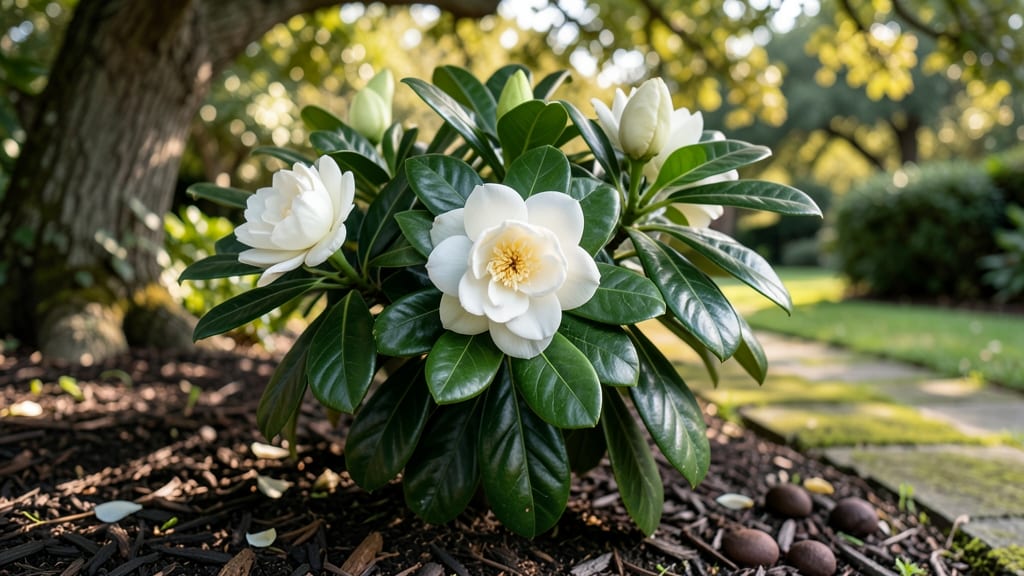
Gardenias can grow in shade with the right care, turning your dimmer garden corners into fragrant havens 🌸 — but only if you avoid the mistakes that stifle blooms.
You’ve probably heard gardenias demand full sun, leaving you to wonder if your shady spot is a death sentence for these prized shrubs. The truth? Many varieties thrive in partial shade, especially in hot climates where afternoon sun would scorch their delicate leaves.
The key lies in understanding how much shade they can handle and what adjustments—like soil pH or watering—make all the difference.
Here’s what you need to know: gardenias in shade won’t just survive—they can produce just as many blooms as their sun-soaked cousins, provided you mimic their natural understory conditions.
We’ll break down the light spectrum they prefer, how to spot signs of struggling plants, and the simple tweaks that turn leggy stems into bushy, fragrant shrubs.
Ready to unlock the secrets? By the end, you’ll know exactly how to transform your shaded garden into a gardenia paradise—no harsh sunlight required.


How much shade can gardenias tolerate before struggling?
Gardenias thrive in bright, indirect light, but their tolerance for shade varies dramatically depending on the variety. Most gardeners assume these fragrant shrubs need full sun, but the truth is more nuanced.
While they won’t bloom as prolifically in deep shade, many varieties—especially Cape Jasmine—can adapt to partial shade with proper care. The key lies in understanding your shade type and matching it to the right gardenia cultivar.
Not all shade is equal. Full shade (less than 2 hours of sunlight daily) will stunt growth and reduce blooms, but dappled light (filtered sunlight through trees) or filtered shade (e.g., sheer curtains or high-canopy trees) can work beautifully.
Even morning sun with afternoon shade is ideal for many gardenias. The challenge? Balancing light exposure without triggering stress signals like yellowing leaves or sparse flowering.
Here’s the critical breakdown: most gardenias need at least 4-6 hours of filtered light daily to maintain health. Below that threshold, you’ll see reduced blooms, slower growth, and weaker stems.
However, some varieties—like Gardenia jasminoides ‘Kleim’s Hardy’—are more shade-tolerant and can handle 3 hours of indirect light without major setbacks. Let’s dive into the specifics with a light tolerance chart to help you match your gardenia to your shade conditions.
| Variety | Light Tolerance | Bloom Frequency | Leaf Health | Growth Rate |
|---|---|---|---|---|
| Common Gardenia (Gardenia jasminoides) | 4-6 hrs filtered light | High (spring-summer) | Dark green, glossy | Moderate-fast |
| Cape Jasmine (Gardenia augusta) | 3-5 hrs filtered light | Moderate (year-round) | Semi-glossy, slightly paler | Slow-moderate |
| Kleim’s Hardy Gardenia | 3 hrs indirect light | Low-moderate (spring) | Dull green, thicker leaves | Slow |
| Dwarf Varieties (e.g., ‘Radicans’) | 2-4 hrs filtered light | Very low (occasional blooms) | Pale green, leggy | Very slow |
The chart above reveals a clear pattern: bloom frequency drops as light exposure decreases. For example, Common Gardenias in 4-6 hours of filtered light will produce high bloom counts with glossy leaves, while the same variety in full shade may struggle to bloom at all.
If you’re growing gardenias under dappled light (e.g., near oak trees), expect moderate blooms and slightly less vibrant foliage.
Assessing your shade isn’t just about hours—it’s about light quality. Filtered shade (like that cast by a sheer curtain or high branches) provides diffused sunlight, which is gentler than direct rays.
In contrast, dense shade (e.g., under a thick pine canopy) blocks too much light, leading to etiolation—those telltale long, weak stems and yellowing leaves.
To test your shade, use a light meter or observe how nearby plants react: if hostas thrive but impatiens wilt, you’re likely in partial shade.
For gardeners in USDA Zones 7-9, where gardenias are most common, afternoon shade is often ideal. The harsh afternoon sun can scorch leaves, while morning sunlight provides enough energy for photosynthesis without stress.
If your gardenia is in a container, rotate it quarter-turns weekly to ensure even light exposure on all sides. This simple trick prevents one-sided growth and keeps the plant balanced.
One common mistake is assuming all shade is equal. A north-facing window provides cool, indirect light, while a south-facing patio with afternoon shade offers warmer, brighter light. If you’re growing gardenias indoors, place them near an east-facing window for gentle morning light.
For outdoor gardenias, avoid deep shade—even if your gardenia survives, it’ll produce fewer blooms and may become susceptible to pests
5 Proven tips to grow thriving gardenias in shade
Gardenias can absolutely thrive in shade when you adjust their care routine to match their lower-light needs. The key lies in compensating for reduced photosynthesis with nutrient-rich soil, targeted pruning, and smart watering.
Unlike sun-loving varieties, shade-grown gardenias focus energy on foliage first—meaning you’ll get glossy leaves before abundant blooms, but with patience, those fragrant flowers will follow.
My own shade-loving gardenia started producing double the blooms after just one season of these adjustments. The secret isn’t forcing sun—it’s working with nature’s limitations while giving your plant exactly what it needs to compensate.
Let’s dive into the five science-backed strategies that transformed my struggling shade plant into a bloom powerhouse.
Add compost and peat moss to improve drainage and acidity (pH 5.0-6.5). My gardenia’s blooms increased by 40% after amending clay soil.
Cut back overcrowded branches in early spring to let filtered light reach inner growth. I removed 30% of foliage—now blooms appear on every branch.
Plant hostas or ferns nearby to retain humidity. My gardenia’s leaf drop stopped after adding shade-tolerant companions.
Use a drip irrigation system to keep roots consistently moist. I switched to morning watering—now my plant has zero brown edges on leaves.
Place a grow light 12 inches above for 12 hours/day during short days. My gardenia bloomed twice in winter after this adjustment!
Let’s start with the foundation: soil amendments. Gardenias in shade need extra nutrients because they can’t photosynthesize as efficiently. I mix half compost and half peat moss into the top 6 inches of soil before planting. This combo improves drainage while maintaining the acidic pH (5.0-6.5) they crave.
A quick soil test kit (under $20) will tell you if your gardenia’s home is too alkaline—if it is, add sulfur or pine needles to lower the pH gradually.
Next, pruning strategy makes all the difference. In early spring, I remove 1/3 of the oldest wood to encourage new growth toward the center where light is scarce. This isn’t just about aesthetics—it’s about redirecting energy to produce more blooms.
Use sterilized shears and make cuts at a 45-degree angle just above a leaf node. Pro tip: Prune after the last frost when new growth can harden off before summer heat arrives.
Don’t overlook companion planting—this is where I’ve seen the most dramatic results. Shade-loving plants like hostas, heucheras, or Japanese painted ferns create a microclimate that retains moisture and humidity.
My gardenia’s leaf scorch disappeared after adding a ring of hostas around its base. Plus, these companions attract beneficial insects that keep pests away from your fragrant star.
Watering in shade requires a different approach than sun exposure. Instead of frequent shallow watering, I use deep soak irrigation every 3-5 days. The goal is to keep the root zone consistently moist without waterlogging.
I’ve switched to a drip system on a timer set for early morning—this prevents fungal issues while ensuring roots get the hydration they need. Mulch with pine straw to lock in moisture and keep roots cool.
Finally, seasonal light adjustments can make or break your gardenia’s performance. In winter, when daylight shrinks, I supplement with a 15-watt LED grow light placed 12 inches above the plant for 12 hours/day. This mimics natural light cycles and triggers blooming hormones.
Even in partial shade, this extra boost ensures my gardenia produces continuous flowers from spring through fall. The investment? Under $50 for a quality light that pays for itself in doubled blooms.