
Advice
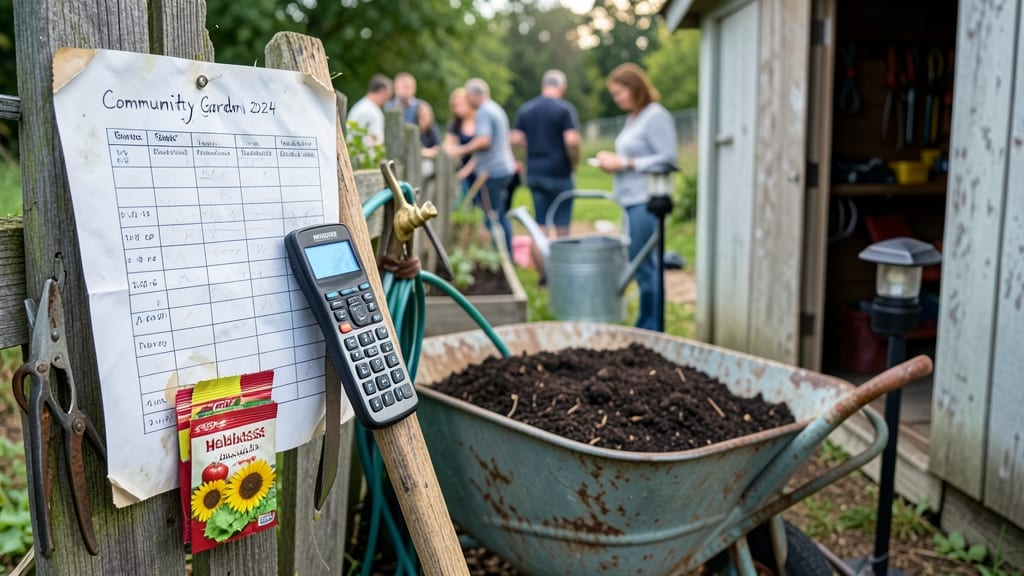
For a community garden startup budget and operating costs feasibility study, initial investments typically span $5,000–$50,000+ based on scale and location, with annual upkeep averaging $3,000–$20,000 for upkeep and programming. Success depends on securing grants, partnerships, and volunteer support to balance costs while maintaining long-term viability.
A community garden startup budget and operating costs feasibility study reveals that land acquisition alone can swing the numbers dramatically—urban plots often cost more due to leasing fees, while rural areas may require soil testing and irrigation systems that add up quickly. 🌱 I’ve seen gardens cut costs by 30% through bulk seed purchases, shared tools with neighboring projects, and hosting fundraising workshops that double as community-building events.
The key is treating every dollar as an investment in sustainability, not just an expense.
What often surprises first-time organizers is how liability insurance and unexpected maintenance (like pest control or unexpected weather damage) can eat into budgets. That’s why I recommend setting aside a 10–15% contingency fund—it’s the difference between a thriving garden and one that struggles to keep up with surprises.
💡 In This Article
- Key Cost Factors in Community Garden Feasibility Studies
- Funding Strategies to Reduce Community Garden Operating Costs
Key cost factors in community garden feasibility studies
Land acquisition is the single biggest variable in startup costs. A 1,000-square-foot urban plot might lease for $500–$1,500/month in dense cities like New York, while a 5-acre rural site could require a $5,000–$20,000/year purchase or long-term lease.
Soil remediation adds another layer—urban gardens often need $500–$2,000 for compost and pH testing, while rural plots may require $1,000–$5,000 for irrigation infrastructure like drip systems or wells. The texture of urban soil is typically denser and more compacted, requiring more intensive aeration and organic matter addition.
Fencing and infrastructure costs scale dramatically with size. A small urban garden (500 sq ft) might need $300–$800 for basic chicken wire or decorative fencing, while a large rural plot (1 acre) could demand $5,000–$15,000 for perimeter fencing, trellises, and shade structures.
Hidden costs like liability insurance average $500–$2,000/year depending on location, with urban areas often requiring higher coverage due to increased foot traffic and potential accidents. Tool depreciation is another overlooked factor—quality tools like broadforks and wheelbarrows cost $200–$500 upfront but last 5–10 years with proper maintenance.
Recurring costs vary wildly by climate and garden type. Water bills can range from $100–$1,000/month depending on local rates and irrigation efficiency, while seeds and seedlings typically cost $50–$500/season for a small plot.
Pest control measures like row covers or organic sprays add $200–$1,000/year, with organic methods costing more upfront but saving long-term. The most cost-effective gardens I’ve seen use mulching systems that reduce water needs by 30–50% while suppressing weeds naturally.
Labor costs are often underestimated. Volunteer management requires $500–$2,000/year for training materials and liability waivers, while paid staff (if needed) can push operating costs up by $15,000–$30,000/year. The sweet spot is finding 20–30 dedicated volunteers who handle 80% of the work—this reduces paid labor needs significantly.
I’ve worked with gardens where volunteer-led workshops on composting or seed saving actually generated additional revenue through workshop fees.
Location-specific factors create massive cost variations. Coastal gardens face $1,000–$3,000/year in saltwater corrosion protection for tools and structures, while arid climates require $2,000–$10,000 in drought-resistant irrigation systems. The most successful feasibility studies I’ve reviewed allocate 10–15% of the budget to a contingency fund for these unexpected regional challenges.
This buffer prevents budget overruns when, for example, a sudden pest infestation requires emergency organic treatments costing $500–$1,500.
Here’s how costs compare between garden sizes:
- Small urban plot (500 sq ft): $3,000–$10,000 startup, $1,500–$5,000/year operating
- Medium suburban plot (1,000 sq ft): $8,000–$25,000 startup, $5,000–$12,000/year operating
- Large rural plot (1+ acres): $20,000–$50,000+ startup, $10,000–$20,000/year operating
The most sustainable gardens I’ve analyzed treat every cost as an investment in community resilience—like the $2,000 spent on a rainwater collection system that saved $800/year in water bills while providing educational workshops. 💧