
Flowers
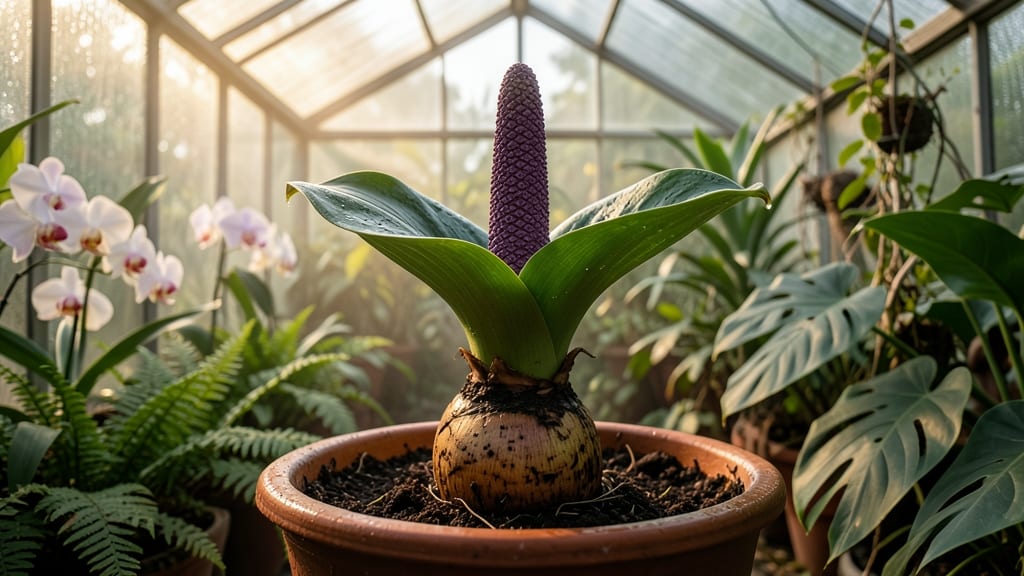
Visiting a botanic garden to see the corpse flower is a rare botanical event where this giant, foul-smelling bloom—known scientifically as Amorphophallus titanum—attracts pollinators with its rotting-meat scent and unfurls for just 24-48 hours.
Botanic gardens cultivate this infamous plant precisely because its blooming is so unpredictable and spectacular. 🌿 The corpse flower's stench isn't just a gimmick—it's an evolutionary masterpiece designed to lure carrion flies, its only pollinators, from miles away.
What makes it even more thrilling is that these blooms often occur only once every 7-10 years, turning a garden visit into a once-in-a-lifetime experience.
The plant itself is equally impressive, with a single flower stalk reaching heights of 6-10 feet and a leaf structure that resembles a massive, prehistoric fern.
Garden curators work tirelessly to create optimal conditions for blooming, monitoring temperature, humidity, and even the plant's root systems. Pro tip: If you're planning a visit, check the garden's social media or website—they often announce blooming events with just days' notice, so timing your trip is key.
The experience goes beyond just seeing the flower; it's a chance to witness nature's most bizarre and fascinating adaptations up close.
💡 In This Article
- Why the Corpse Flower’s Blooming Is a Botanical Marvel
- How to Prepare for a Corpse Flower Viewing Event
Why the corpse flower’s blooming is a botanical marvel
The corpse flower (Amorphophallus titanum) is a botanical enigma because its blooming cycle is triggered by a perfect storm of conditions that scientists still don’t fully understand.
Native to the rainforests of Sumatra, this plant spends most of its life underground as a corm—a bulb-like structure that can weigh up to 15 pounds and store nutrients for decades.
The bloom itself is a 24-48 hour event, during which the flower generates heat (up to 89°F) to amplify its rotting-meat scent, mimicking a carcass to attract carrion flies. This heat production is a rare trait in plants, making it a true evolutionary marvel. 🌱
The flower’s odor isn’t just random—it’s a chemical cocktail of dimethyl disulfide and dimethyl trisulfide, compounds also found in decaying flesh. These volatile organic compounds (VOCs) can be detected by flies up to 1 mile away, ensuring pollination even in dense forest environments.
What’s fascinating is that the corpse flower’s inflorescence (the entire flower structure) can reach 6-10 feet tall and weigh 75 pounds, making it one of the largest unbranched inflorescences in the plant kingdom.
The spathe (the leaf-like structure) unfurls to reveal the spadix, where the actual flowers are clustered—male flowers at the top and female flowers at the base. This spatial arrangement forces pollinators to brush past both, maximizing fertilization chances.
Botanic gardens prioritize cultivating corpse flowers because they serve as living laboratories for studying plant evolution and conservation. The plant’s slow growth and unpredictable blooming make it a high-maintenance specimen, but the educational value is immense.
Visitors witness firsthand how plants have evolved to exploit ecological niches, from heat generation to chemical mimicry. The rarity of blooms—often occurring only every 7-10 years—creates urgency and excitement, turning a garden visit into a scientific spectacle.
Curators use data loggers to monitor soil temperature, humidity, and even the plant’s metabolic activity, fine-tuning conditions to encourage blooming. This hands-on approach helps researchers understand how climate change might impact such specialized species. 🔬
The corpse flower’s life cycle is a study in extremes. After blooming, the plant enters a dormant phase for years, only to regrow its massive leaves (which can span 3-5 feet wide) before repeating the cycle.
This pattern makes it a prime example of a "boom-and-bust" reproductive strategy, where energy is conserved for infrequent, high-impact blooms. The plant’s ability to attract pollinators without producing nectar—its "reward"—is a testament to nature’s ingenuity.
For botanic gardens, cultivating corpse flowers isn’t just about showcasing a bizarre plant; it’s about preserving a piece of evolutionary history that might otherwise be lost to habitat destruction. The public’s fascination with these events also funds conservation efforts, creating a win-win for science and education. ✨
What most people don’t realize is how the corpse flower’s biology challenges traditional botanical classifications. It belongs to the arum family (Araceae), which includes peace lilies, but its size and carnivorous pollination strategy set it apart.
The plant’s heat production is so efficient that it can raise the temperature of its inflorescence by 10-15°F above ambient air temperature, a feat that requires significant metabolic energy.
This thermogenesis isn’t just for scent amplification—it also helps break down the flower’s own tissues, releasing nutrients that may play a role in its post-bloom recovery. The corpse flower’s ability to "trick" pollinators into servicing its flowers without offering food rewards is a masterclass in ecological deception. 💫
For botanic gardens, the corpse flower is a draw that transcends its stench. The plant’s blooming events are meticulously documented, with data collected on everything from visitor reactions to pollinator behavior.
Some gardens, like the New York Botanical Garden or the Fairchild Tropical Botanic Garden, have even created dedicated "corpse flower rooms" with controlled environments to encourage blooming. The public’s curiosity about this plant—often described as "nature’s most disgusting beauty"—funds research into plant reproduction, conservation, and even biotechnology.
For example, scientists study the corpse flower’s heat-generating mechanisms to explore potential applications in sustainable energy or medical fields. The plant’s blooming is a reminder that nature’s most extraordinary creations often defy expectations. 🌿