
Light Requirements
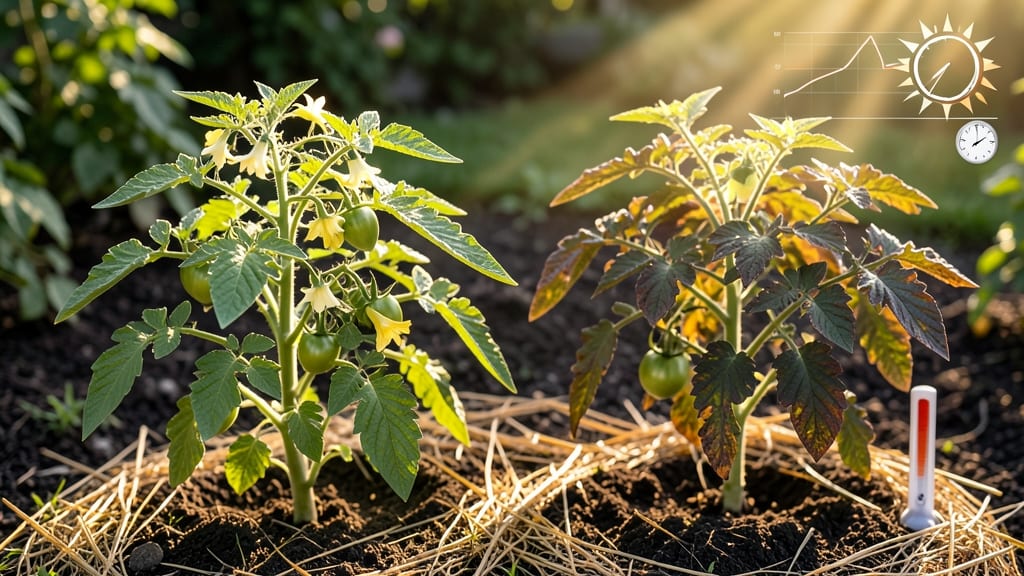
Your vegetable garden needs morning sun for most crops, as cooler, gentler light prevents stress and wilting, while afternoon sun works best for heat-loving plants like tomatoes and peppers. Leafy greens and root vegetables handle morning light better than direct afternoon heat, which can scorch delicate foliage.
Morning sunlight provides a gentler spectrum that helps plants establish strong root systems without overheating. 🔥 Many gardeners swear by morning sun for leafy greens like spinach and kale, as it reduces moisture loss and bolsters photosynthesis efficiency.
The key is balancing light duration—most vegetables need 6-8 hours total, but the timing matters just as much as the quantity.
For example, tomatoes and peppers thrive with afternoon sun because their thicker leaves can handle the heat, while lettuce and herbs often wilt under intense midday rays. I recommend observing your garden's microclimate—some areas may get too hot even in the afternoon, requiring temporary shade cloth for sensitive plants.
💡 In This Article
- How Sunlight Direction Affects Vegetable Growth and Yield
- Best Sunlight Strategies for Different Vegetable Types
How sunlight direction affects vegetable growth and yield
The difference between morning and afternoon sun boils down to light spectrum and heat intensity. Morning sunlight contains more blue and violet wavelengths, which are crucial for photosynthesis and plant growth. These cooler wavelengths (around 400-500nm) help plants establish strong cellular structures without overheating.
In contrast, afternoon sun emits more red and infrared wavelengths (around 600-700nm), which increase heat stress while still driving photosynthesis. This is why leafy greens like spinach and Swiss chard grow best with morning light—their delicate leaves can't handle the midday heat that causes wilting.
Heat stress is the key factor limiting afternoon sun exposure. When temperatures exceed 85°F, many plants shut down photosynthesis to prevent damage, a process called photoinhibition. This is why tomatoes and peppers—both heat-tolerant crops—thrive with afternoon sun.
Their thicker leaves and waxy coatings reflect excess heat, while their root systems can handle the stress. 🔥 The science shows that solanaceous plants (tomatoes, peppers, eggplants) actually produce more fruit when given afternoon sun because the higher temperatures trigger flowering hormones.
For comparison, brassicas like broccoli and cabbage prefer morning light to maintain their compact growth habit.
Photosynthesis efficiency also varies by light timing. Plants absorb light most efficiently during the cooler morning hours when stomata (leaf pores) are fully open for gas exchange. Afternoon heat causes stomata to close, reducing CO₂ intake by up to 30% in sensitive crops.
This is why root vegetables like carrots and beets perform better with morning sun—they focus energy on root development rather than heat protection.
The light quality matters too: morning light has a higher blue-to-red ratio, which promotes vertical growth in leafy greens, while afternoon light's red dominance encourages fruiting in tomatoes and peppers.
Consider the plant's natural habitat for clues. Most wild vegetables originate in temperate climates where morning sun dominates, explaining why many garden crops prefer it. For example, lettuce and herbs from Mediterranean regions thrive with morning light in hot climates, while tropical plants like okra handle afternoon heat better.
The key is matching your garden's microclimate to the plant's evolutionary adaptations. 💛 In my own garden, I've noticed that morning sun produces sweeter basil and more tender kale, while afternoon sun gives my tomatoes a deeper red color and thicker walls.
Light intensity plays a surprising role too. While both morning and afternoon sun provide similar light intensity (measured in 10,000-15,000 lux at peak), the angle matters. Morning sun hits leaves at a shallower angle, spreading light more evenly across the plant canopy.
Afternoon sun's steeper angle creates hot spots that can scorch leaves. This is why I recommend spacing plants differently for morning vs. afternoon exposure—closer together for morning light to maximize coverage, wider apart for afternoon to prevent leaf burn.
Seasonal variations add another layer. In summer, afternoon sun can be 10-15°F hotter than morning, while spring mornings provide gentler light that helps seedlings establish. The solution? Rotate crops seasonally—plant heat-lovers in summer and shade-tolerant greens in spring.
I've found that even heat-loving tomatoes benefit from morning sun in summer's peak heat, using shade cloth for the hottest afternoon hours. The goal is to mimic the natural light patterns plants evolved with.