
Tools
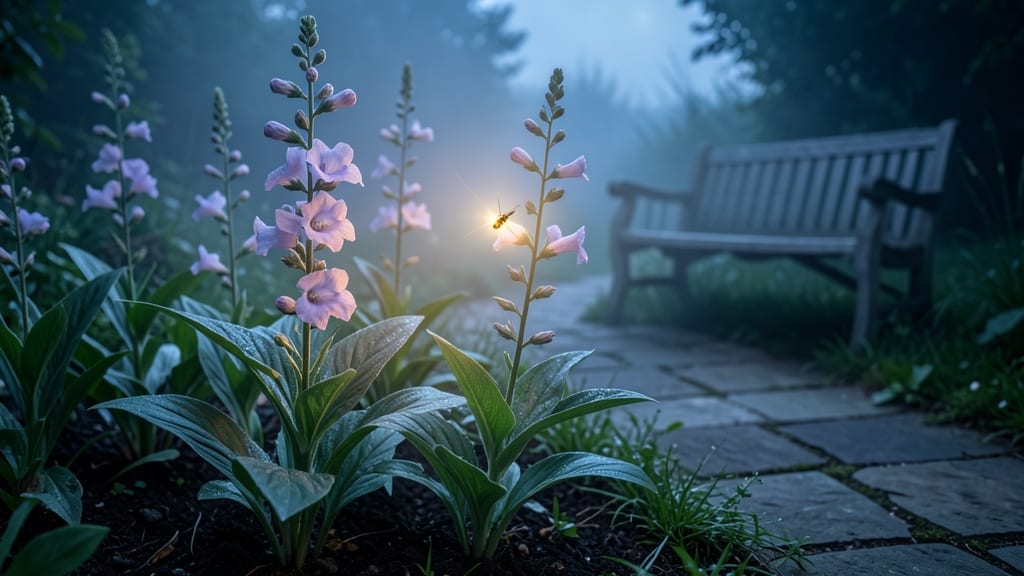
Creating a firefly-friendly garden means planting native species like evening primrose or milkweed in shaded, damp areas while eliminating chemical pesticides. Spot them at dusk by their glowing abdomens, where flash patterns and colors (yellowish-green to orange) vary by species.
Fireflies thrive where their natural behaviors—like mating signals and moisture-seeking—align with garden conditions. 🌿 The key is replicating their wild habitats: mulch-rich soil, dappled shade, and water sources (like shallow dishes) create ideal conditions.
I’ve seen the biggest activity in gardens with a mix of broadleaf plants and ground covers, which provide both shelter and food sources for their larvae.
What’s fascinating is how their flashing patterns serve as species-specific communication tools. For example, the common eastern firefly flashes yellow every 5-6 seconds, while the great dividing range firefly uses rapid green pulses.
These differences help distinguish them during peak activity hours—typically between 8:00 PM and midnight—when they’re most visible.
💡 In This Article
- Why Fireflies Glow: Science Behind Bioluminescence
- Best Native Plants to Grow for Firefly Attraction
Why fireflies glow: science behind bioluminescence
Fireflies produce light through a fascinating biochemical reaction called bioluminescence, where the enzyme luciferase combines with the molecule luciferin and oxygen in their abdomen. This reaction releases energy as light rather than heat—a process that’s about 95% efficient compared to artificial light sources.
The glow comes from specialized cells called photocytes, which can be controlled to flash on and off with precision, creating their signature signals.
The color of their light—ranging from yellowish-green (560-570 nm wavelength) to orange—depends on the specific proteins and filters in their photocytes. For example, the common eastern firefly emits a bright yellow-green flash, while the great diving range firefly produces a softer green.
These colors are invisible to human eyes in bright light but stand out vividly in the dim conditions of dusk, when fireflies are most active. 🔥
Fireflies use their flashes primarily for mating communication, with each species having a unique pattern. Males fly in J-shaped flight paths, flashing every 3-10 seconds depending on the species, while females respond from vegetation with shorter flashes.
This "language" helps them locate mates over distances of up to 100 feet. Habitat conditions like moisture levels and light pollution directly affect their ability to communicate—dry soil or bright artificial lights can disrupt their signaling entirely.
What’s less obvious is how fireflies conserve energy during their flashes. Their photocytes can turn on and off almost instantly, using just enough energy to create visible light without overheating. This efficiency is why you’ll see them glowing for hours during summer evenings—unlike artificial lights, which waste energy as heat.
The flash duration (often 0.2-0.5 seconds) is also carefully regulated to avoid predation while maximizing visibility to potential mates.
Moisture plays a critical role in triggering bioluminescence. Firefly larvae (glow worms) thrive in damp, organic-rich soil, and adult fireflies need water sources like shallow dishes or dewy grass to survive.
The higher the humidity, the more active they become—this is why gardens with mulched beds or ground covers see greater firefly activity. Even a 5% increase in soil moisture can double their presence during peak seasons.
Interestingly, fireflies don’t glow continuously—their flashes are pulsed to conserve energy. For example, the genus Photinus (common in North America) may flash 6-10 times per minute, while others like Photuris use slower, steadier patterns.
These differences help ecologists distinguish species in the wild, much like bird calls. The science behind their glow isn’t just about light—it’s a finely tuned system of communication and survival. ✨