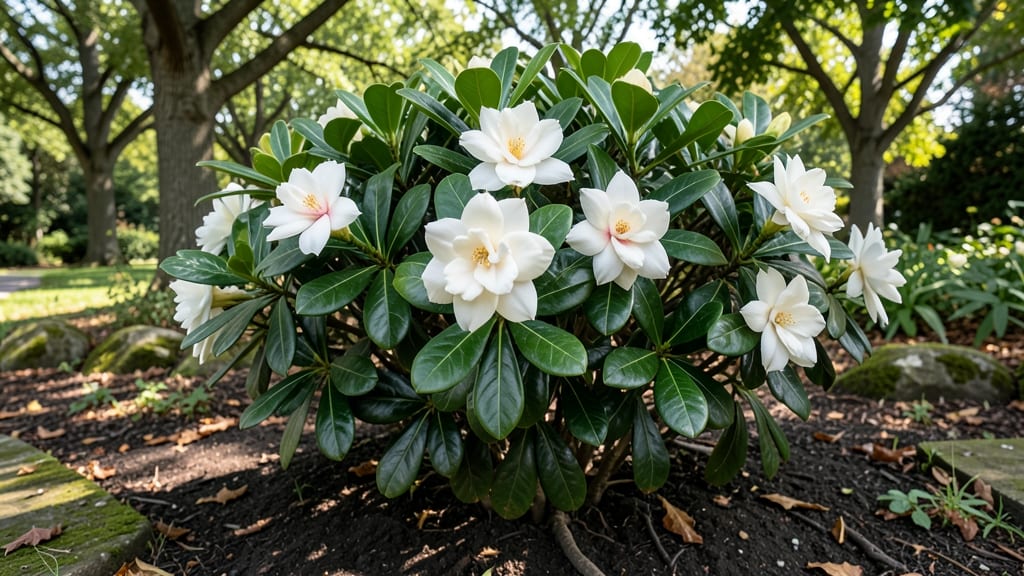
The size of a gardenia shrub 🌸 determines how it fits into your landscape, whether it becomes a statement piece or a subtle accent.
If you're dreaming of fragrant, glossy-leaved gardenias but worried about whether they’ll dwarf your landscape or sprawl uncontrollably, you’re not alone—size matters when choosing this classic shrub.
Most gardenias reach between 3 and 6 feet tall and wide, but varieties like 'Kleim’s Hardy' stay compact at just 2 to 3 feet, while others like 'Radicans' can stretch toward 6 feet or more.
In this guide, I’ll break down mature sizes by variety, share spacing tips to avoid overcrowding, and show you how to prune for the perfect shape—so you can enjoy those intoxicating blooms without the stress of unruly growth.
Gardenia shrub size by variety: mature height & spread guide
Choosing the right gardenia variety isn’t just about fragrance and glossy foliage—it’s also about mature size. Some varieties stay compact enough for containers or small gardens, while others grow into statement shrubs that need room to shine.
Understanding these differences helps you plan your landscape with confidence and avoid overcrowding.
Gardenia shrubs typically mature between 3 to 6 feet tall, but their spread can vary dramatically depending on the variety. For example, 'Kleim’s Hardy' stays under 4 feet, making it ideal for foundation plantings or small yards, while 'Radicans' can reach 6 feet with a wide, bushy spread.
Let’s break down the most popular varieties so you can pick the perfect fit for your space.
Pro Tip: Always check your gardenia’s growth rate and spread habit before planting. Some varieties, like 'Fortuniana', grow faster and wider, while others, like 'Veitchii', stay more contained. This guide will help you navigate the options with ease.
| Variety |
Mature Height |
Mature Spread |
Growth Rate |
Best For |
| 'Kleim’s Hardy' |
3–4 ft |
3–4 ft |
Moderate |
Small gardens, containers, cold climates |
| 'Radicans' |
4–6 ft |
5–7 ft |
Fast |
Privacy screens, large landscapes |
| 'Fortuniana' |
5–7 ft |
6–8 ft |
Fast |
Tropical landscapes, large yards |
| 'Veitchii' |
2–3 ft |
2–3 ft |
Slow |
Borders, containers, bonsai |
| 'Mystery' |
3–4 ft |
3–4 ft |
Moderate |
Foundation plantings, mixed borders |
| 'Kleim’s Blush' |
3–4 ft |
3–4 ft |
Slow-Moderate |
Small spaces, urban gardens |
| 'August Beauty' |
4–5 ft |
4–5 ft |
Moderate |
Medium-sized gardens, hedges |
| 'Crest' |
2–3 ft |
2–3 ft |
Slow |
Containers, bonsai, small landscapes |
| 'Prosperity' |
3–4 ft |
3–4 ft |
Moderate |
Small to medium gardens, borders |
'Radicans Compacta'
How to control gardenia shrub size: pruning tips for compact growth
Keeping your gardenia shrub at a manageable size isn’t just about aesthetics—it’s about encouraging healthier blooms and preventing overcrowding. These fragrant beauties can quickly outgrow their welcome if left unchecked, but with the right pruning techniques, you can maintain their shape while promoting lush foliage and abundant flowers.
The key is timing, tools, and knowing which branches to trim.
Most gardenia varieties mature between 3 to 6 feet tall, but without pruning, they can sprawl wider than expected. I’ve found that regular maintenance pruning in late winter or early spring—just before new growth begins—helps control their size while keeping them bushy.
For faster results, a harder pruning after flowering can reset their growth pattern, but this requires patience as they’ll focus on regrowing foliage before blooming again.
Step 1: Choose the Right Time
✅ Best time: Late winter or early spring (just before buds swell)
✅ Alternative: Light pruning after flowering to shape (avoid heavy cuts)
Step 2: Gather Your Tools
🔹 Bypass pruners (for clean cuts on smaller stems)
🔹 Loppers (for thicker branches up to 1 inch)
🔹 Sterilized rubbing alcohol (to clean tools between cuts)
🔹 Garden gloves (gardenia leaves can irritate skin)
Step 3: Pinch Young Shoots
🌱 When: Spring and summer (on new growth)
🌱 How: Pinch back 1/3 of new shoots to encourage branching
🌱 Why: Creates a fuller, bushier shrub with more blooms
Step 4: Head Back Overgrown Branches
✂️ Cut back 1/3 to 1/2 of last year’s growth
✂️ Angle cuts just above a leaf node or outward-facing bud
✂️ Avoid cutting into old wood (no leaves = dead branch)
Step 5: Thin Out Crowded Centers
🌿 Remove 1-2 oldest stems at the base each year
🌿 Focus on crossing or rubbing branches (they weaken the plant)
🌿 Goal: Improve air circulation and sunlight penetration
Step 6: Clean Up and Mulch
🧹 Remove all pruned branches and debris
🧹 Apply 2-3 inches of mulch (acidic pine bark works best)
🧹 Water deeply to reduce stress on the plant
After pruning, your gardenia will need extra care to recover. I always water deeply the day after trimming to help it bounce back, and I avoid fertilizing for about 4-6 weeks to let the cuts heal.
If you’re growing a dwarf variety like ‘Radicans,’ you’ll need to be even more precise with your cuts—these shrubs respond well to light pinching but can’t handle heavy pruning like their larger cousins.
Remember, the goal isn’t just to shrink your gardenia—it’s to shape it intentionally. A well-pruned shrub will have a balanced form, fewer leggy branches, and more fragrant blooms in the long run.
With practice, you’ll develop an eye for which branches to keep and which to trim for the perfect compact gardenia that fits your space beautifully. 🌿
★★★★★4.7(12 reviews)
|