
Planting
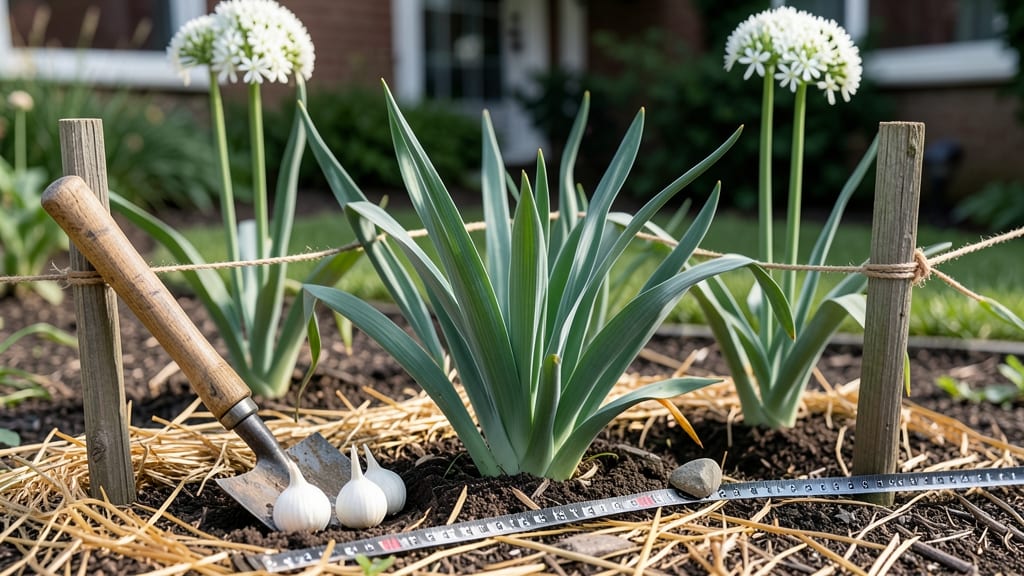
Spacing garlic in your garden correctly is the key to growing plump, flavorful bulbs 🧄—and most gardeners get it wrong without even realizing it.
Picture this: You’ve prepped the soil, planted your cloves at the right depth, and watered them in—only to harvest tiny, weak bulbs that barely fill a jar. Too often, we focus on soil and sun but overlook the simple spacing that makes or breaks a garlic harvest.
Proper garlic spacing isn’t just about fitting more plants into a small bed. It’s about giving each clove enough room to breathe, preventing disease, and ensuring those bold, papery-skinned bulbs you dream of.
Whether you’re growing hardneck, softneck, or elephant garlic, the right distances can mean the difference between a disappointing harvest and a pantry full of homegrown goodness.
In this guide, I’ll walk you through the exact spacing rules for garlic—from in-row distances to row spacing—and how to adjust for your soil, climate, and garden layout. You’ll also learn how to avoid the most common spacing mistakes that rob you of yield and flavor.
Optimal garlic spacing by variety type: hardneck vs softneck vs elephant garlic
Getting the garlic spacing right is the difference between small, puny bulbs and plump, flavorful harvests. Each variety—hardneck, softneck, and elephant garlic—has unique spacing needs tied to its growth habits.
Too close, and your garlic will compete for nutrients; too far, and you’ll waste garden real estate. Let’s break down the science-backed spacing for each type to maximize your yield.
I’ve planted all three varieties myself, and I can tell you: hardneck garlic loves room to stretch its scape stalks, while elephant garlic (which is actually a leek relative) thrives with even wider spacing. Softneck garlic, the storage king, strikes a balance.
Understanding these differences ensures you’re not just planting blindly—you’re setting your garlic up for success from day one.
Here’s the golden rule: in-row spacing and row spacing work together. In-row spacing refers to the distance between individual cloves or bulbs, while row spacing is the gap between rows.
Both matter because garlic needs airflow to prevent fungal diseases like white rot and enough elbow room to develop large bulbs. Let’s dive into the specifics for each variety.
For hardneck garlic, the 4-6 inch in-row spacing gives each clove room to develop a large bulb and a scape stalk. The 12-18 inch row spacing prevents overcrowding, which is critical because hardnecks rely on cold weather to form bulbs.
If you’re in a Zone 5 or colder, lean toward the wider end of the range—cold snaps can stress garlic, and extra space helps it recover.
When I first grew softneck garlic, I made the mistake of spacing it too wide (18 inches between rows). My bulbs were smaller than expected, and I realized softnecks prefer tighter quarters to focus energy on storage quality.
The 4-5 inch in-row spacing and 10-12 inch row spacing create a dense enough patch to produce those long-storing bulbs we all love. This variety is perfect for coastal climates or areas with mild winters.
Elephant garlic is the gentle giant of the garlic world, and it needs space to match its size. The 6-8 inch in-row spacing and 18-24 inch row spacing give its massive cloves (often 2-3 inches wide!) room to grow. I’ve seen gardeners cram elephant garlic too close, and their bulbs end up split or misshapen. If you’re growing this variety, think of it like planting onions—give it the royal treatment!
Why does spacing matter so much? Air circulation is key to preventing garlic rot and mold. Close planting traps moisture, creating the perfect conditions for fungal diseases. Proper spacing also ensures each bulb gets enough nutrients and sunlight
How to adjust garlic spacing for soil quality, climate, and garden layout
Your garlic spacing isn’t one-size-fits-all—it’s a dynamic equation that changes with your soil quality, local climate, and garden layout. For example, heavy clay soil needs tighter spacing to prevent waterlogging, while sandy soil benefits from wider gaps for better root spread.
Let’s break down how to adjust spacing for your unique conditions.
In humid climates with frequent rainfall, increase spacing by 20-30% to reduce fungal diseases like white rot. Conversely, in dry climates, you can plant cloves 1-2 inches closer to conserve moisture. Always start with the standard 4-6 inches between cloves and adjust based on these factors.
🌱 Garlic Spacing Adjustments by Condition
| Condition | Standard Spacing | Adjusted Spacing | Why Adjust? |
|---|---|---|---|
| Poor soil (clay/rocky) | 4-6" | 3-4" | Compacts roots to access nutrients |
| High rainfall | 4-6" | 6-8" | Improves air circulation |
| Small gardens | 4-6" | 2-3" (staggered) | Maximizes space vertically |
| Raised beds | 4-6" | 5-7" | Prevents edge crowding |
✅ Pro Tip: Use elephant garlic in tight spaces—its larger cloves need 6-8 inches apart but yield bigger bulbs.
For small gardens or raised beds, try staggered planting in a grid pattern. Plant cloves in a 2x2 or 3x3 matrix every 3-4 inches, leaving 6-inch rows between grids. This mimics wider spacing while fitting more plants in limited space.
If you notice yellowing leaves or small bulbs, your spacing might be too tight. Conversely, large gaps with sparse foliage signal over-spacing. Adjust next year by 1-2 inches in either direction. Always plant the pointy end up—this ensures proper root development.
In container gardens, use 1-gallon pots for 1-2 cloves each, spaced 3 inches apart. For window boxes, plant single cloves every 4 inches along the length. Remember, garlic thrives on crowding control—never let bulbs touch at maturity.
Finally, mulch heavily (3-4 inches) after planting to regulate soil temperature and moisture. This helps maintain your adjusted spacing benefits year-round. With these tweaks, you’ll harvest plump, disease-free bulbs tailored to your garden’s unique conditions. 🧄