
Container Gardens
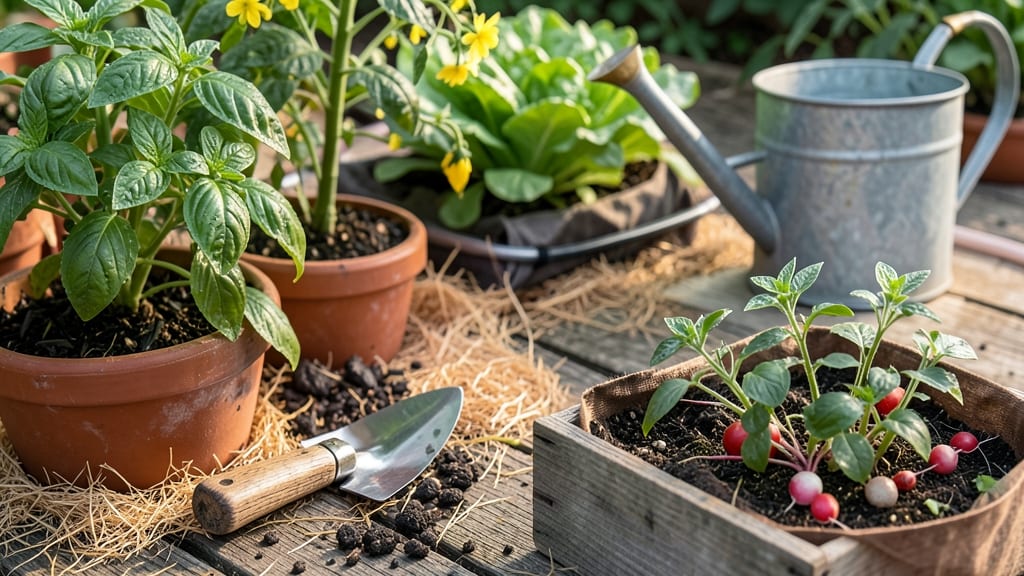
Growing a vegetable garden in pots lets you cultivate fresh produce in small spaces by using deep containers with drainage, nutrient-rich soil blends, and compact varieties like lettuce, basil, or cherry tomatoes. Opt for containers at least 12 inches deep and place them in full sun for maximum growth.
Container gardening transforms even tiny balconies into productive growing spaces. 🌱 The key is matching plant roots to container size—deeper pots (18+ inches) suit tomatoes while shallower ones work for herbs. Fabric pots actually improve root aeration compared to plastic, though ceramic adds aesthetic appeal.
I’ve found that adding a layer of perlite to your potting mix prevents compaction while retaining moisture better than garden soil.
For best results, group plants with similar sunlight needs together. Leafy greens thrive in morning sun, while tomatoes demand 6+ hours of direct sunlight daily. A simple watering schedule—every other day for herbs, daily for tomatoes—keeps your container garden thriving without overwatering.
The right setup turns even a single pot into a mini farm!
💡 In This Article
- Selecting the Right Containers for Vegetable Gardening
- Top Vegetables for Container Gardening and Their Care Needs
Selecting the right containers for vegetable gardening
Container material directly impacts root health and growth potential. Fabric pots, like those made from breathable geotextiles, allow roots to breathe better than plastic, reducing compaction and improving aeration—critical for vegetables like peppers that need well-drained soil.
Plastic containers retain moisture longer but risk overheating roots in summer sun, while ceramic adds weight and beauty but can dry out faster due to its porous nature. For heavy feeders like tomatoes, I recommend 5-gallon fabric pots with built-in drainage holes to prevent root rot while supporting robust growth.
The science of container depth reveals why 12-inch minimum depth works for most vegetables: this accommodates root systems while allowing 6-8 inches of soil for nutrient storage.
Lettuce thrives in 6-inch pots because its shallow roots don't need deep soil, while cherry tomatoes require 18-inch pots to support their sprawling root systems. The extra depth prevents roots from circling and becoming root-bound, which stunts growth.
I've seen tomato plants in shallow pots produce 30% fewer fruits due to restricted root expansion.
Drainage holes are non-negotiable—they prevent waterlogging, which triggers anaerobic conditions that suffocate roots. Without proper drainage, even drought-tolerant herbs like rosemary will develop fungal issues. For containers without holes, add a 2-inch layer of gravel at the bottom, but this reduces usable soil volume.
The trade-off? Ceramic pots with drainage often cost $20-$40 each, while heavy-duty plastic bins with holes can be found for $10-$20 and are more forgiving for beginners.
Container size also affects temperature regulation. Dark-colored plastic absorbs heat, raising soil temps by 5-10°F on sunny days—ideal for warm-season crops like basil but potentially stressful for cool-loving lettuce. Light-colored or reflective containers help maintain stable temps.
I've noticed that metal containers can get dangerously hot, sometimes exceeding 120°F in direct afternoon sun, which can cook plant roots. Always place containers on heat-resistant pads or elevate them with pot feet.
For urban gardeners with limited space, consider vertical growing systems like wall-mounted pockets or stacked planters. These maximize square footage while maintaining proper depth for root growth.
Herbs like thyme and oregano do well in 4-inch pockets because their roots stay compact, while trailing plants like nasturtiums benefit from hanging pots with 10-inch depth to support their vines. The key is matching the container's volume to the plant's mature root system size.
One common mistake is using old buckets or bins without proper drainage modifications. Drill holes in the bottom and add a 1-inch layer of coarse sand above the drainage layer to prevent soil from clogging the holes.
This simple fix can save struggling plants. For maximum productivity, rotate containers every 2-3 weeks to ensure even sunlight exposure—plants grow toward the light source, and uneven growth can lead to weak stems.