
Tools
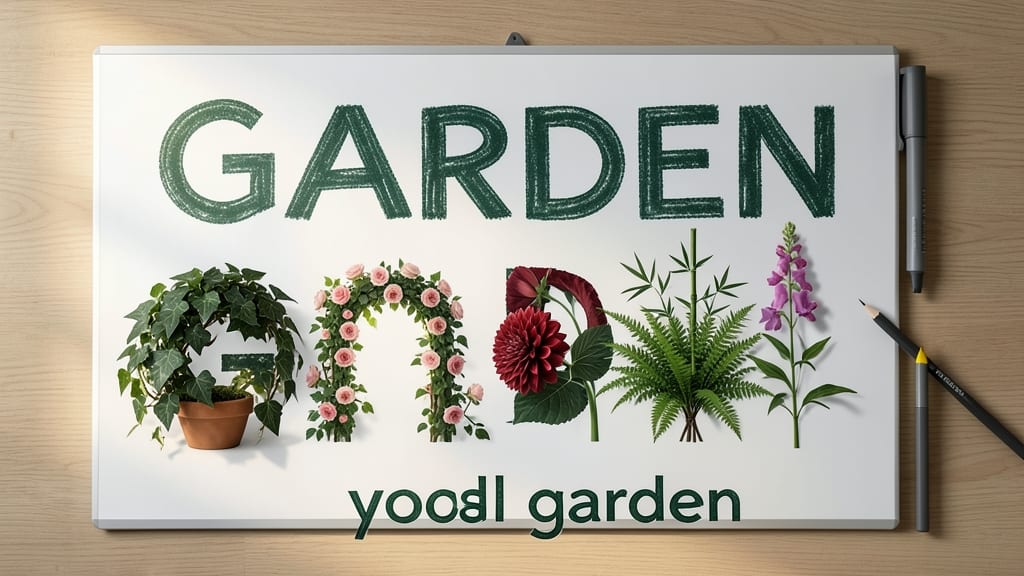
To spell 'garden', write it as G-A-R-D-E-N with a hard 'G' sound (like 'garden'), not 'jarden'. The word traces back to Old English gard, meaning an enclosed plant-growing space.
This spelling reflects English's silent letter patterns—many words ending in '-en' (like 'garden') drop the 'e' sound while keeping the letter. 🌱 The confusion often stems from French-influenced words like 'jardin' (French for garden), which uses a soft 'j' sound.
To avoid mistakes, try associating 'garden' with 'grass'—both start with 'g' and relate to nature.
Visual learners can draw a simple garden sketch with the word written above it, reinforcing the correct spelling through repetition. Another trick is to write 'garden' five times while saying it aloud, focusing on the hard 'g' sound.
This method helps train your brain to connect the spelling with its pronunciation.
💡 In This Article
- Why 'Garden' Ends with an 'E' and Common Spelling Pitfalls
- How to Remember 'Garden' Spelling with Visual Tricks
Why 'garden' ends with an 'e' and common spelling pitfalls
The word "garden" traces its roots to Old English gard, which originally described an enclosed space for cultivating plants. Over centuries, the spelling evolved to include an 'e' at the end, even though it's silent in modern pronunciation.
This silent 'e' is a hallmark of English orthography, where letters often serve as placeholders rather than sounding out. For example, words like "love" and "have" follow the same pattern—silent 'e' at the end to signal a long vowel sound in the preceding syllable. 🌿
One of the most common mistakes is spelling "garden" as "jarden," which stems from confusion with French words like jardin (French for "garden"). The French language uses a soft 'j' sound, while English retains the hard 'g' from its Germanic origins.
This linguistic crossover creates a phonetic trap, especially for learners who associate the 'j' sound with the word's pronunciation. The hard 'g' in "garden" is pronounced like the 'g' in "go," not the 'j' in "jump."
English spelling rules often defy pronunciation, and "garden" is a prime example. The silent 'e' at the end doesn't change the word's sound but serves a grammatical purpose, influencing how the preceding vowel is pronounced.
For instance, removing the 'e' from "garden" turns it into "gard," which sounds like a completely different word. This inconsistency is why many English learners struggle with spelling—words don't always sound the way they're written. 📚
Another pitfall is confusing "garden" with words like "yard," which also describe outdoor spaces but have entirely different spellings and origins. "Yard" comes from Old English geard, meaning an enclosed area, but it lacks the silent 'e' and the soft 'a' sound.
This distinction highlights how English spelling can vary even among words with similar meanings. To avoid mistakes, focus on the hard 'g' sound and the silent 'e' at the end, which are consistent markers in the word's spelling.
Here’s a quick comparison to reinforce the correct spelling:
- Correct: "Garden" (hard 'g' + silent 'e')
- Incorrect: "Jarden" (French influence, soft 'j')
- Incorrect: "Garden" without the 'e' (changes meaning entirely)
Understanding these patterns helps demystify English spelling. The silent 'e' in "garden" isn't just a quirk—it’s a rule that connects the word to its historical roots while keeping it distinct from similar-sounding words. This is why mastering such details can significantly improve spelling accuracy. ✨