
How To
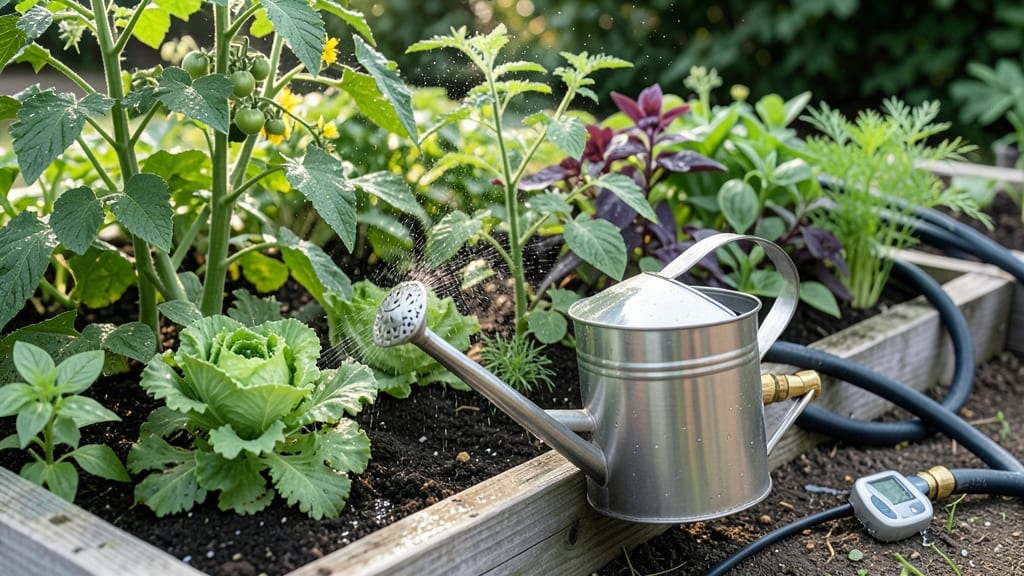
Watering your vegetable garden for the right amount of time ensures healthy roots and a bountiful harvest 🥬—but guessing how long is more art than science.
Overwatering or underwatering your vegetable garden can stifle growth, attract pests, or even kill your plants—yet most gardeners struggle to find the perfect balance. The key lies in understanding soil moisture, not just relying on a timer.
Different vegetables have unique needs: leafy greens like lettuce need frequent, shallow watering, while root crops like carrots thrive with deep, infrequent soaks. Soil type also plays a role—sandy soil drains quickly, while clay holds moisture longer.
In this guide, I’ll break down the soil-moisture check method, custom watering schedules by plant type, and how to adjust for weather, season, and soil conditions. By the end, you’ll know exactly how long to water for a thriving vegetable garden.


The soil-moisture check method: how long to water based on plant needs
Determining the right watering duration for your vegetable garden isn't about guessing—it's about understanding your soil's moisture levels. Most gardeners overwater because they rely on schedules instead of testing soil conditions. The key is checking moisture at two critical depths: the top 1-2 inches and the deeper root zone.
This method ensures your plants get just the right amount without waste or stress.
Start by inserting your finger 1-2 inches deep into the soil near your plants. If it feels dry, water lightly until moisture reaches this level. For deeper-rooted plants like tomatoes or carrots, dig down 6-12 inches—this is where their roots thrive.
If this zone feels bone-dry, you’ll need a longer watering session to saturate it fully. This two-step check prevents surface-level watering that encourages shallow roots.
| Plant Type | Root Depth | Ideal Watering Duration | Seasonal Adjustment |
|---|---|---|---|
| Leafy Greens (Lettuce, Spinach) | 1-3 inches | 5-10 minutes per session | Increase by 30% in summer |
| Root Vegetables (Carrots, Beets) | 6-12 inches | 15-25 minutes per session | Reduce by 20% in fall |
| Fruiting Plants (Tomatoes, Peppers) | 12-18 inches | 20-30 minutes per session | Double duration in peak summer |
| Herbs (Basil, Cilantro) | 2-4 inches | 5-12 minutes per session | Cut by 50% in winter |
Adjust your watering duration based on the plant type and its root depth. For example, shallow-rooted lettuce only needs 5-10 minutes per session, while deep-rooted tomatoes may require 20-30 minutes to fully saturate their root zones.
Always water in the early morning to reduce evaporation and fungal risks. If you notice water pooling on the surface, your soil may need amendments like compost to improve drainage.
Seasonal changes dramatically affect how long you should water. In spring, when soil is still cool and moist, you might only need 50% of your summer watering duration. Conversely, during peak summer heat, increase watering by up to 100% to prevent wilting.
Use a rain gauge or tuna can to measure rainfall—if you’ve had 1 inch of rain, skip watering that day entirely.
For container gardens, watering duration is shorter but more frequent. Check soil moisture every 2-3 days since pots dry out faster. A good rule of thumb: if the top 1 inch feels dry, it’s time to water.
Use your finger to gauge depth—containers often need 10-15 minutes per session, depending on pot size. Larger containers (10+ gallons) may require 20-30 minutes to fully hydrate.
Soil type plays a huge role in watering duration. Clay soil holds moisture longer, so you’ll need shorter sessions (10-15 minutes), while sandy soil drains quickly and may require 20-30 minutes per session.
To test your soil, take a handful and squeeze it—if it crumbles easily, it’s sandy; if it holds a shape, it’s clay. Adjust your watering duration accordingly to avoid runoff or drought stress.
Pay attention to plant-specific signs of over or underwatering. Yellowing leaves often mean too much water, while crispy edges signal drought. For leafy greens, aim for consistently moist (not soggy) soil.
Root vegetables like carrots need deeper, less frequent watering to encourage root growth. If your plants wilt by midday, they likely need a longer watering session—especially in hot, dry conditions.
Invest in a soil moisture meter for precise readings, especially if you’re new to gardening. These tools measure moisture at different depths and take the guesswork out of watering. Even a simple $10 meter can save your plants from overwatering or underwatering.
Place it near your plants and use it to track moisture trends over time. This data will help you fine-tune your watering duration for each season.
Remember, deep watering is always better than shallow, frequent watering. It encourages roots to grow deeper, making your plants more resilient. Aim to water until moisture reaches 12 inches deep for most vegetables.
Use a drip irrigation system or soaker hose to deliver water slowly and evenly, reducing waste and ensuring consistent moisture levels throughout your garden.
By mastering the soil-moisture check method, you’ll give your vegetable garden the perfect balance of hydration. Start with short sessions, monitor soil conditions, and adjust based on plant type, season, and soil type. Soon, you’ll have a thriving garden that’s both productive and sustainable. 🌱
Watering duration by vegetable type: custom schedules for common garden plants
Not all vegetables need the same amount of water—while tomatoes and peppers crave deep soaks, lettuce and radishes prefer consistent moisture without drowning. The key is matching your watering duration to each plant's root depth and growth stage.
For example, young seedlings need frequent, shallow watering, while mature plants benefit from longer, deeper sessions.
Your garden's soil type also plays a huge role. Clay soil holds moisture longer, so you'll water less frequently but for longer durations (10-15 minutes per zone). Sandy soil, on the other hand, drains quickly—requiring shorter, more frequent waterings (5-10 minutes every 2-3 days).
Containers dry out fastest, so they need daily checks and adjusted watering times accordingly.
| Vegetable | Watering Duration (Minutes) | Frequency (Days) | Soil Adjustments | Container Notes |
|---|---|---|---|---|
| Tomatoes | 15-20 | Every 2-3 | Clay: +5 mins; Sandy: -5 mins | Water when top inch is dry |
| Peppers | 12-15 | Every 2-3 | Clay: +3 mins; Sandy: -3 mins | Avoid wetting leaves |
| Lettuce | 8-10 | Daily | Clay: +2 mins; Sandy: -2 mins | Keep soil evenly moist |
| Carrots | 10-12 | Every 2 | Loosen clay soil | Deep pots only |
| Cucumbers | 15-20 | Every 2 | Mulch sandy soil | Large containers needed |
| Radishes | 5-8 | Daily | Clay: +1 min; Sandy: -1 min | Small pots work |
| Green Beans | 10-15 | Every 2-3 | Clay: +3 mins; Sandy: -3 mins | Trellis helps airflow |
| Onions | 8-10 | Every 3 | Clay: +2 mins; Sandy: -2 mins | Drought-tolerant |