
Landscaping
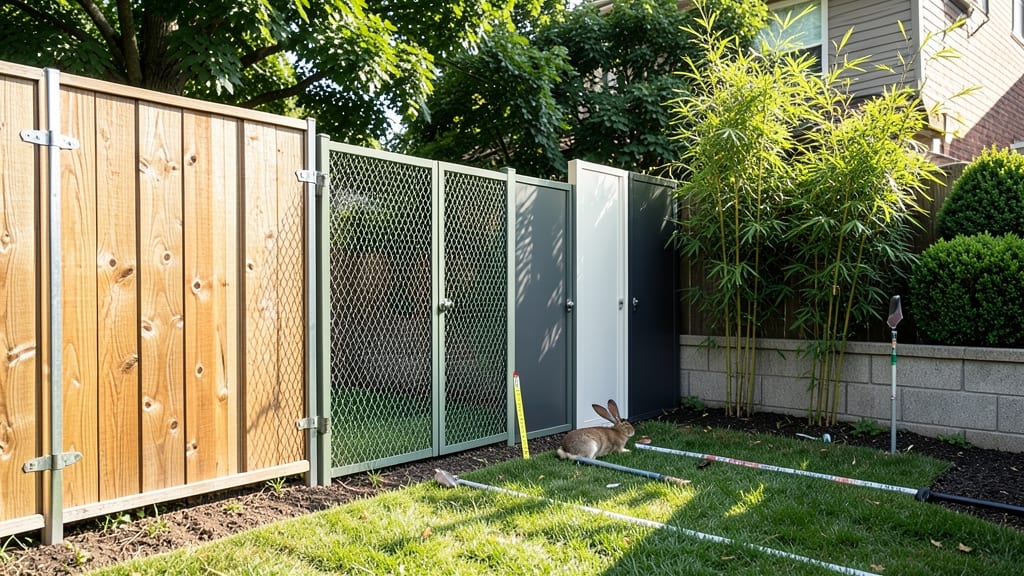
Determining how high a garden fence should be depends on balancing privacy needs with local regulations, as most areas enforce height restrictions between 4 to 6 feet to maintain neighborhood harmony and safety.
A fence's height isn't just about blocking views—it's a legal and practical puzzle. 🌳 Most suburban neighborhoods cap fences at 6 feet to prevent overshadowing neighbors' sunlight, while rural areas may allow taller options for livestock or windbreaks.
I've seen 4-foot fences work perfectly for pet containment or light screening, but anything over 6 feet often requires permits in residential zones. The material also matters: vinyl and wood can look sleeker at standard heights, while metal or chain-link might need extra height for security without sacrificing curb appeal.
Before breaking ground, check your HOA guidelines (if applicable) and local building codes—some cities have strict rules about fence colors too! For example, California limits fences to 6 feet in most areas, while the UK enforces a 2-meter (about 6.5 feet) maximum.
Pro tip: If privacy is your goal, consider adding lattice panels or tall plants along the base to create the illusion of extra height without violating height limits.
💡 In This Article
- Local Fence Height Laws by Region
- Choosing the Right Fence Height for Privacy and Aesthetics
Local fence height laws by region
Fence height restrictions are primarily governed by local zoning laws and homeowners' association (HOA) rules, which often vary dramatically from one region to another.
In the U.S., for example, California generally enforces a 6-foot maximum for residential fences, while states like Texas may allow up to 8 feet in rural areas. The UK, on the other hand, caps fences at about 2 meters (6.5 feet) to preserve views and sunlight access for neighboring properties.
These laws exist to maintain neighborhood harmony, prevent overshadowing, and ensure safety—especially near roads or property lines.
The enforcement mechanisms can differ significantly. Some cities require permits for fences over 4 feet, while others only regulate heights above 6 feet. HOAs often have stricter rules, sometimes limiting fences to 4 feet or requiring specific materials to match the neighborhood’s aesthetic.
Violating these rules can result in fines, mandatory removal, or even legal action, so it’s critical to verify local ordinances before installation. For instance, Los Angeles requires a permit for any fence taller than 6 feet, and non-compliance can lead to a $500+ fine and forced removal.
Rural areas often have more flexibility, allowing taller fences for agricultural purposes or windbreaks. In these cases, heights can exceed 8 feet, sometimes even reaching 10 feet for livestock containment. However, even in rural settings, local agricultural zoning boards may impose restrictions to prevent environmental or safety hazards.
For example, a 10-foot fence might be permitted for a farm but could face backlash in a suburban-adjacent zone due to concerns about blocking views or creating fire hazards.
Another key factor is the fence’s location on the property. Many regulations differentiate between front yard, side yard, and rear yard fences. A 4-foot fence in the front yard might be standard, while the same height in the rear yard could be considered insufficient for privacy.
Always check whether your property falls under residential, commercial, or agricultural zoning, as these classifications drastically influence allowable heights. For example, a 6-foot fence might be fine in a rear yard but could trigger violations in a front yard where visibility is prioritized.
International variations add another layer of complexity. In Australia, fence heights are often regulated by state laws, with New South Wales allowing up to 1.8 meters (5.9 feet) in most areas, while Queensland may permit taller fences in rural zones.
Meanwhile, countries like Japan have strict height limits in urban areas to preserve traditional neighborhood aesthetics, often capping fences at 1.5 meters (4.9 feet). Understanding these regional nuances ensures you avoid costly mistakes and comply with local expectations.