
Watering
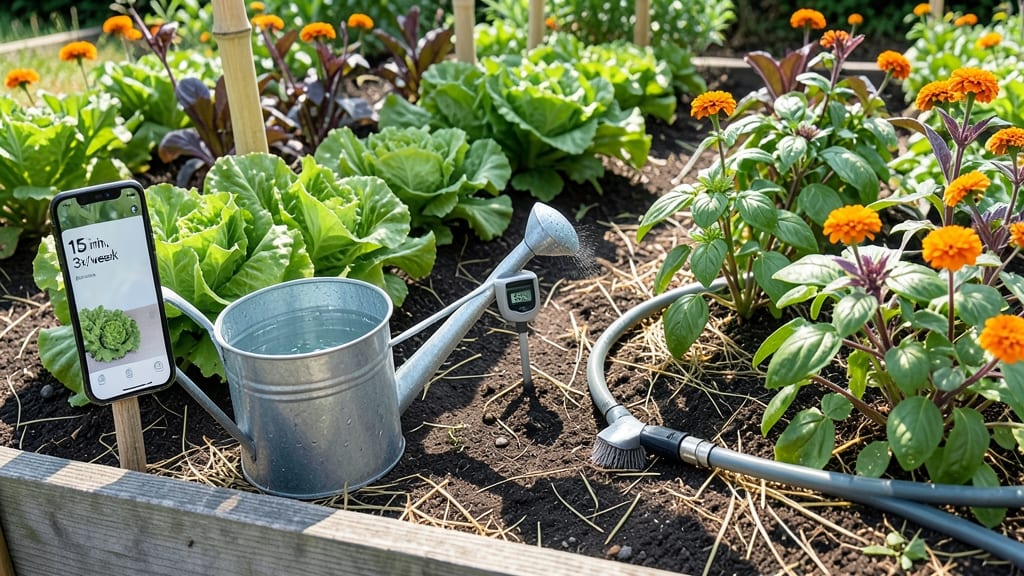
Determining how long to water your garden depends on plant type and season: most vegetables need 1 to 1.5 inches per week, while succulents only require 5 to 10 minutes every 2-3 weeks. Adjust for soil type and weather—dry climates need deeper, less frequent watering, while humid areas benefit from lighter, more frequent sessions. Early morning watering minimizes evaporation and fungal risks.
Your garden's watering needs vary dramatically between plant types and seasonal conditions.
For instance, leafy greens like lettuce and spinach thrive with frequent shallow watering, while root vegetables such as carrots and potatoes need deeper, less frequent sessions to encourage root growth. 🌱 The key is matching watering duration to root depth—shallow-rooted plants need quick, light sessions, while deep-rooted varieties benefit from longer, slower watering to reach their full depth.
Mulch can extend water retention by up to 30%, reducing how often you need to water while keeping roots consistently moist.
Seasonal adjustments are equally important: summer heat increases evaporation rates, often requiring 30-50% more water than spring or fall. Container plants dry out faster than in-ground gardens, so they typically need daily checks during hot weather.
A simple way to test moisture levels is to stick your finger 1-2 inches into the soil—if it feels dry, it's time to water. Overwatering is just as harmful as underwatering, as it can lead to root rot and nutrient leaching from the soil.
💡 In This Article
- Science Behind Garden Watering: Soil, Plants, and Root Depths
- Seasonal Watering Schedule for Common Garden Plants
Science behind garden watering: soil, plants, and root depths
Water absorption in your garden isn't just about how much you pour—it's about how your plants' roots interact with soil composition.
Shallow-rooted plants like lettuce or basil have roots reaching only 6-12 inches deep, so they need frequent, light watering (about 5-10 minutes every 1-2 days) to keep the topsoil moist.
In contrast, deep-rooted crops such as tomatoes or carrots develop roots up to 3 feet deep, requiring longer sessions (15-20 minutes) to saturate the entire root zone.
The science here involves capillary action: finer soils like clay hold water tightly near the surface, while sandy soils drain quickly, often needing 20-30% more water to reach the same moisture level.
Seasonal evaporation rates dramatically alter these needs. During summer, up to 90% of water can evaporate within hours due to heat and wind, while winter often requires 50% less watering.
Mulch plays a critical role here—organic mulches like straw or wood chips can reduce evaporation by 30-50% by creating a protective barrier that maintains soil temperature and moisture. The ideal mulch layer is 2-4 inches thick, acting like a natural sponge that slowly releases water back to roots.
Without mulch, soil temperatures can fluctuate by 20°F between day and night, stressing plants and increasing water needs.
Overwatering creates a hidden problem: oxygen deprivation. Roots need air to breathe, and waterlogged soil suffocates them, leading to rot. This is why clay soils—though moisture-retentive—often cause more root issues than sandy soils. A simple test is the "squeeze test": if soil clumps tightly when squeezed, it's too wet.
For most vegetables, the sweet spot is 40-60% moisture by volume, measured by a soil moisture meter. Succulents, however, thrive at 20-30% moisture, explaining why they need such minimal watering compared to thirsty crops like corn.
Soil texture also dictates watering duration. Sandy soils drain in 15-30 minutes, requiring frequent but short sessions, while clay soils may take 2-3 hours to absorb the same amount. The key is matching your watering duration to your soil's infiltration rate.
For example, a 10-minute watering session on sandy soil might deliver only 0.5 inches of water, while the same time on clay could give 1.5 inches.
This is why many gardeners use a rain gauge to track actual water delivery—what feels like "enough" time can vary wildly based on your soil type.
Consider this real-world example: In Arizona's desert climate, I've seen cacti thrive with just 3 minutes of water every 4 weeks, while nearby vegetable gardens needed 30 minutes daily during peak summer. The difference?
Root depth (1-2 inches for cacti vs. 2+ feet for vegetables) and soil composition (sandy loam vs. clay-loam). Understanding these variables lets you customize watering to your garden's specific needs, saving both water and effort.
The goal isn't to follow rigid rules but to observe your plants' responses and adjust accordingly.