
Light Requirements
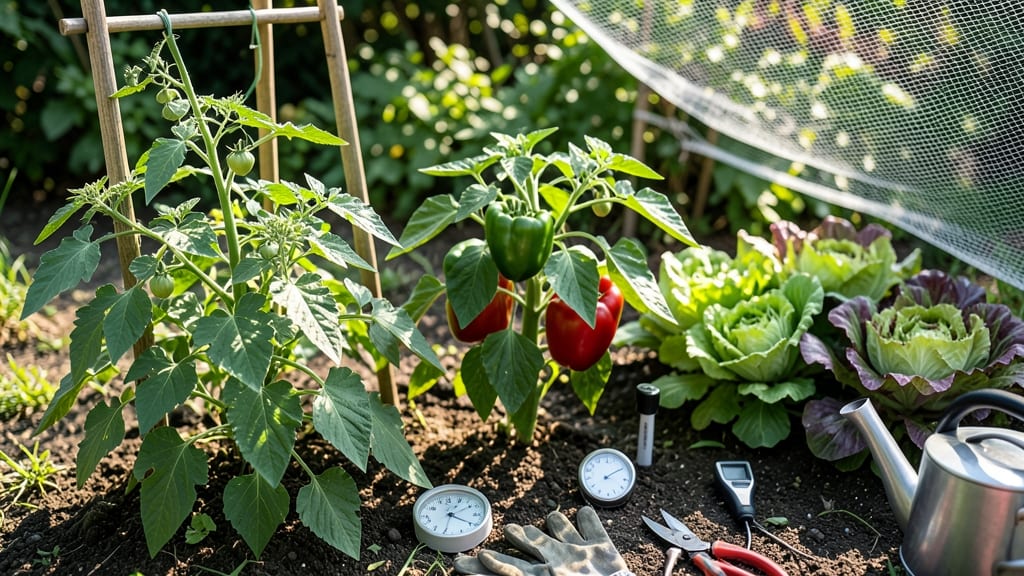
Sunlight is the lifeblood of your 🥬 garden—but too much or too little can mean the difference between a thriving harvest and wilted disappointment. Whether you're growing sun-loving tomatoes or shade-tolerant lettuce, understanding the exact light needs for each plant is the key to a productive garden.
In Zone 6, where spring planting kicks off in March, you’ll need to strategically place crops based on their sun requirements. Some vegetables, like peppers and cucumbers, demand full sun, while others, like spinach and kale, can handle partial shade.
I’ll break down the ideal sunlight ranges for your favorite veggies and how to adjust your garden layout for the best results.
Discover how to spot signs of sun stress, optimize your garden’s placement, and maximize your harvest—no matter how much sunlight your space actually gets.


Sunlight requirements by vegetable type: full sun vs partial shade breakdown
Understanding your vegetable garden's sunlight needs is like knowing the secret ingredient in a recipe—get it wrong, and your harvest suffers. Most vegetables thrive with 6-8 hours of direct sun, but some, like leafy greens, can handle less.
The key is matching each plant to its ideal light conditions to avoid stunted growth or sunburned foliage. Let’s break down the categories so you can plan your garden like a pro.
First, let’s debunk a common myth: partial shade doesn’t mean "any old spot with dappled light." True shade-tolerant plants still need at least 3-4 hours of sun, while others will bolt or produce poorly.
For example, lettuce and spinach can handle 4-6 hours of sun in hot climates, but they’ll bolt faster in cooler weather. Meanwhile, tomatoes and peppers demand 8+ hours of sun to set fruit.
Here’s a quick rule of thumb: Full sun = 6+ hours of direct sunlight, partial shade = 3-6 hours, and low-light tolerant = 2-3 hours. But these ranges can shift based on your USDA hardiness zone and local climate.
For instance, in Zone 9, a plant might need 6 hours of sun to thrive, while in Zone 5, it could require 8 hours to compensate for cooler temperatures.
Now, let’s talk about regional adjustments. If you’re in a hot, dry climate like Arizona, some plants (like lettuce) might need only 3-4 hours of sun to avoid wilting. Conversely, in cooler climates like the Pacific Northwest, those same greens can handle 6 hours of sun without bolting.
Always observe how your plants react—yellowing leaves or slow growth are red flags for insufficient light.
For container gardening, sunlight needs are even more critical because pots heat up faster. Place tomato plants in south-facing containers and
How to adjust your garden layout for sun exposure challenges
Even the most dedicated gardeners face sun exposure challenges—whether it's a shady corner from towering trees or a hot afternoon sun scorching delicate greens. The key to success lies in strategic garden layout adjustments that make the most of what sunlight you have.
Start by observing your garden throughout the day to map sun patterns and identify shady spots or overly exposed areas. This simple step will guide your planting decisions and help you avoid common pitfalls like sunburned leaves or stunted growth.
For example, if your garden has morning sun but afternoon shade, prioritize sun-loving crops like tomatoes and peppers in the sunniest spots while reserving partial shade plants like lettuce or spinach for the cooler afternoon areas. Vertical gardening is another game-changer for small spaces or uneven sunlight—trellises and wall planters can turn limited space into productive real estate while giving plants the optimal light exposure they crave.
Think of it as a multi-level solution that maximizes every ray of sunlight.
- 1 6-8 hours of sun is ideal for most vegetable crops like tomatoes, peppers, and cucumbers to produce high yields.
- 2 3-6 hours of sun works for partial shade plants such as leafy greens (kale, Swiss chard) and herbs (basil, cilantro).
- 3 Less than 3 hours of sun suits low-light plants like spinach, arugula, and radishes, though yields may be smaller.
- 4 Adjust seasonally: Morning sun in summer may shift to afternoon sun in winter—rotate crops accordingly.
- 5 Use reflective surfaces like white gravel or light-colored mulch to bounce extra sunlight onto shady areas.
Another clever trick is companion planting, where you pair plants with complementary sunlight needs. For instance, plant tall sun-lovers like corn or sunflowers on the north side of your garden to cast shade on heat-sensitive crops like beans or peas.
This creates a natural microclimate that balances light and temperature. You can also use dwarf varieties of sun-loving plants near the edges of shady spots to stretch their reach into the light. Think of it as a sunlight-sharing strategy that benefits everyone in your garden ecosystem.
If your garden is plagued by buildings or fences blocking sunlight, consider seasonal adjustments. In spring and fall, when the sun is lower in the sky, east- or west-facing gardens may receive more light than they do in summer.
Take advantage of this by planting sun-hungry crops in these areas during cooler months. Additionally, container gardening offers flexibility—you can move pots to follow the sun throughout the day or season. This mobility ensures your plants get the consistent light exposure they need, even in the most challenging layouts.
Don’t overlook the power of mulching and soil preparation to enhance sunlight absorption. Dark mulches like straw or wood chips absorb heat, warming the soil and encouraging root growth in cooler, shadier spots. Meanwhile, light-colored mulches reflect heat, protecting heat-sensitive plants from scorching.
Combine these techniques with drip irrigation to maintain consistent moisture—hydrated plants are more resilient to sun stress and can better utilize available light. Small tweaks like these can transform a problematic garden layout into a thriving, productive space.
Finally, embrace patience and experimentation. Every garden is unique, and what works for your neighbor might not work for you. Keep a garden journal to track which plants thrive in which spots and adjust your layout as needed.
Over time, you’ll develop an intuitive sense of how to harness sunlight in your space, turning challenges into opportunities for a bountiful harvest. With these strategies, even the trickiest sun exposure issues can become a thing of the past. 🌱