
Watering
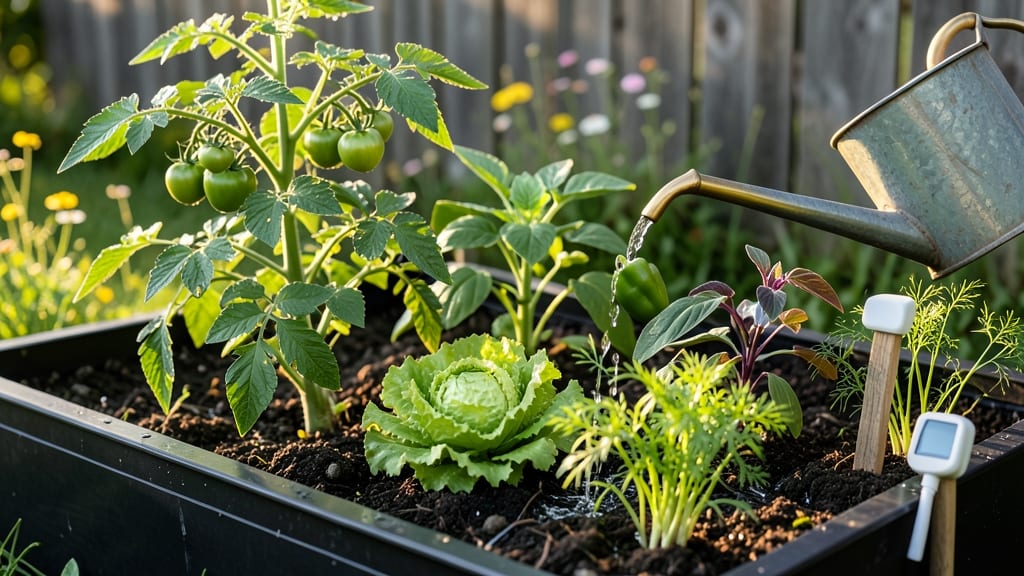
You should water your veggie garden 🥬 based on plant type, soil, and weather—not just a fixed schedule.
Overwatering or underwatering your veggie garden can mean the difference between a thriving harvest and wilted disappointment—yet most gardeners get the timing wrong. The right watering schedule depends on plant type, soil conditions, and even the season, so let’s break down the science behind smart irrigation for your garden’s success.
Leafy greens like lettuce need consistent moisture, while root vegetables such as carrots thrive with deeper, less frequent watering. Summer heat demands more frequent watering, but winter slows things down. Understanding these nuances saves time, water, and keeps your plants healthy.
Below, I’ll share a plant-by-plant guide, seasonal adjustments, and tools to monitor soil moisture—so you can water exactly when your veggie garden needs it most.
Watering frequency by plant type: a science-backed schedule for common vegetables
Watering your veggie garden isn't a one-size-fits-all task—each plant type has unique needs based on its growth stage, root depth, and water retention requirements.
For example, leafy greens like lettuce and spinach need consistent moisture to stay crisp, while root vegetables like carrots and beets prefer evenly moist soil to prevent cracking. Understanding these differences ensures your plants thrive from seedling to harvest.
Most vegetables require 1-2 inches of water per week, but this varies dramatically between plant families. Fruiting plants like tomatoes and peppers actually tolerate slightly drier conditions once established, while cucumbers and zucchini demand frequent hydration to prevent bitter fruit.
Even herbs like basil and cilantro have specific watering preferences that differ from their leafy green cousins.
The growth stage of your plants also dictates watering frequency. Seedlings need daily moisture to prevent wilting, while mature plants can often handle 3-5 days between waterings.
Below, I’ve broken down the science-backed watering schedules for the most common vegetable categories, so you can tailor your irrigation routine for maximum yield.
For leafy greens, the key is maintaining even moisture—never let the soil dry out completely, or your lettuce will bolt (go to seed) prematurely.
I’ve found that using a soaker hose or drip irrigation system works best for these high-demand plants, as it delivers water directly to the roots without wetting the foliage. This reduces the risk of fungal diseases like downy mildew, which thrives in damp leaves.
When it comes to root vegetables, consistency is critical. Carrots and beets need uniform moisture to grow straight and sweet, but they’ll split or fork if the soil is too wet or too dry.
A good rule of thumb is to water deeply every 3-5 days rather than giving shallow, frequent waterings. This encourages roots to grow deeper into the soil, resulting in more robust harvests.
Fruiting plants like tomatoes and peppers are often misunderstood—they’re surprisingly drought-tolerant once established. The secret is to water deeply but infrequently, which strengthens their root systems. I’ve seen gardeners double their tomato yields by switching from daily shallow waterings to weekly deep soaks. Just be sure to water at the base of the plant and avoid wetting the leaves to prevent diseases like early blight.
Adjusting watering for seasonal changes: heat, rain, and dormancy tips
Seasonal shifts dramatically impact your veggie garden’s water needs. What works in summer’s scorching heat fails during cool autumn rains, and winter dormancy requires a completely different approach.
The key? Adjusting your watering routine to match the environmental conditions and plant life cycles—not just sticking to a rigid schedule.
For example, tomatoes and peppers demand frequent watering when temps hit 90°F+, while lettuce and spinach slow their growth in winter and need far less. Even rainy seasons can drown roots if you don’t pause irrigation or improve drainage.
Let’s break down how to adapt your routine for each season—plus tools to avoid guesswork.
- 1 Summer Heatwave: Water deeply every 2-3 days at dawn (before 8 AM) to prevent evaporation. Use mulch to retain moisture—3 inches of straw can cut water needs by 30%.
- 2 Rainy Season: Pause irrigation entirely if 1 inch of rain falls in 24 hours. Check for waterlogged soil (soggy, foul-smelling) and improve drainage with raised beds or sand amendments.
- 3 Cool Months: Reduce watering to once every 7-10 days. Exceptions: evergreens (kale, broccoli) need bi-weekly watering to prevent winter burn.
- 4 Dormancy Prep: In late fall, taper watering for perennials (like asparagus) to every 2 weeks. Stop entirely for annuals once frost arrives.
- 5 Tools to Monitor: Use a moisture meter (readings below 30% = water) or the finger test (stick your finger 1 inch deep—dry? Water). Avoid overhead sprinklers in heat (leads to fungal diseases).
Signs of overwatering include yellowing leaves, mushy stems, or white mold on soil. Underwatered plants wilt even in cool weather and develop crispy leaf edges. Pro tip: Drip irrigation delivers water directly to roots, reducing waste by up to 50% compared to sprinklers.
Mulch isn’t just decorative—it’s a water-retention powerhouse. A 3-inch layer of organic mulch (like wood chips or grass clippings) keeps soil 5-10°F cooler in summer and locks in moisture for up to 3 days longer. For container gardens, switch to coco coir or peat moss to prevent drying.
Evergreens like broccoli or Brussels sprouts are exceptions—they need winter watering to stay hydrated under snow. Aim for 1 inch every 2 weeks unless the ground is frozen. And if you’re in a drought-prone area, group plants by water needs (e.g., zucchini near peppers, not lettuce).
Adjusting your watering routine seasonally isn’t just about survival—it’s about maximizing yield and minimizing stress on your plants. Start with these tips, and soon you’ll have a self-regulating system that adapts to Mother Nature’s whims. Happy gardening! 🌱