
How To
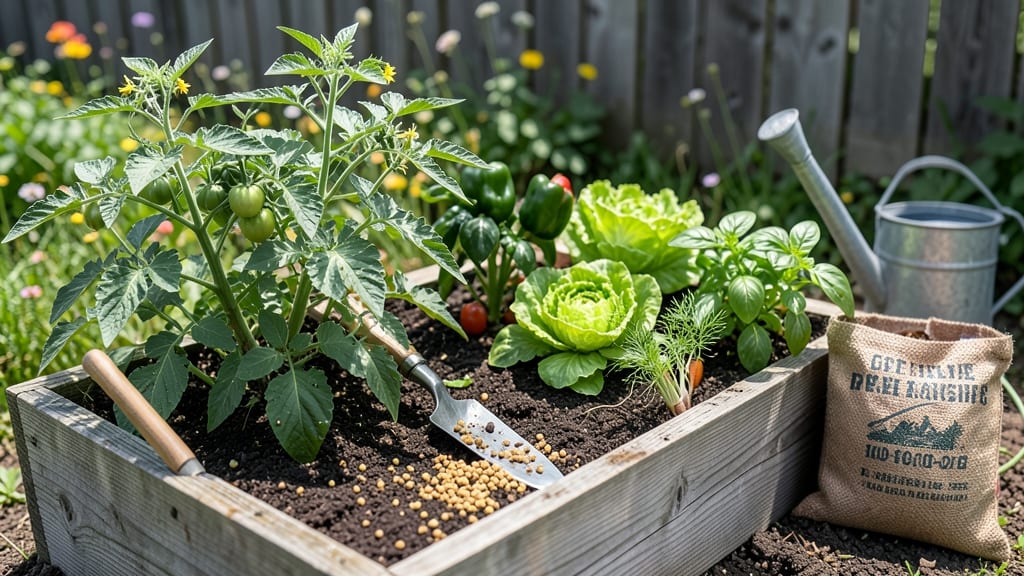
To fertilize a vegetable garden properly means feeding your plants just often enough—not too little, not too much—so they grow strong without wasting resources or burning their roots.
Struggling to keep your 🥕 vegetable garden thriving? Over- or under-fertilizing can ruin your harvest, and timing matters more than you think. Too much too soon, and you’ll end up with leaf burn or stunted growth. Too little, and your plants won’t reach their full potential.
This guide breaks down the seasonal schedule you need, from pre-planting boosts to mid-season maintenance, so you can fertilize with confidence—whether you’re growing leafy greens, fruiting plants, or root crops.
You’ll learn how to read your plants’ signals, choose the right fertilizer for each stage, and avoid common mistakes that waste money and harm your soil. Let’s get started!

Fertilizing frequency by vegetable type: a seasonal guide
Fertilizing your vegetable garden isn’t a one-size-fits-all task—each plant type has unique needs. Leafy greens like spinach and kale thrive on frequent, light feedings, while root crops such as carrots and beets need less nitrogen to avoid stunted growth.
Meanwhile, fruiting plants like tomatoes and peppers demand phosphorus-heavy fertilizers during flowering. Understanding these differences ensures your harvest stays healthy and productive.
Seasonal timing is equally critical. Early spring and late summer are prime feeding windows, but organic fertilizers (like compost or worm castings) break down slower, so you’ll need to apply them sooner. Synthetic fertilizers, on the other hand, release nutrients quickly, making them ideal for mid-season boosts.
Always test your soil pH first—most vegetables prefer a neutral range of 6.0-7.0.
Here’s a quick breakdown of how often to fertilize your vegetable garden by plant type, tailored to organic and synthetic options:
For leafy greens, I recommend a high-nitrogen approach early in the season to encourage lush foliage. Use fish emulsion or compost every 2-3 weeks until harvest. Skip fertilizing just before picking to avoid bitter flavors. Root crops, however, need minimal nitrogen—too much will make them forked or woody.
A single low-nitrogen application at planting is often enough.
When it comes to fruiting plants, timing is everything. Shift to a phosphorus-rich fertilizer once flowers appear to support fruit development. Tomatoes, for example, love a 10-20-10 blend applied every 3-4 weeks during their growing season.
Herbs, like basil, prefer a lighter touch—stick to balanced fertilizers every 4-6 weeks to avoid overstimulating growth.
If you’re using organic fertilizers, plan ahead—they take time to break down. I like to side-dress with compost or worm castings in early spring, then top up with a liquid feed like compost tea every 4 weeks.
For synthetic fertilizers, follow the label closely, but remember: less is often more. Over-fertilizing can burn roots or lead to excessive foliage at the expense of fruit.
Always monitor your plants for signs of nutrient stress. Yellowing leaves? It might be time for a nitrogen boost. Stunted growth or poor flowering? Switch to a phosphorus-heavy fertilizer.
And if your soil feels compacted or lacks organic matter, amend it with compost before fertilizing—healthy soil is the foundation of a thriving garden.
Pro tip: Mulch after fertilizing to lock in moisture and nutrients. Use straw or shredded
Signs your vegetable garden needs fertilizer (and when to stop)
Your vegetable plants communicate their needs through subtle (and sometimes obvious) signals. Yellowing leaves, stunted growth, or delayed flowering often mean your soil lacks essential nutrients. But how do you know if it's time to fertilize—or if you've already overdone it?
Learning to read these signs helps you adjust your schedule without wasting resources or harming your plants.
First, check the leaf color. Pale or yellow leaves on younger growth typically signal a nitrogen deficiency, while purple or red stems indicate phosphorus shortages. Brown leaf edges, on the other hand, often mean you've over-fertilized with salts.
These visual cues help you tailor your approach to what your garden truly needs.
⚠️ callout warning ⚠️
Applying fertilizer too frequently (more than every 4-6 weeks) can burn roots and disrupt soil microbes. Heavy-handed applications in summer heat increase salt buildup, while fall/winter feeding wastes nutrients plants can't use. Always match fertilizer type to your plant's growth stage—nitrogen for leaves, phosphorus for roots and flowers, potassium for fruit development.
Fix it: Flush soil with water, add compost, and test soil pH before reapplying fertilizer.
Don't ignore growth patterns either. If your plants are short and leggy with weak stems, they're likely nitrogen-starved. Conversely, small leaves or thick, dark green foliage can signal phosphorus or potassium deficiencies.
For fruiting plants like tomatoes or peppers, fewer flowers or small fruits often mean they need phosphorus to support blooming.
Timing matters just as much as type. Early-season feeding (spring) boosts leafy growth, while mid-summer applications should focus on phosphorus for flowering. Stop fertilizing 4-6 weeks before harvest to avoid chemical residues. For organic gardeners, a light compost tea every 3-4 weeks maintains soil health without risk of over-application.
Watch for root health too. If you see mushy roots or fungal growth when transplanting, your soil may have too much salt from over-fertilization. Healthy roots should be white or light tan.
To fix this, amend your soil with organic matter like compost or coconut coir to improve drainage and microbial activity.
Remember: Less is often more. Many gardeners overcompensate when they spot early signs of deficiency, leading to more problems than they solve. Start with a soil test to identify specific nutrient gaps, then adjust your schedule based on your plants' responses.
With practice, you'll learn to read your garden like a book—and your harvest will thank you!