
Watering
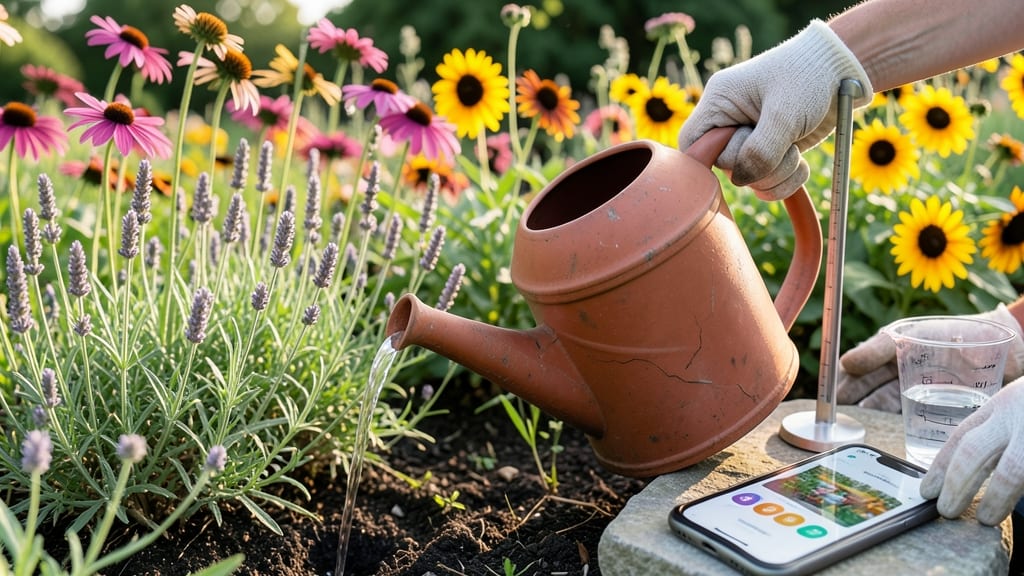
Watering a flower garden the right way means giving it just enough moisture to thrive—not too much, not too little—so your 🌸 blooms stay vibrant all season.
Struggling to keep your flower garden vibrant without drowning or starving your plants? The secret lies in understanding moisture balance—because watering too much or too little can turn your blooms into a sad, wilted mess.
Most gardeners guess instead of checking, which leads to overwatered roots or parched petals. I’ll show you the finger-dip test and seasonal watering rules that keep your soil perfectly moist, no guesswork required.
By the end, you’ll know exactly when to water—whether your garden is in full sun or partial shade—and how to spot the signs of thirsty or soggy soil before it’s too late.
The perfect watering schedule for flower gardens by plant type
Watering your flower garden isn't a one-size-fits-all task—each plant type has unique needs that change with the seasons. Annuals like petunias and marigolds demand consistent moisture, while perennials such as coneflowers adapt better to dry spells. Bulbs like tulips need minimal water once established, and drought-tolerant varieties thrive with sparse hydration.
Understanding these differences ensures your garden stays lush without wasting water or drowning roots.
Seasonal shifts also play a critical role. In spring, focus on establishing roots with deep, infrequent watering. Summer demands frequent hydration, especially during heatwaves, while fall transitions to a more conservative approach.
By tailoring your watering schedule to both plant type and season, you'll create a thriving, resilient garden that blooms beautifully year after year.
Here's a quick reference to get you started—adjust based on your local climate and soil type. Well-draining soil retains moisture longer than heavy clay, so always check moisture levels before watering. Mulching around plants helps retain soil moisture and reduces evaporation, cutting down on how often you need to water.
| Plant Type | Spring Watering | Summer Watering | Fall Watering | Winter Watering | Notes |
|---|---|---|---|---|---|
| Annuals (Petunias, Marigolds, Zinnias) | Every 2-3 days (deep soak) | Daily (early morning) | Every 5-7 days (reduce gradually) | Minimal (monthly if no frost) | Fast-growing; needs consistent moisture |
| Perennials (Coneflowers, Lavender, Black-Eyed Susans) | Weekly (deep watering) | Every 3-4 days (deep soak) | Bi-weekly (reduce as temps drop) | Monthly (avoid soggy soil) | Established roots; drought-tolerant once mature |
| Bulbs (Tulips, Daffodils, Hyacinths) | Every 7-10 days (after sprouting) | Weekly (once foliage appears) | Minimal (stop after foliage dies) | None (dormant) | Water sparingly; overwatering causes rot |
| Drought-Tolerant (Succulents, Sedum, Yarrow) | Every 10-14 days (deep soak) | Every 7-10 days (check soil) | Monthly (reduce drastically) | None (store water in leaves) | Thrive on neglect; avoid soggy conditions |
For annuals, which have a single growing season, consistency is key. Water deeply every 2-3 days in spring to encourage root growth, then increase to daily in summer if temperatures exceed 90°F. Petunias and marigolds wilt quickly when thirsty, so monitor soil moisture closely.
In fall, taper off watering as growth slows, and avoid winter watering unless your region experiences freeze-thaw cycles.
Perennials like coneflowers and lavender are more forgiving but still need attention. During spring, aim for weekly deep watering to establish roots before the heat sets in. In summer, water every 3-4 days and aim for the soil 6 inches deep—this mimics natural rainfall and encourages deeper roots. Fall is the time to reduce watering gradually, allowing roots to hard
The finger-dip test: how to check soil moisture like a pro
If you’ve ever walked past a wilted petunia or a muddy patch of dahlias, you know watering is an art, not a guess. The finger-dip test is my go-to trick for nailing soil moisture—no fancy tools required.
This simple method tells you exactly when your flower garden is thirsty or already overwatered, saving you from both root rot and parched plants.
Here’s the secret: most flowers thrive when the top 1-2 inches of soil stay lightly moist, not soggy or bone-dry. The finger-dip test lets you feel the truth instead of relying on a watering schedule that might be too rigid.
Overwatering is just as deadly as underwatering, and your roses or marigolds will thank you for getting it right.
- Step 1: Wait until morning when soil is cooler and moisture levels are stable.
- Step 2: Gently push your index finger 1-2 inches deep into the soil near the plant’s base.
-
Step 3: Check the moisture:
- Dry: Soil feels like sand or crumbles easily → Water now.
- Moist: Soil sticks slightly to your finger but isn’t wet → Wait 1-2 days.
- Wet: Soil feels cold or squishy → Hold off until drier.
- Step 4: Repeat around the garden—soil moisture varies by sun exposure and plant type.
- Step 5: Adjust your watering routine based on what you feel, not a calendar.
I’ve made the mistake of watering my geraniums on a strict every-other-day schedule, only to find the soil was still damp from yesterday’s rain. The finger-dip test prevents this—it’s your real-time moisture gauge.
For potted flowers, check the soil at the edges of the pot where it dries fastest.
Another common pitfall? Testing soil in the shade where it stays cooler and wetter longer. Always test near the plant’s base in its natural light conditions. Succulents and lavender need drier soil than impatiens or coleus, so adjust your expectations based on the plant type.
Pro tip: Keep a small notebook nearby to track your findings. Note which flower varieties dry out fastest in your climate—this helps you refine your watering strategy over time. For example, my zinnia beds dry out in 2 days in summer, while hostas can go 5 days without water.
Remember, the goal isn’t to water on a schedule—it’s to meet your plants’ needs. When you master the finger-dip test, you’ll see healthier blooms, fewer pests (overwatering attracts slugs!), and a garden that thrives all season long. 🌸