
How To
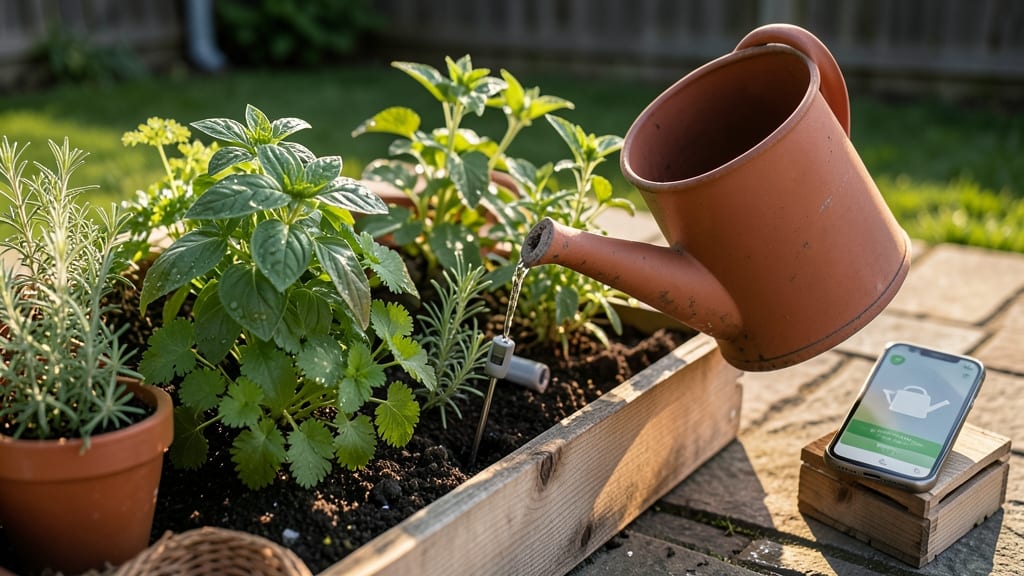
Watering your herb garden the right way keeps those 🌿 fresh leaves vibrant and flavorful—because how often you water makes all the difference between thriving plants and sad, wilted stems.
Most gardeners guess instead of checking, and that’s how you end up with either drowned roots or crispy herbs that taste like cardboard. The secret? Simple soil-moisture tests that tell you exactly when each herb—from basil to rosemary—needs a drink.
In this guide, I’ll break down the perfect watering schedule for your zone, how to adjust for containers vs. in-ground beds, and the easy tests that save your herbs from over- or under-watering.
You’ll leave here knowing exactly when to reach for the hose—or skip it entirely—and keep your herb garden lush all season long.
Optimal watering frequency for different herb types by soil type
Watering your herb garden isn't a one-size-fits-all task—each plant has unique needs, and your soil type plays a huge role. For example, basil thrives with consistent moisture in loamy soil, while rosemary prefers drier sandy soil to prevent root rot.
Understanding these differences ensures your herbs grow flavorful and healthy, not wilted or waterlogged.
Soil type dramatically changes how often you water. Sandy soil drains quickly, requiring daily checks in summer, while clay soil holds moisture longer, needing water only every 5-7 days.
Even within the same soil, herb varieties like parsley (moisture-loving) and thyme (drought-tolerant) demand different care. Let’s break it down by plant and soil for foolproof watering.
| Herb Type | Soil Type | Watering Frequency (Summer) | Notes |
|---|---|---|---|
| Basil | Loamy/Sandy | Every 1-2 days | Needs consistent moisture; wilts fast in dry soil. |
| Basil | Clay | Every 3-4 days | Clay retains water; check top 1 inch of soil. |
| Mint | Loamy | Every 2-3 days | Loves moisture but avoid soggy roots. |
| Rosemary | Sandy | Every 4-5 days | Drought-tolerant; overwatering kills it. |
| Thyme | Sandy/Loamy | Every 5-7 days | Prefers dry conditions; thrives in heat. |
| Parsley | Loamy/Clay | Every 2-3 days | Needs steady moisture for leafy growth. |
For basil, the goldilocks zone is key—too little water, and leaves crisp up; too much, and roots suffocate. In sandy soil, water deeply every 1-2 days during summer’s peak heat, while clay soil can stretch that to 3-4 days.
Always water at the base of the plant to avoid fungal spores splashing onto leaves.
If you’re growing mint, treat it like a thirsty friend—it drinks water fast but hates soggy feet.
In loamy soil, water every 2-3 days, but reduce to every 4-5 days in cooler months. Mint spreads aggressively, so contain it in pots or raised beds to control watering zones.
Rosemary and thyme are the drought-loving rebels of the herb world. In sandy soil, rosemary thrives with minimal watering—every 4-5 days in summer is plenty. Thyme, equally resilient, needs water only when the top 2 inches of soil feel dry. Overwatering these herbs leads to root rot, so err on the side of underwatering.
Parsley, a biennial, demands consistent moisture to grow its lush, flat leaves. In loamy or clay soil, water every 2-3 days in summer, ensuring the soil never dries out completely. For container-grown parsley, check soil moisture daily—pots dry out 3x faster than in-ground beds.
Seasonal shifts demand watering adjustments. In spring and fall, reduce frequency by 30-50% compared to summer. Winter watering drops to bi-weekly for most herbs, except parsley, which may need monthly checks. Always water in the early morning to minimize evaporation and fungal risks.
Pro tip: Use a soil moisture meter or the finger test—stick your finger 1 inch deep into the soil. If it feels dry, water; if moist, wait. This simple check beats guessing and saves your herbs from stress or disease. 🌱
Container gardens need extra attention. Her
5 Soil-moisture tests to determine when herbs need water
Guessing when to water your herb garden can lead to either drought-stressed plants or root rot from overwatering. Instead of relying on schedules, use these 5 simple soil-moisture tests to give your herbs exactly what they need—consistent moisture without waterlogging.
These methods work for both container herbs like basil and in-ground perennials like rosemary, adapting to your garden's unique conditions.
Start with the finger test, the most accessible method. Stick your index finger about 1-2 inches into the soil near your herb's roots. If it feels dry, it's time to water.
For container herbs, check deeper—up to 3 inches—since pots dry out faster. This test works best in the morning, when soil moisture is most stable and evaporation hasn't occurred yet.
- 1 Finger Test: Insert finger 1-2 inches deep. Dry = water; damp = wait.
- 2 Weight Check: Lift pots—lighter weight = needs water; heavier = hold off.
- 3 Visual Inspection: Check for cracked soil (dry) or shiny surface (overwatered).
- 4 DIY Moisture Meter: Use a wooden skewer—if it comes out clean, soil is dry.
- 5 Herb-Specific Signs: Wilted leaves = underwatered; yellowing = overwatered.
For container herbs, the weight check is a game-changer. Lift your pot—if it feels significantly lighter than usual, your herbs are thirsty. This method is especially useful for heavy drinkers like basil or drought-tolerant rosemary in pots, as it accounts for both soil moisture and evaporation rates.
Pro tip: Place a moisture meter in your largest pot to track trends over time.
When dealing with in-ground herb gardens, rely on visual cues like soil color and texture. Dark, crumbly soil at 2 inches deep indicates adequate moisture, while light, dusty soil signals dehydration.
Pay attention to herb-specific signs: parsley and cilantro wilt dramatically when thirsty, while thyme and oregano may just look slightly droopy. Adjust your watering based on these visual clues.
For a no-equipment DIY moisture meter, insert a wooden skewer or chopstick into the soil. Pull it out after 10 seconds—if it’s clean, your herbs need watering. If it’s damp, wait another day.
This method is perfect for herb spirals or mixed containers where multiple moisture levels exist. Test in the shadiest part of the container first, as this area typically dries last.
Finally, combine these tests with herb-specific watering needs. Mint and chives prefer consistently moist soil, while rosemary and thyme thrive with drier conditions. Use your soil-moisture tests to fine-tune your approach—water mint when the top ½ inch feels dry, but wait until 1-2 inches deep for rosemary.
Consistency is key to avoiding stress signals like yellowing leaves or stunted growth.