
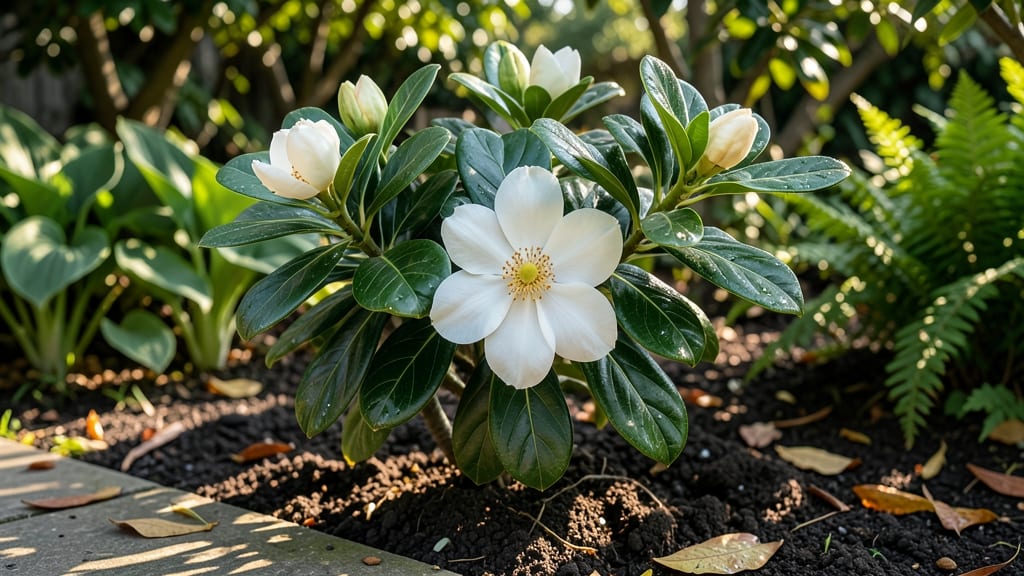
Factors that control gardenia height: pruning, soil, and climate
Understanding how to control your gardenia’s height starts with recognizing the key factors at play. Sunlight exposure, pruning techniques, soil acidity, and climate conditions all shape whether your plant stays compact or stretches toward the sky.
For example, gardenias in full sun often grow taller and bushier, while those in partial shade may become leggy. Let’s break down how each factor influences growth and what you can do to guide your plant’s height naturally.
Pruning is the most direct way to manage gardenia height. Regular pruning encourages denser growth and prevents overgrowth, while selective trimming can shape your plant into a manageable size. I recommend pruning right after flowering to avoid cutting off next year’s blooms.
For compact growth, focus on trimming the outermost growth to promote bushier branches. If your gardenia is already too tall, don’t worry—strategic pruning can reduce height by up to 30% in a single season.
Soil plays a critical role in gardenia height, particularly acidity levels. Gardenias thrive in acidic soil (pH 5.0-6.5). If your soil is too alkaline, your plant may struggle to absorb nutrients, leading to stunted growth or leggy stems.
Amending soil with peat moss or sulfur can help maintain the right pH. Additionally, well-draining soil prevents root stress, which can cause your gardenia to grow taller as it stretches for stability.
- Sunlight: 4-6 hours of morning sun promotes balanced growth; afternoon shade prevents legginess. Too much direct sun can stress plants in hot climates, leading to slower growth.
- Pruning: Trim 1/3 of new growth annually to encourage bushiness. Prune after flowering to avoid sacrificing blooms. For height control, focus on topping back taller stems.
- Soil Acidity: Maintain pH 5.0-6.5 for optimal nutrient uptake. Test soil annually and amend with sulfur or pine needles if needed. Poor soil pH can stunt growth by 20-40%.
- Climate: Gardenias in USDA Zones 8-11 grow taller naturally. In cooler zones (Zone 7), expect shorter growth due to winter dormancy. Use mulch to protect roots and encourage robust growth.
Climate is another major factor in gardenia height. Gardenias are tropical plants, so they thrive in warm, humid conditions. In USDA Zones 8-11, gardenias can reach their full height potential of 4-6 feet.
However, in cooler zones like Zone 7 or below, gardenias may only grow 2-3 feet tall due to winter dormancy. To help your gardenia grow taller in cooler climates, plant it in a protected microclimate, like near a south-facing wall or under a patio cover.
If you’re dealing with an overgrown gardenia, don’t panic—there are simple steps to bring it back under control. Start by removing dead or diseased branches first, then prune 1/3 of the oldest stems to encourage new growth from the base.
For a more dramatic height reduction, you can cut back stems by half in early spring. Just remember, gardenias are resilient, and they’ll bounce back with proper care.
With the right balance of pruning, soil care, and climate management, you can keep your gardenia at your desired height while enjoying its stunning blooms.
For compact growth, consider dwarf varieties like ‘Radicans’ or ‘Kleim’s Hardy,’ which naturally stay under 3 feet tall. These varieties are perfect for containers or small gardens. If you’re growing a standard variety, focus on consistent pruning and soil maintenance to keep it manageable.
With these tips, you’ll have a gardenia that fits perfectly in your space while still delivering that signature intoxicating fragrance.
★★★★★5.0(15 reviews)
|