
Watering
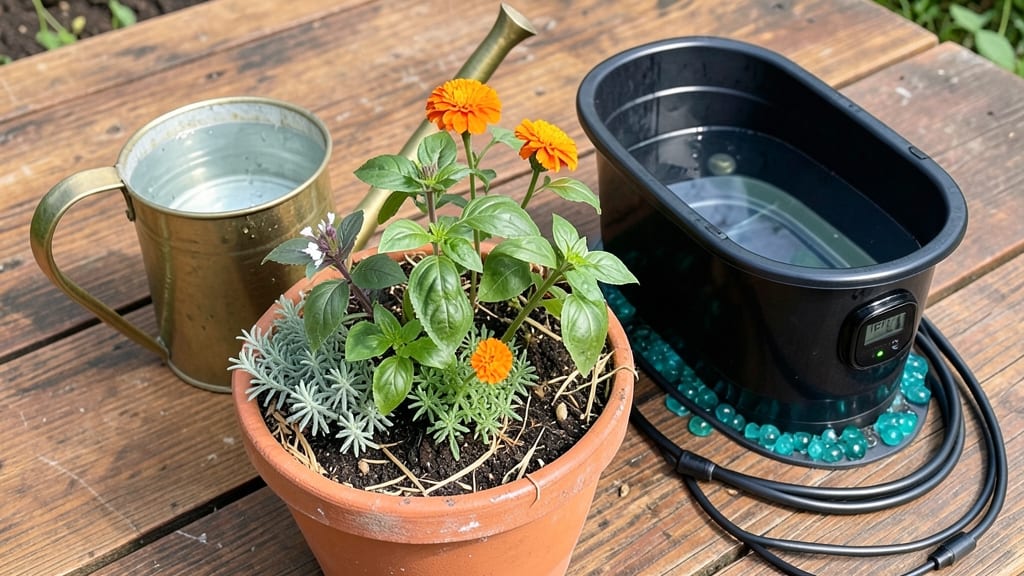
To water a garden when away, you need a system that delivers moisture consistently without you lifting a finger—whether you’re gone for a long weekend or a two-week vacation.
Picture this: you return home to find your 🌱 General Garden Plants wilting from thirst, or worse, drowning because the rain poured while you were out. The right approach keeps your garden thriving, not struggling, while you’re away.
Automated solutions like drip irrigation or smart timers handle the heavy lifting, but even budget-friendly DIY hacks—like repurposed bottles or moisture-activated timers—can save your plants from disaster.
Below, I’ll walk you through the best methods, from high-tech setups to simple, low-cost tricks, so you can relax knowing your garden stays hydrated—no matter how long you’re gone.


Best automated watering systems for vacation-proof gardens
When you're planning a vacation, the last thing you want is to return to a garden suffering from thirst. Automated watering systems are your secret weapon—keeping roots hydrated while you're away.
These systems range from high-tech smart sprinklers to simple DIY drip kits, each tailored to different plant types and budgets. Let’s explore the top options to keep your vegetables, flowers, and herbs thriving without constant attention.
Not all systems work equally well for every garden type. Vegetable gardens often benefit from precise drip irrigation, while herbs and container plants thrive with self-watering pots. Flower beds can handle smart sprinklers or soaker hoses.
The key is matching the system to your plants’ watering needs—whether they’re drought-tolerant succulents or moisture-loving basil.
Below, I’ve compared the most effective automated watering systems, ranked by efficiency, cost, and ease of setup. Whether you’re a tech-savvy gardener or prefer low-maintenance solutions, there’s an option that fits your style and budget.
For vegetable gardens, a drip irrigation kit is often the best choice. These systems deliver water directly to the roots, reducing waste and ensuring even hydration. Brands like Rain Bird or Nelson offer kits with timers, making it easy to set a schedule before you leave.
If you’re growing herbs like basil or parsley, self-watering pots are a game-changer—they hold water in a reservoir, releasing it gradually to the roots.
Smart sprinklers are ideal for larger gardens or lawns, especially if you want remote control via an app. Systems like Orbit B-Hyve or Rachio can adjust watering based on weather forecasts, preventing overwatering during unexpected rain. However, they’re pricier and require a stable Wi-Fi connection, which might not be practical for everyone.
If you’re on a tight budget, DIY moisture sensors or soaker hoses are fantastic alternatives. A simple setup with a 5-gallon bucket and a wick can keep potted plants hydrated for days.
For in-ground gardens, a soaker hose connected to a timer is a low-cost, effective solution. Just bury the hose near the base of plants and let it do the work.
Before setting up any system, consider your garden’s specific needs. Succulents and cacti need far less water than tomatoes or peppers, so adjust your timer accordingly.
Group plants with similar water needs together to simplify your setup. For example, place lavender and rosemary near each other—they both thrive with minimal water.
One common mistake is overwatering, which can suffocate roots and lead to fungal issues. Always check your garden’s soil type—sandy soil drains faster than clay, so you may need to water more frequently in the former.
A quick soil test before your trip can save you from returning to a soggy mess.
For extra peace of mind, combine systems. Use a drip irrigation kit for your vegetable beds and self-watering
DIY smart watering hacks to save money and stress
You don’t need expensive gadgets to keep your garden hydrated while you’re away. With a few household items and some creative problem-solving, you can create low-cost watering systems that mimic professional setups. The key is understanding your plant’s water needs and matching them with the right DIY solution.
Start by grouping plants with similar moisture requirements—like herbs together or succulents with drought-tolerant perennials. This ensures one system can serve multiple plants efficiently. For example, basil and parsley need consistent moisture, while lavender and rosemary thrive with less frequent watering.
Poke small holes in the cap of a 2-liter plastic bottle, fill it with water, and bury it upside-down near the soil line. Adjust hole size for slower/faster release.
Place a cotton or felt mat under pots, soak it in water, and drape the edges in a bucket of water. The mat wicks moisture to roots for up to 5 days without refilling.
Use a DIY timer (like a repurposed sprinkler head) attached to a hose bib with a glass jar filled with water. As the jar empties, it triggers a constant slow drip for 24-48 hours.
Drill holes in the bottom of a plastic container, place it inside a larger tray, and fill the tray with water. The wicking effect keeps roots hydrated for 1-2 weeks—perfect for seedlings or cuttings.
To calculate watering intervals, check your USDA hardiness zone and local rainfall forecasts. For example, in Zone 6a, most plants need deep watering every 3-5 days in summer, while Zone 9b may stretch that to 5-7 days.
Multiply your plant’s water needs by the number of days you’ll be away—then adjust for container size (small pots dry faster).
Test your setup 24 hours before leaving by placing a clear plastic cup in the soil. If it stays half-full after 6 hours, your system is working. For extreme heat, add mulch (straw or shredded leaves) to retain moisture and reduce evaporation by 30-50%.
This simple step can extend your watering system’s effectiveness by 2-3 extra days.
Remember, even the best DIY system needs regular checks if you’re away for more than a week. Ask a neighbor to spot-check your garden or set up a security camera with motion alerts for overwatering signs like yellowing leaves or mold.
With these hacks, your garden will stay lush and stress-free—no matter where you roam. 🌱