| Drip Irrigation |
Large gardens, vegetables, flowers, shrubs |
- Precise watering
- Water-efficient
- Customizable
- Works for multiple plants |
- Higher initial cost
- Requires setup time
- Needs pressure regulator |
$50–$300 (initial) + $0–$20/month (electric models) |
Moderate (requires setup) |
| Smart Timers (e.g., Orbit B-Hyve) |
Hose attachments, small to medium gardens |
- Easy setup
- Wi-Fi control
- Programmable schedules
- Budget-friendly |
- Limited to hose-based watering
- No precision for individual plants
- Requires reliable water source |
$50–$150 (initial) + $0 (no monthly cost) |
Easy (plug-and-play) |
| Wicking Beds |
Container gardens, herbs, small vegetables |
- Passive watering
- No electricity needed
- Great for travel
- Reduces overwatering |
- Limited to small spaces
- Requires wicking material
- Not ideal for heavy feeders |
$30–$100 (DIY) or $150–$300 (pre-made) |
Moderate (setup required) |
| Self-Watering Containers |
Potted plants, herbs, small flowers |
- Portable
- No maintenance once set up
- Great for balconies
- Water-efficient |
- Limited capacity
- Not for large plants
- Requires refilling periodically |
$20–$80 per container |
DIY self-watering hacks using household items
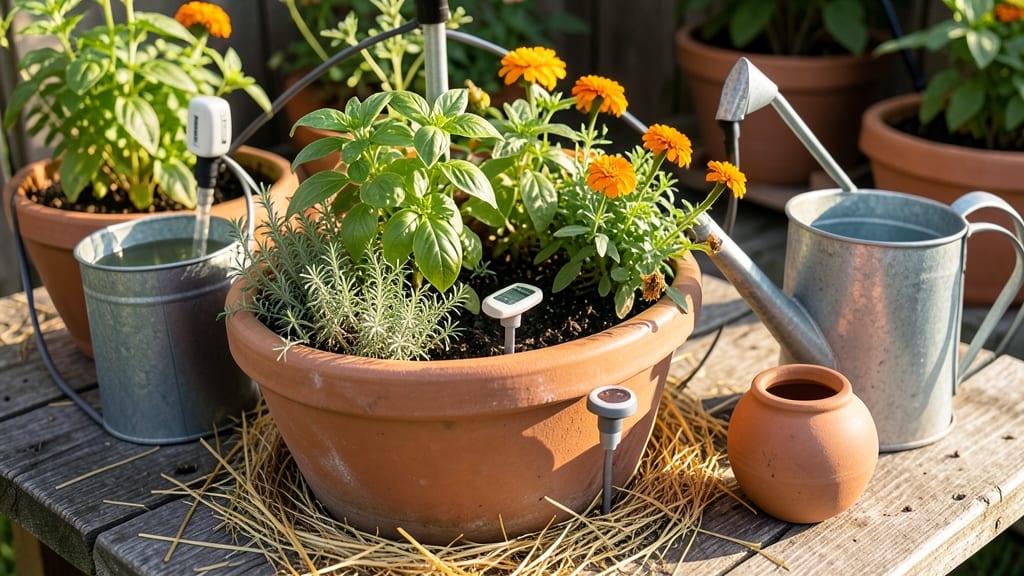
When you're heading out of town, your container plants and small garden beds don’t need to suffer. With just a few household items and some clever setups, you can create self-watering systems that keep roots hydrated for 1-2 weeks without any electricity.
These no-tech solutions work perfectly for herbs, vegetables, and delicate flowers that can’t handle drought. 🌿
My favorite budget-friendly hacks use things you already own—plastic bottles, old towels, and even saucer trays. The key is creating a slow-release watering system that mimics nature’s gradual moisture delivery.
For potted plants, a single bottle can provide enough water to last 5-7 days in moderate climates, while wicking setups can stretch that to 2+ weeks for thirsty plants. 💧
Here’s how to set up these DIY self-watering solutions using common household items. Each method is simple, customizable, and works for different plant types and container sizes.
Step-by-Step DIY Self-Watering Setup
-
Plastic Bottle Waterer (Best for Containers)
- Cut the bottom off a 2-liter plastic bottle and flip it to create a spout.
- Insert the bottle upside-down into the soil, ensuring the spout touches the root zone.
- Fill the bottle with water—capacity determines how long it lasts (2L = ~5-7 days).
- Place a small rock in the bottle to prevent clogging if using a narrow spout.
-
Wicking Fabric Method (Best for Raised Beds)
- Fill a shallow tray or saucer with 2-3 inches of water and place it under your container.
- Cut a piece of absorbent fabric (like an old towel or felt) to size and place it between the tray and plant pot.
- Ensure the fabric reaches the soil—capillary action will pull water up as needed.
- Refill the tray every 3-5 days or use a larger tray for longer intervals.
-
Saucer Drip System (Best for Multiple Small Pots)
- Place multiple pots on a single saucer or tray.
- Fill the saucer with 1-2 inches of water—enough to create a shallow reservoir.
- Ensure pots have drainage holes and the saucer isn’t overflowing.
- Add a wicking fabric under pots if they dry out too quickly.
-
Terracotta Pot Wick (Best for Long-Term Moisture)
- Place your plant pot inside a larger container (like a bucket or basin).
- Fill the outer container with water and small rocks to create a wicking zone.
- Ensure the inner pot’s drainage holes sit above the water line to prevent root rot.
- Water will wick up through the terracotta as needed for up to 2 weeks.
💡 Pro Tip: Test your setup 24 hours before leaving to ensure even water distribution.
For succulents and drought-tolerant plants, these methods work even better because they deliver water gradually without oversaturating the soil. Just avoid using them in extreme heat (above 90°F/32°C), where evaporation speeds up dramatically. In such cases, pair these hacks with mulch to slow moisture loss. 🌡️
If you’re traveling for longer than 2 weeks, combine these DIY methods with grouping plants by water needs. Place thirsty herbs like basil near your bottle waterers and drought-resistant lavender in the saucer setups.
With a little planning, your garden will stay lush and healthy—no matter how long you’re away. ✅
★★★★★4.7(11 reviews)
|