Watering
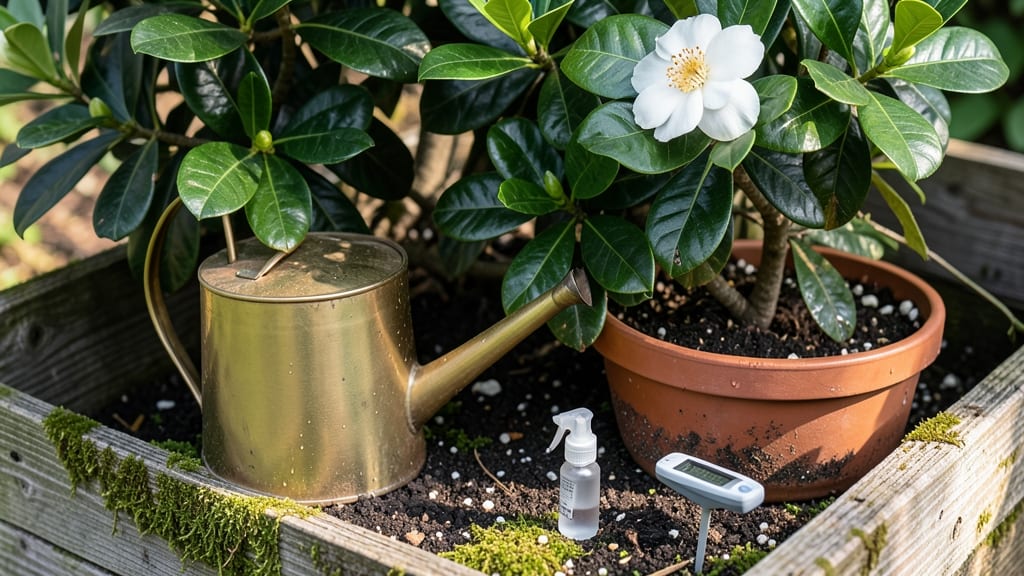
To water gardenias properly, focus on deep, infrequent soaks that keep the soil consistently moist but never soggy — the key to those glossy leaves and intoxicating blooms.
Struggling to keep your gardenia blooming and thriving? The secret often lies in mastering the delicate balance of watering—too much or too little can turn your fragrant beauty into a sad, wilted mess.
These tropical favorites in Zone 6 need about 1 liter of water every 2-3 days in spring and summer, but that changes when fall arrives. The trick is checking soil moisture before watering—stick your finger an inch down, and if it feels dry, it’s time.
Below, I’ll walk you through the best watering schedule, how to spot overwatering vs. underwatering, and the one simple trick that keeps your gardenia’s roots happy year-round.


The perfect watering schedule for gardenias to prevent wilting
Gardenias are delicate divas when it comes to water—too much and their roots drown, too little and their blooms wilt. The key lies in consistent moisture without soggy soil.
These tropical beauties thrive when their soil stays evenly damp but never waterlogged, which is why a science-backed schedule makes all the difference. Understanding their natural hydration needs ensures your gardenia stays lush, fragrant, and blooming for seasons.
Most gardeners fail at watering because they rely on guesswork rather than soil conditions. Gardenias need about 1 inch of water per week, but this changes with season, pot size, and climate.
For example, a potted gardenia in summer may need daily watering, while an in-ground shrub in spring might only require every 3-4 days. The goal is to mimic their tropical rainforest habitat—steady moisture with good drainage.
Seasonal adjustments are critical. In spring and summer, gardenias drink more as they push new growth and blooms. During fall and winter, their water needs drop dramatically. Even in winter, though, let the top 1-2 inches of soil dry slightly between waterings to prevent root rot—a silent killer of gardenias. Always water in the early morning to reduce evaporation and fungal risks.
Now, let’s break down the perfect watering schedule with a clear, actionable plan tailored to your gardenia’s needs. This summary-table will help you visualize the ideal routine for each season, ensuring your plant stays hydrated without overdoing it.
For potted gardenias, watering needs are higher because containers dry out faster. Always check the weight of the pot—a dry pot feels significantly lighter. If the soil is bone dry within 1 inch, it’s time to water.
In-ground gardenias, however, have deeper roots and can go slightly longer between waterings, especially in cooler months. The key is to water deeply each time, encouraging roots to grow downward for stability.
One of the biggest mistakes gardeners make is watering on a strict calendar rather than checking soil conditions. Instead of following a rigid schedule, use the finger test: Stick your index finger 1-2 inches into the soil.
If it feels dry, water thoroughly. If it’s still damp, wait another day. This method prevents both overwatering and underwatering, two issues that can stunt blooms or even kill your gardenia.
Another pro tip: Mul
How to check soil moisture and adjust watering for gardenias
Gardenias thrive on consistent moisture, but guessing how much water they need can lead to wilting or root rot. The key is checking soil moisture before watering—this ensures your plant gets just the right amount of hydration without drowning its roots.
I’ve learned the hard way that overwatering is just as harmful as underwatering for these delicate shrubs.
Start by understanding your gardenia’s water needs. In-ground plants typically require watering every 2-3 days in warm weather, while potted gardenias dry out faster and may need daily attention. The finger test is my go-to method for checking moisture levels—it’s simple, free, and accurate when done correctly.
⚠️ Warning: Overwatering Kills Gardenias
Yellowing leaves and mushy stems are red flags—these symptoms mean your gardenia is drowning. The soil should never stay soggy more than 24 hours after watering. If you’re unsure, stick your finger in the soil: if it’s cold and clumpy, you’ve overdone it. Gardenias prefer moist but well-draining soil, never waterlogged.
To perform the finger test, insert your index finger about 1-2 inches into the soil near the plant’s base. If the soil feels dry and crumbly, it’s time to water.
If it’s still damp, wait another day. This method gives you real-time feedback about your gardenia’s hydration status without relying on a watering schedule that might not fit your climate.
For a more precise approach, use a moisture meter. These handy tools measure soil moisture levels digitally, eliminating guesswork. I recommend inserting the probe 2-3 inches deep—this mimics the depth where gardenia roots absorb water.
Most meters have color-coded readings: green means moist, yellow means borderline, and red signals it’s time to water. This is especially useful for potted gardenias, which dry out faster.
Visual cues also play a role in adjusting your watering routine. Drooping leaves often indicate thirst, but they can also signal overwatering if the soil feels soggy. Another clue is the growth rate: healthy gardenias grow steadily, while underwatered ones slow down or stop blooming entirely.
Keep a journal to track your gardenia’s response to different watering patterns—this helps you fine-tune your approach over time.
Adjust your watering based on the season. During summer’s heat, gardenias may need daily watering, while winter’s chill reduces their needs to once every 7-10 days. Mulching around the base of your plant helps retain moisture and keeps roots cool.
I use organic mulch, like shredded bark, to create a protective layer that slows evaporation and regulates soil temperature—both critical for gardenia health.