
Planting
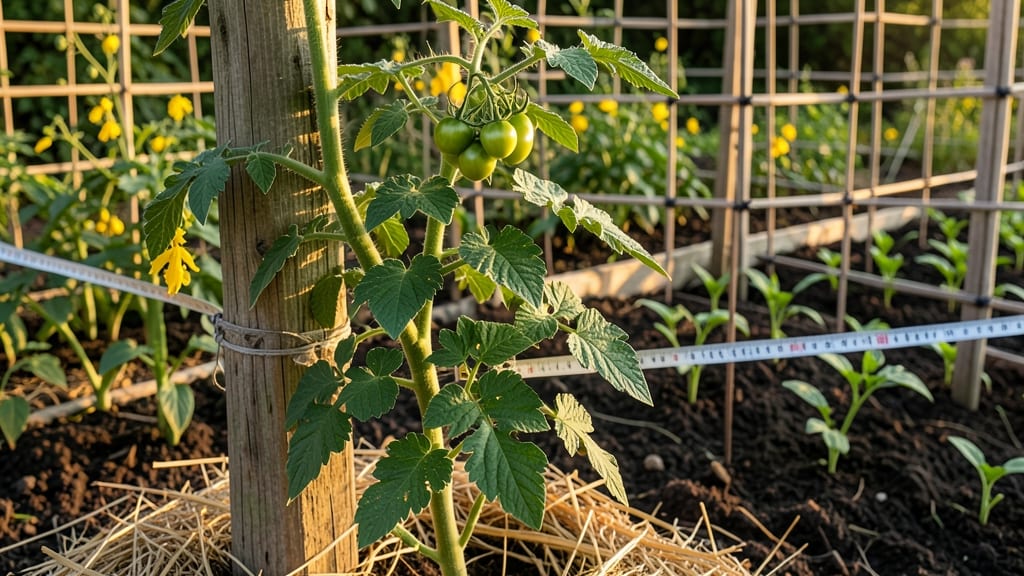
Getting your tomato garden spacing right is the difference between a bountiful harvest and a sad, blight-ridden mess.
Picture this: You’ve spent weeks nurturing your 🍅 seedlings, only to watch them fight for sunlight and air—leaving you with stunted growth, cracked fruit, and a garden that looks more like a jungle than a productive plot. That’s the cost of guessing.
Proper spacing isn’t just about fitting more plants in—it’s about giving each tomato the room it needs to thrive. Too close, and you’ll battle disease and poor airflow.
Too far apart, and you waste precious garden real estate. The right distance keeps your plants happy, your yield high, and your harvest season long.
In this guide, I’ll break down the exact spacing you need for indeterminate vines, compact bushes, and everything in between—plus how to tweak it for containers, vertical gardens, and small spaces. No more crowded chaos, just science-backed rows that work.
Optimal tomato plant spacing by variety (indeterminate vs determinate)
Not all tomatoes grow the same—some stretch skyward like vines while others stay compact like bushes.
This difference isn’t just about aesthetics; it directly impacts your tomato garden spacing. Indeterminate varieties (like 'Sungold' or 'Brandywine') keep growing all season, while determinate types (like 'Roma' or 'Celebrity') stop at a fixed height. Getting these spacing rules wrong can mean blight outbreaks or stunted fruit.
Let’s break down the science-backed distances for each type to ensure your plants thrive.
Proper spacing isn’t just about fitting more plants in—it’s about maximizing airflow and sunlight exposure. Crowded tomatoes trap moisture, creating the perfect conditions for fungal diseases like early blight. Meanwhile, too much space wastes garden real estate.
The key is balancing density with plant health. For indeterminate tomatoes, think tall and airy; for determinate tomatoes, go for a bushier, grid-like layout.
Here’s the golden rule: Indeterminate tomatoes need 24–36 inches between plants and 3–4 feet between rows. Their sprawling vines demand room to climb or sprawl without competing for sunlight. Determinate tomatoes, on the other hand, thrive with 18–24 inches between plants and 2–3 feet between rows.
Their compact growth means you can pack them in tighter—just don’t skimp on airflow.
Why does this spacing matter? Indeterminate tomatoes produce fruit all season long, but their vines need room to spread.
If you cram them too close, the lower leaves (where diseases like early blight start) stay damp and shaded. Determinate tomatoes, meanwhile, set all their fruit at once, so they benefit from tighter spacing to support their heavy fruit loads.
Think of it like a shopping cart vs. a bookshelf—one needs wide aisles, the other can be packed tighter.
For indeterminate varieties, always use cages or trellises to guide their growth upward. This saves space and keeps fruit off the ground.
Place cages 18–24 inches apart and stake them firmly—nothing’s worse than a toppled tomato plant mid-summer. Determinate tomatoes don’t need support but benefit from mulch to retain moisture and suppress weeds. A 2-inch layer of straw or shredded leaves keeps soil cool and reduces evaporation.
What if your garden is smaller than ideal? Square-foot gardening is a lifesaver for tight spaces. Plant 1 determinate tomato per square foot or 4 dwarf tomatoes in a 2x2 foot grid.
For indeterminate types, use vertical space: train vines up a 6-foot trellis and space plants 12 inches apart along the base. This cuts your footprint by half while keeping yields high.
One common mistake? Assuming "more plants = more tomatoes." Overcrowding leads to poor air circulation, which invites blight and mold. I’ve seen gardens where tomatoes were spaced like carrots—packed in tight
How row spacing affects yield: the 3 critical factors
When I first started growing tomatoes, I made a costly mistake—packing my plants too closely to save space. What I didn’t realize was that row spacing directly impacts airflow, sunlight penetration, and even disease resistance.
The right distance between rows can mean the difference between a 50-pound harvest and a 20-pound disappointment. Let’s break down the three factors that turn good spacing into high-yield success.
First, plant maturity size determines your baseline row spacing. Indeterminate tomatoes—those that grow continuously—need 36-48 inches between rows to accommodate their sprawling vines. Determinate varieties, which grow to a fixed height, can handle 24-36 inches between rows.
But here’s the catch: crowding reduces sunlight on lower leaves, creating prime conditions for fungal diseases like early blight.
- 1. Airflow: 18-36" row spacing prevents humidity buildup. Tighter than 18" = fungal hotspots.
- 2. Sunlight: 48" rows for indeterminates ensure full canopy coverage. Less than 36" = shaded stems.
- 3. Soil Health: Wide rows (36"+) reduce soil compaction. Narrow rows (<24") = root competition.
"Proper spacing isn’t just about plants—it’s about their environment."
Second, your garden type dictates adjustments. In urban containers, I’ve seen growers double yields by using vertical trellises and 12-inch row spacing—but only for dwarf varieties.
For greenhouses, 24-inch rows work because controlled environments reduce disease pressure. Meanwhile, large-scale farms often use 48-inch rows with precision irrigation to maximize efficiency.
Third, soil type plays a hidden role. Sandy soil drains quickly, so plants can tolerate closer row spacing (24-30") because they won’t suffer from waterlogging. Clay soil, however, benefits from wider rows (36-48") to prevent root suffocation.
I learned this the hard way when my determinate tomatoes in heavy clay struggled with root rot—until I widened the rows.
One common mistake I see is overestimating plant growth. Many gardeners start with 18-inch rows for determinate tomatoes, only to watch their plants sprawl into a disease-ridden mess by midsummer.
The fix? Measure mature plants before finalizing your layout. For example, a 'Celebrity' tomato (determinate) needs 24-30 inches between plants and 36 inches between rows to thrive.
For urban gardens, where space is limited, I recommend staggered planting—placing rows 12-18 inches apart but offsetting them like bricks. This creates micro-aisles for airflow while still allowing sunlight to reach all plants.
Pair this with vertical supports for indeterminates, and you’ll double your yield per square foot without sacrificing health.
Remember: spacing isn’t static. Monitor your plants weekly. If you notice yellowing leaves on lower stems, it’s a sign of poor airflow—time to thin or widen rows.
With the right spacing, your tomatoes won’t just grow bigger; they’ll stay healthier longer, giving you a longer harvest season and fewer trips to the garden store for fungicides. 🌱