
Vegetables
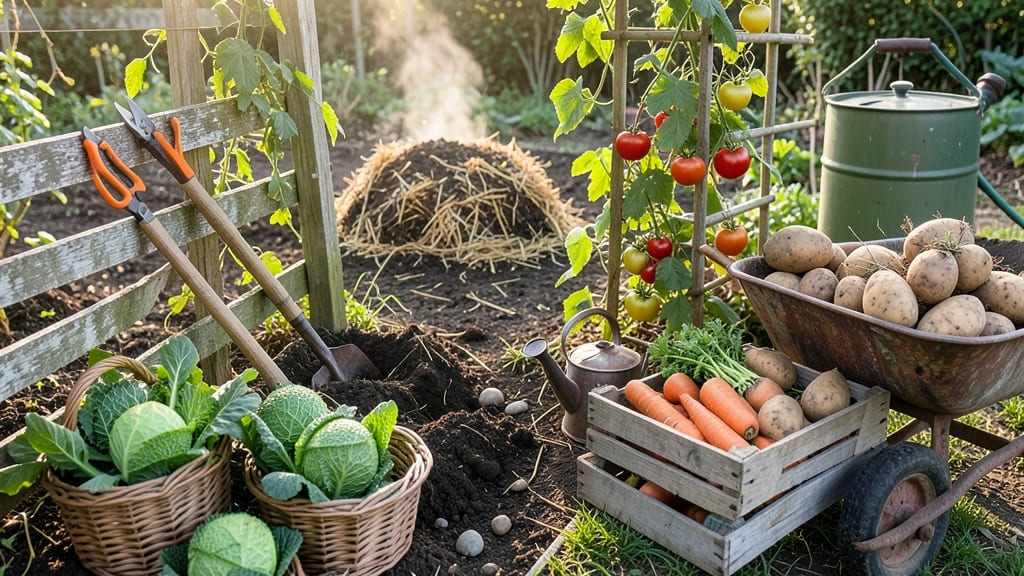
Victory gardens during WW2 turned vacant urban spaces and family backyards into vital food sources, producing roughly 40% of America's vegetables while easing wartime food shortages and lifting community spirits.
These gardens weren't just about growing food—they were a nationwide movement that reshaped how Americans viewed self-sufficiency. 🌱 The U.S. government distributed over 3 million seed packets in 1943 alone, encouraging families to cultivate high-yield crops like tomatoes, beans, and leafy greens in even the smallest spaces.
What's fascinating is how ordinary citizens adapted wartime challenges, like limited fertilizer, by using compost and crop rotation to maximize yields. This grassroots effort didn't just feed families—it created a shared purpose that strengthened neighborhoods during one of history's darkest periods.
The impact extended beyond the kitchen: victory gardens reduced shipping demands on overburdened supply chains, freeing up resources for the war effort. Schools and community groups organized planting days, turning gardening into a patriotic duty.
Today, these gardens serve as a powerful reminder of how collective action can address food security—especially relevant as modern communities face similar challenges with supply chain vulnerabilities.
💡 In This Article
- How WW2 Victory Gardens Worked: From Seed to Harvest
- Starting a Modern Victory Garden: Lessons from WW2 for Today’s Growers
How WW2 victory gardens worked: from seed to harvest
The U.S. government launched victory gardens in 1942 through the National War Garden Commission, partnering with schools, churches, and local groups to distribute 3 million seed packets by 1943.
These weren't just random plantings—they focused on high-yield, nutrient-dense crops like tomatoes (producing 20 pounds per plant in ideal conditions), potatoes (5-10 pounds per hill), and leafy greens that grew quickly in small spaces.
The government even published Victory Garden Manuals with planting charts, spacing guidelines, and soil preparation tips tailored to urban environments.
Soil conservation was critical with limited resources. Gardeners used compost from kitchen scraps and yard waste—a technique still used today—to enrich depleted urban soils. Without chemical pesticides, they relied on crop rotation, hand-picking pests, and companion planting (like marigolds to deter nematodes).
Schools organized "bug days" where children collected caterpillars and beetles to reduce garden damage. The average urban garden measured 10x20 feet but produced enough to feed a family of four for half the year, proving that even small plots could make a big impact.
Labor was organized creatively. Women—many working in factories during the day—tended gardens in early mornings or evenings. Community groups held shared plowing days using horse-drawn plows in cities where tractors were scarce. The 4-H Clubs taught children about seed saving and transplanting, creating a generation familiar with farming basics.
This collective effort wasn't just about food production; it fostered a sense of shared purpose that strengthened neighborhoods during wartime.
Crop selection adapted to rationing constraints. With meat and dairy limited, gardens prioritized protein-rich vegetables like peas (containing 25% protein by weight when dried) and beans. Root vegetables stored well in cellars, while greens were harvested young for maximum nutrition.
The government even encouraged growing herbs for tea to reduce reliance on imported spices. This practical approach ensured families got the most nutrition from every square foot of garden space.
What's often overlooked is how victory gardens reduced shipping demands. Before the war, 25% of U.S. vegetables came from California, straining railroads and fuel supplies. Local production cut this dependency dramatically.
The average victory garden produced 8 pounds of food per square foot annually—equivalent to what a commercial farm might yield in half that time with modern equipment. This efficiency helped free up transportation for military needs, demonstrating how decentralized food production could support national security.
Today, these gardens remain a model for resilience. Their success shows how community-driven agriculture, even with limited resources, can address food shortages. The lessons—from seed saving to soil conservation—are just as relevant for modern urban gardeners facing climate challenges or supply chain disruptions. 🌱