
Tools
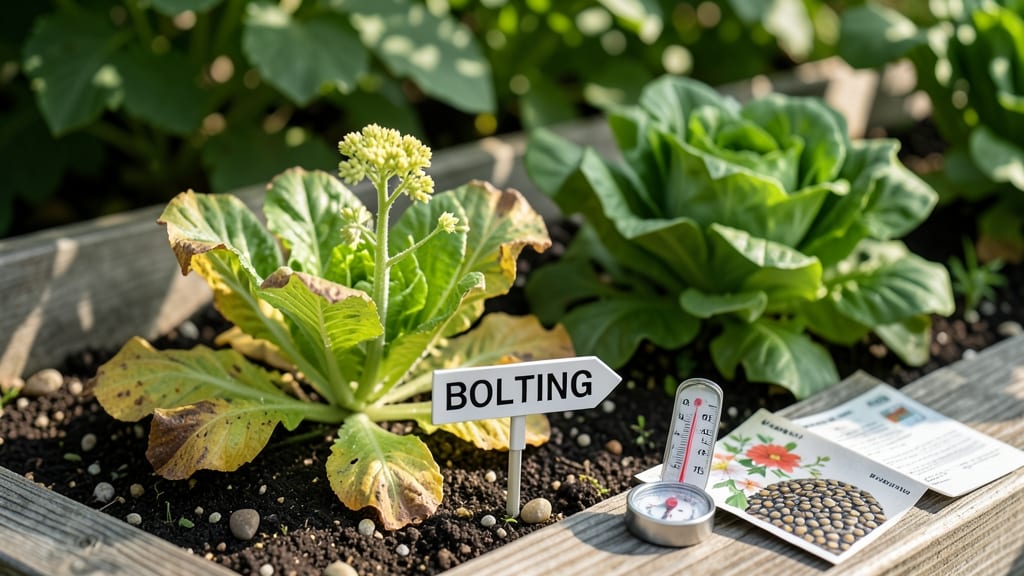
What does bolt mean in gardening? It describes when leafy vegetables and herbs prematurely flower, produce seeds, and develop bitter or woody stems instead of growing tender foliage. This happens as a stress response to heat, drought, or planting at the wrong time.
Bolting is essentially your plants' way of saying, "I'm stressed!" 🌱 When temperatures rise too quickly or water becomes scarce, plants trigger their reproductive cycle to ensure survival. This is especially common in cool-season crops like lettuce or spinach when planted too early in warm climates.
I've seen even heat-tolerant varieties like Swiss chard bolt under prolonged 90°F+ conditions—it's nature's alarm system kicking in.
What makes this tricky is that bolting isn't always about extreme conditions. Some varieties have genetic predispositions to bolt faster, while others may respond to sudden changes in daylight hours.
Even well-established plants can bolt if they experience drought stress followed by sudden watering. The key is understanding your specific plants' needs and adjusting your growing conditions accordingly.
💡 In This Article
- Why Plants Bolt: Triggers and Biological Responses
- Preventing Bolting in Heat-Tolerant Vegetables
Why plants bolt: triggers and biological responses
Bolting happens when plants detect environmental stress and trigger their reproductive cycle through a complex hormonal response. The primary signals come from temperature spikes—especially when nighttime temperatures exceed 60°F (15°C) for cool-season crops like lettuce or kale.
This activates ethylene production, a plant hormone that accelerates flowering. For example, basil bolts when daytime temperatures hit 80°F (27°C) for just a few days, while spinach may bolt at 70°F (21°C) nighttime temperatures.
The photoperiod (daylight length) also plays a crucial role. Short-day plants, like some lettuce varieties, bolt when days get longer, while long-day plants respond to increasing daylight hours. This is why spring-planted lettuce often bolts by early summer—its internal clock detects the longer days as a signal to reproduce.
Even well-watered plants can bolt if they experience heat stress combined with sudden changes in light exposure, like moving from shade to full sun.
Genetics determine how sensitive a plant is to these triggers. Heat-tolerant varieties like 'Black Seeded Simpson' lettuce have been bred to delay bolting at 85°F (29°C), while heirloom varieties may bolt at 75°F (24°C).
The trade-off is often flavor—bolted plants produce bitter compounds as they shift energy from leaves to seed production. For instance, a bolted arugula leaf can taste sharply peppery compared to its tender, mild pre-bolt state.
Soil conditions also influence bolting through water stress. Even consistent irrigation can't prevent bolting if roots can't access moisture during heatwaves. The plant's survival instinct overrides growth patterns, causing stems to elongate rapidly (up to 2 inches per day in extreme cases) as it races to produce seeds before dying.
This is why gardeners in Zone 7+ often struggle with bolting—our summers combine high temperatures with intense sunlight that overwhelms even "heat-loving" crops.
Interestingly, some plants use bolting as a survival strategy in their native habitats. Wild relatives of Swiss chard bolt naturally in Mediterranean climates to produce seeds before summer droughts kill them.
Domesticated varieties retain this trait but at lower thresholds—making them vulnerable in our controlled garden environments where we try to prevent this natural response.
Understanding these biological triggers helps explain why even "bolt-resistant" varieties eventually succumb. For example, 'Outredgeous' red lettuce may delay bolting until 90°F (32°C), but prolonged exposure will still trigger flowering. The key is managing these environmental factors before the plant's internal clock becomes irreversible.