
Tools
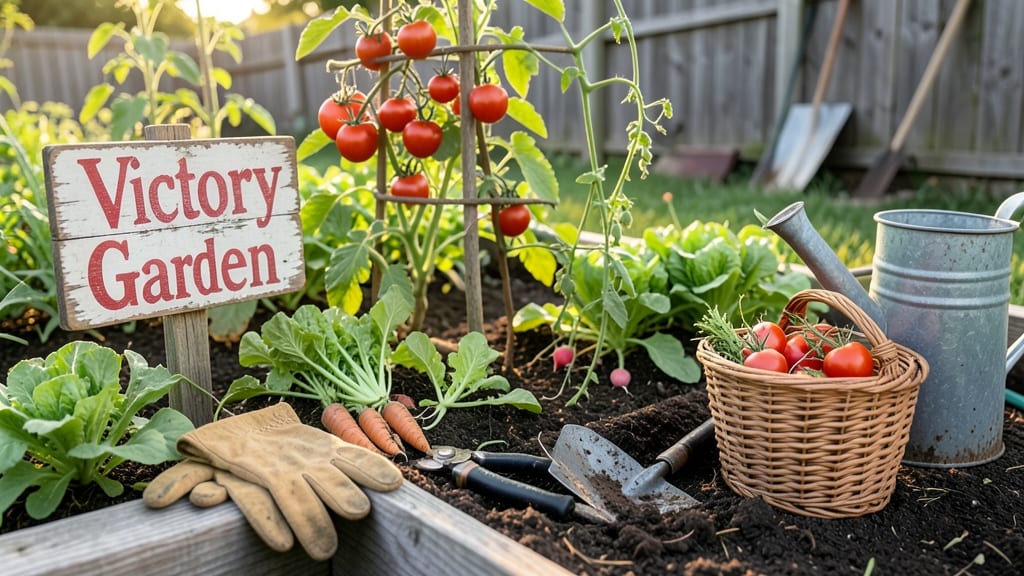
A victory garden is a homegrown vegetable plot created to supplement food supplies during wartime or shortages, originally popularized during World War I and II to boost national food production.
A victory garden represents more than just a patch of vegetables—it's a movement that emerged during World War I and II when families grew their own food to support the war effort. 🌱 The U.S. government even encouraged citizens to plant these gardens, providing resources and guidance to maximize yields.
Today, the concept lives on in urban farming and sustainable living practices, proving that homegrown produce can still make a meaningful difference.
Modern victory gardens often focus on space-efficient designs, making them perfect for balconies, rooftops, or small yards. 💛 They typically include easy-to-grow crops like lettuce, tomatoes, and herbs, which deliver fresh flavors while reducing reliance on commercial agriculture.
What's fascinating is how these gardens connect people to their food sources, fostering both self-sufficiency and community.
💡 In This Article
- Origins and Historical Role of Victory Gardens
- Modern Victory Garden Trends and Benefits
Origins and historical role of victory gardens
Victory gardens first emerged during World War I (1914-1918) when food shortages threatened national security.
The U.S. government launched the "Food Will Win the War" campaign, encouraging families to grow vegetables to free up commercial crops for soldiers. 🌱 By 1918, nearly 5 million gardens produced about 40% of the nation's fresh produce, demonstrating how civilian efforts could directly impact wartime logistics.
The movement gained even more momentum in World War II (1939-1945), when President Franklin D. Roosevelt's wife, Eleanor, spearheaded the "Victory Garden" initiative. The government distributed over 10 million seed packets and published gardening guides showing how to grow food in limited spaces—even window boxes.
Food rationing made fresh produce scarce, so these gardens became essential, supplying 40% of all vegetables by 1943 and saving shipping resources for military needs.
What made victory gardens so effective was their adaptability. Urban families grew potatoes in backyards, while rural communities expanded fields.
The U.S. Department of Agriculture even created "Victory Garden" stamps for ration coupons, reinforcing the connection between homegrown food and national defense. 💛 This grassroots effort wasn't just about growing vegetables—it was about reclaiming control over food security during uncertain times.
Beyond food production, these gardens fostered community resilience. Neighborhoods shared tools, seeds, and knowledge, creating social bonds that strengthened local networks. The psychological impact was significant too—growing your own food provided a sense of purpose and accomplishment during war, proving that individual actions could have collective impact.
After the wars, victory gardens faded as commercial agriculture resumed, but their legacy endured. The concept proved that small-scale farming could meet large-scale needs when organized strategically—a lesson that resonates in today's discussions about food sovereignty and sustainability. 🌍