
Tools
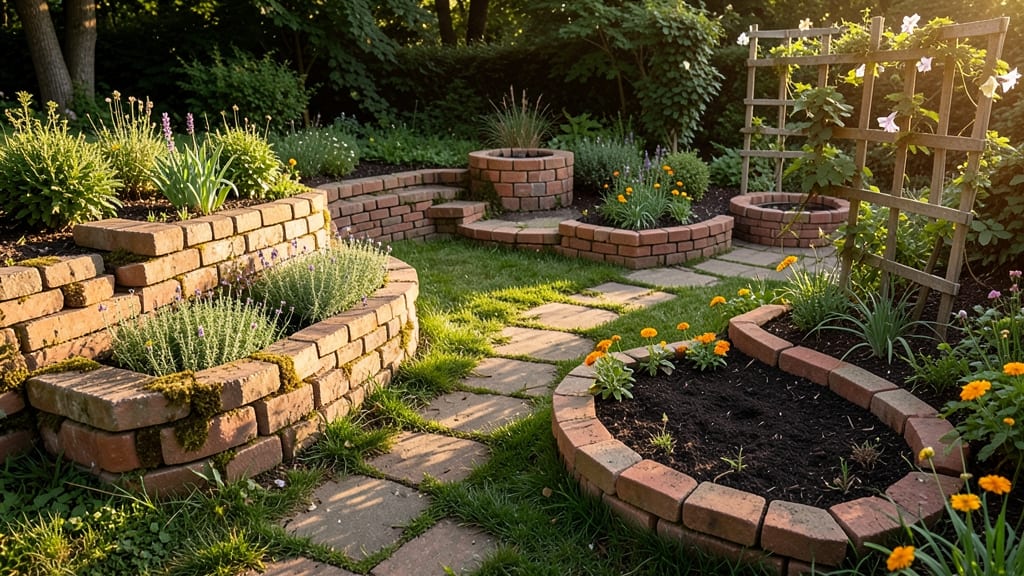
When repurposing old bricks in the garden, you can transform them into rustic pathways, elevated planting areas, or decorative borders that boost both beauty and practicality. They also serve as sturdy plant supports or clean edging for garden beds.
Old bricks aren't just leftover construction materials—they're versatile building blocks that can completely transform your garden's look and function. 🌿 I've used them to create charming garden paths that guide visitors through flower beds while adding a timeless rustic charm.
For raised beds, bricks provide excellent drainage and a polished, finished appearance that lasts for years. The best part? You don't need fancy tools—just a level, some sand for stability, and a little creativity to arrange them in patterns that suit your garden's style.
Beyond their practical uses, bricks add visual interest through their texture and color variations. Whether you arrange them in a herringbone pattern for pathways or stack them vertically as plant supports, their earthy tones complement nearly any garden palette.
The key is to think beyond simple functionality—consider how the bricks' shape and color can create focal points or frame your favorite plants. For example, a single brick used as a plant marker can become a decorative accent while serving its purpose.
💡 In This Article
- How to Repurpose Old Bricks for Garden Structures
- Creative Brick Garden Decor Ideas for Visual Appeal
How to repurpose old bricks for garden structures
Building garden structures with old bricks starts with choosing the right foundation. For pathways, lay bricks on a compacted base of 2-3 inches of gravel to ensure stability—this prevents shifting over time. Use a rubber mallet to tap bricks into place and a level to maintain even surfaces.
For raised beds, create a frame by stacking bricks vertically, then fill the center with a mix of 60% soil and 40% compost to promote drainage while retaining moisture for plants.
The key to structural integrity lies in the "mortar" you choose. Traditional cement mortar works but can be overkill for garden projects. Instead, try a sand-only mix (dry sand or coarse sand) between bricks for pathways—it allows water to drain while keeping bricks in place.
For raised beds, skip mortar entirely and nestle bricks tightly together. If you want extra stability, interleave bricks with landscape pavers or flat stones at the corners to prevent spreading.
Consider the weight distribution when planning larger structures like retaining walls. Bricks should sit on a 4-inch-wide concrete footing for walls taller than 2 feet to prevent sinking. For shorter walls, a gravel base works fine.
Pro tip: Use bricks with varied textures—some with weathered surfaces and others with smooth edges—to create visual interest while maintaining structural cohesion. 🏗️
For pathways, arrange bricks in patterns like staggered (offset rows) or herringbone for a polished look. Measure your space first—most standard bricks measure 3 5/8 inches by 2 1/4 inches, so calculate how many you'll need with 10% extra for cuts and breaks.
If you're working with uneven terrain, use a string line and stakes to mark the pathway edges before laying bricks to ensure straight lines.
When building raised beds, leave a 1-inch gap between the bricks and the ground to prevent moisture buildup. This gap can be filled with small rocks or sand. For plant supports, stack bricks vertically and secure them with landscape fabric or wire mesh if needed.
The rough texture of bricks provides excellent grip for climbing plants like beans or morning glories, while the height creates a defined growing space.
Don't overlook the importance of drainage in your designs. For pathways, ensure the base slopes slightly (1/4 inch per foot) away from garden beds to direct water away. In raised beds, incorporate a layer of perforated drainage pipe at the bottom if your garden has heavy clay soil.
These small details make the difference between a structure that lasts decades and one that falls apart after a few seasons. 💧