
Tools
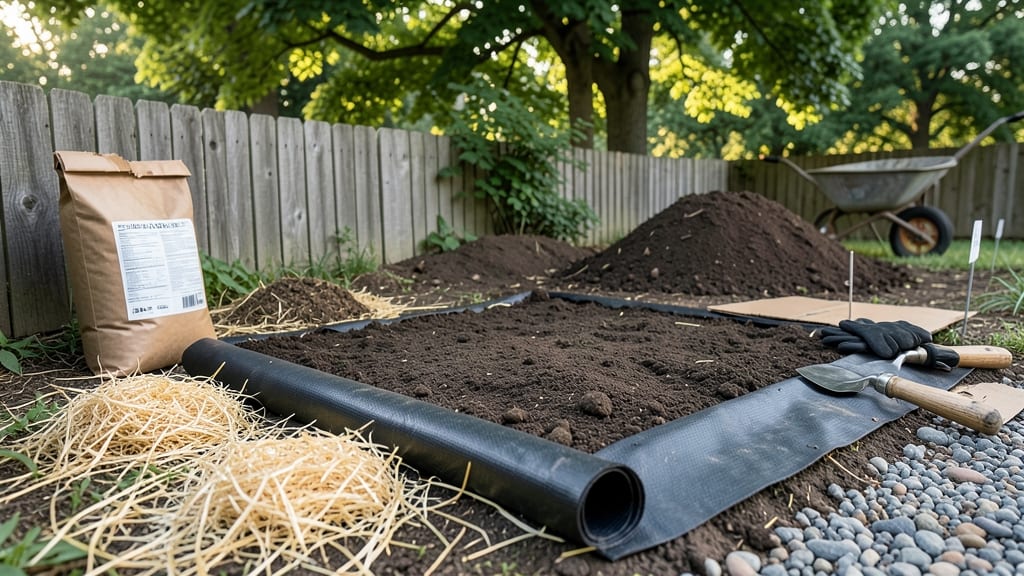
Under your garden bed, what to put under garden bed involves adding organic layers like compost, well-aged manure, or leaf mold to create a nutrient-rich base that improves soil aeration, water retention, and root development for healthier plants.
This approach works because organic materials break down over time, releasing essential nutrients while preventing soil compaction. 🌱 For example, compost adds microbial activity that boosts nutrient availability, while coarse materials like straw help with drainage.
The key is balancing these layers based on your plants' needs—vegetables often thrive with compost-heavy beds, while shrubs may benefit from additional sand for better aeration.
I’ve found that preparing the bed this way reduces watering needs and gives plants a stronger start. Plus, it’s a great way to recycle yard waste like grass clippings or fallen leaves. Just avoid fresh wood chips or untreated cardboard, as they can deplete nitrogen or introduce chemicals.
💡 In This Article
- How Organic Mulch Layers Boost Soil Health
- Best Materials for Garden Bed Layers by Plant Type
How organic mulch layers boost soil health
When you layer organic materials under your garden bed, you're essentially creating a living ecosystem that constantly improves soil quality.
These materials—like compost, aged manure, or leaf mold—decompose slowly, releasing nutrients that feed plants over time. 🌱 The decomposition process also produces glomalin, a sticky glycoprotein from soil fungi that binds soil particles together, creating stable aggregates.
This improves aeration by preventing compaction while allowing water and roots to move freely through the soil.
The texture of these materials matters too. Coarse mulches like straw or wood chips create air pockets that prevent soil from becoming dense, while finer materials like compost add nutrients directly.
For example, a 2-3 inch layer of compost can increase soil organic matter by 1-2% annually, which boosts water retention by up to 20% compared to bare soil. This means your plants get consistent moisture without drowning in puddles or drying out quickly.
Microbial activity is where the real magic happens. Organic layers teem with bacteria, fungi, and earthworms that break down materials into plant-available nutrients.
A healthy soil microbiome can convert 50-70% of organic matter into usable nitrogen, phosphorus, and potassium within a season. 💫 This is why compost-rich beds often produce stronger, more resilient plants—roots encounter a nutrient-rich environment from the moment they sprout.
Moisture regulation is another critical benefit. Organic layers act like a sponge, absorbing excess water during heavy rains and releasing it slowly during dry spells. This reduces runoff and evaporation, keeping roots hydrated for longer.
For instance, a garden bed topped with 3 inches of straw can maintain 30-50% more soil moisture than one without mulch, especially in hot climates.
One common mistake is using fresh wood chips or untreated cardboard, which can rob nitrogen from the soil as they decompose. Instead, opt for well-aged materials like 2-3 year-old compost or leaf mold, which have already begun breaking down.
These materials provide immediate nutrients while supporting long-term soil health without disrupting the nitrogen cycle.
For best results, mix organic layers with existing soil at a ratio of 1 part organic matter to 2 parts soil. This balance ensures proper aeration while preventing compaction.
Over time, you'll notice healthier plants with deeper root systems and fewer pests, thanks to the improved soil structure and nutrient availability.