
Fertilization
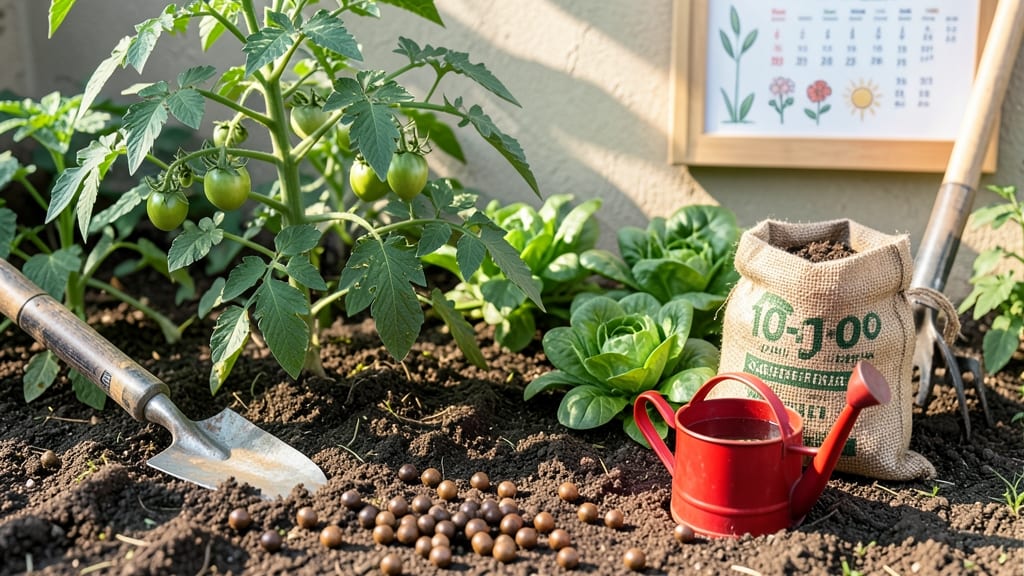
The best time to fertilize your garden is early spring and mid-summer—when plants are actively growing but haven’t yet hit their peak. Miss these windows, and you risk feeding your 🌱 Garden Vegetables & Flowers (General) at the wrong moment, leading to wasted nutrients or stressed roots.
Timing your garden fertilization wrong can leave your plants starving—even with the best soil—or waste money on nutrients they can’t use. Whether you’re in USDA Zone 6a or a warmer region, the key is matching fertilizer to the plant’s growth cycle, not just the calendar.
For spring, feed right after the last frost (around mid-April in Zone 6a) to jumpstart roots, but avoid overdoing it before planting. In summer, a light boost every 4-6 weeks keeps blooms and harvests thriving without burning foliage.
Below, I break down the exact schedule for organic vs. synthetic fertilizers, regional tweaks, and how to tell if your soil is actually hungry—or just tired from last season’s work.

Spring fertilization schedule: jumpstart growth before peak season
Spring is the golden window for fertilization—when plants wake up from dormancy and need a nutrient boost to thrive. But timing matters: fertilize too early, and nutrients get washed away by rain; too late, and you miss the growth surge.
I’ll break down the exact schedule for vegetables, flowers, and lawns, plus how to adapt for your climate zone.
First, check your soil temperature—it should stay above 50°F (10°C) for 2+ weeks before fertilizing. In cool climates (Zones 3-6), aim for early April; in warm climates (Zones 7-10), start in late February.
Soil testing is key: if your pH is off, amend it first (e.g., lime for acidic soil, sulfur for alkaline).
Organic vs. synthetic? Both work, but organic fertilizers (like compost or fish emulsion) release nutrients slowly, while synthetic fertilizers (e.g., 10-10-10) provide an instant kick. For vegetables, I recommend a balanced organic fertilizer at planting, then a low-nitrogen feed (like 5-10-10) when flowers form.
Flowers? Go for high-phosphorus (e.g., 5-10-5) to encourage blooms.
Lawns need special attention: apply a slow-release, high-nitrogen fertilizer (like 24-0-5) in early spring as grass greens up. Avoid fertilizing if your lawn is dormant or if frost is forecast—nutrients can burn tender new growth. Water deeply after fertilizing to help nutrients penetrate the soil.
| Plant Type | Best Fertilization Time | Fertilizer Type | Notes |
|---|---|---|---|
| Vegetables | Early spring (planting) + mid-season | Balanced organic (10-10-10) or compost | Avoid high-nitrogen in fruiting stage |
| Flowers | Late spring (when buds form) | High-phosphorus (5-10-5) | Encourages blooms, not foliage |
| Lawns | Early spring (green-up) + late fall | Slow-release nitrogen (24-0-5) | Avoid fertilizing in drought or heat |
| Perennials | Early spring (before new growth) | Compost or worm castings | Light feeding; avoid heavy fertilizers |
| Trees/Shrubs | Late winter/early spring | Slow-release granular | Spread evenly in root zone |
For cool-season crops (like lettuce or peas), fertilize lightly at planting and again when they’re half their mature size. Warm-season crops (tomatoes, peppers) need a heavier feed after transplanting, then again when flowers appear.
Pro tip: side-dress with compost or a low-nitrogen fertilizer (like 3-4-6) to avoid leafy growth at the expense of fruit.
Watch for signs of over-fertilizing: yellowing leaves, crispy edges, or stunted growth. If you see these, flush the soil with water and hold off on feeding for 4-6 weeks. Under-fertilizing shows as pale leaves, slow growth, or poor blooms—so don’t skimp!
Adjust based on your plants’ needs: fast growers (like basil) need more frequent feeding than slow growers (like rosemary).
In warm climates, spring fertilization can extend into May, but stop by June 1 to avoid stressing plants before summer dormancy. In cool climates, wrap up by late May to prevent late-season growth that won’t harden off for winter.
Always water before fertilizing to prevent nutrient burn, and avoid fertilizing within 24 hours of rain.
My top 3 spring fertilization tips:
- Test your soil first—pH and nutrient levels dictate what you need.
- Start light and increase gradually to avoid shocking plants.
- Match the fertilizer to the plant’s growth stage (e.g., phosphorus for blooms, nitrogen for leaves).
With this schedule, your garden will burst with energy all season—no wasted nutrients, no burned plants, just lush growth and bountiful harvests. Happy fertilizing! 🌱
Fall fertilization secrets: strengthen roots for winter resilience
Fall fertilization might seem counterintuitive—after all, plants appear dormant—but this late-season feeding is your secret weapon for next year’s success. When applied correctly, fall nutrients boost root development, store energy reserves, and prevent winter stress in perennials, bulbs, and evergreens.
The key? Timing it right and choosing the right fertilizers to avoid burning plants before dormancy.
Most gardeners skip fall fertilization, but research shows plants like daylilies, hostas, and shrubs can absorb up to 30% more nutrients in cool weather.
The trick is to feed 6-8 weeks before your first frost date—early enough for roots to process nutrients but late enough to avoid stimulating new growth that won’t survive winter. Let’s break down the exact steps.
- 1 Late August to Early September: Apply a low-nitrogen fertilizer (5-10-10 ratio) to perennials and shrubs. Focus on phosphorus and potassium to strengthen roots and build winter reserves.
- 2 Mid-September: Feed bulbs (tulips, daffodils) with a bulb-specific fertilizer or bone meal to encourage strong root systems before dormancy. Avoid high-nitrogen feeds—it promotes foliage over bulbs.
- 3 Early October: Apply an evergreen fertilizer (high in iron and manganese) to needle-bearing plants. This prevents winter browning and supports photosynthesis until frost.
- 4 4 Weeks Before Frost: Top-dress lawns and ground covers with a slow-release organic fertilizer (like compost or worm castings). This feeds roots gradually without promoting late-season growth.
For organic gardeners, fall is the perfect time to amend soil with compost or well-rotted manure. Work it into the top 6 inches of soil around perennials and shrubs.
This improves soil structure and adds beneficial microbes that will break down nutrients next spring. Avoid fresh manure—it can burn roots and attract pests.
Timing is everything: Never fertilize after the first hard frost, as plants can’t absorb nutrients in cold soil. Also, avoid synthetic fertilizers with high nitrogen (like 30-0-0) in fall—they encourage tender new growth that won’t survive winter.
Instead, opt for balanced or low-nitrogen formulas (like 5-10-10 or 10-20-20) to support root development without stimulating foliage.
Pro tip: Water deeply after fertilizing to activate nutrients and prevent burn. Use a soaker hose or drip irrigation to deliver moisture directly to roots without wetting leaves.
This also reduces disease risk in cool, damp fall weather. Pair this with a 2-inch layer of mulch to insulate roots and lock in moisture.
By following this 4-week fall fertilization timeline, you’ll give your garden a head start next spring. Your perennials will bloom earlier, bulbs will produce bigger flowers, and evergreens will stay lush through winter.
The effort now pays off in stronger, healthier plants—and fewer springtime struggles. 🌱