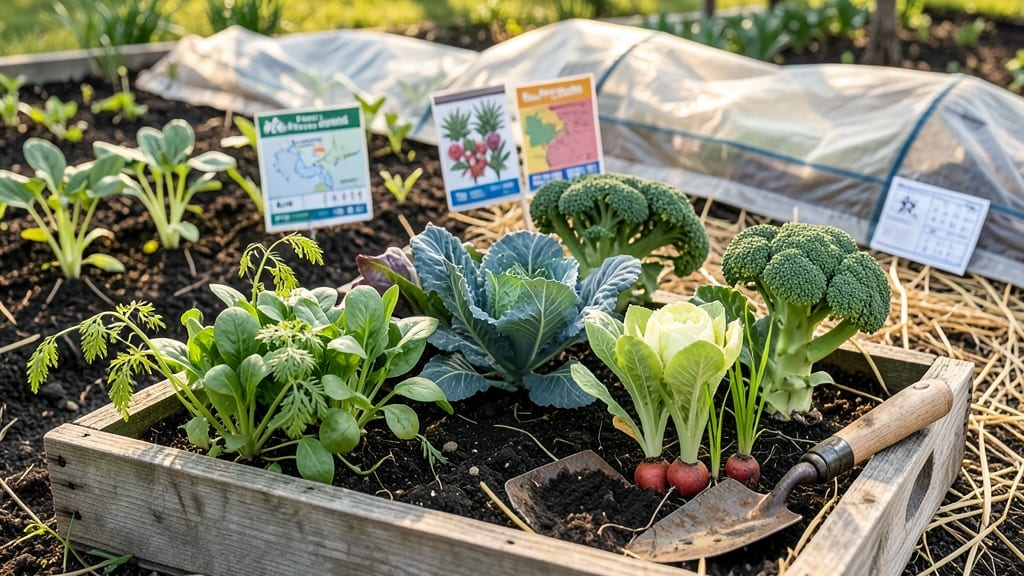
Planting a garden in Michigan at the right time means the difference between a bountiful harvest and a sad pile of frost-nipped seedlings 🌱—and the best window depends on whether you’re growing cool-season greens or heat-loving tomatoes.
Michigan gardeners know timing is everything—plant too early and risk frost damage, too late and your harvest suffers. But with the state’s diverse heat zones and unpredictable spring weather, figuring out the perfect planting window can feel like guessing.
In zones 5b-6b, most gardeners aim for mid-April to mid-May after the last frost, but the Upper Peninsula plays by different rules than Detroit. Meanwhile, fall planting in late August or early September can stretch your season with hardy crops like kale and spinach.
Below, I break down the ideal planting schedule by crop type, regional frost dates, and pro tips to adjust for Michigan’s quirks—so you can finally get that garden right.
Jan
❄️
Feb
❄️
Mar
🌱
Apr
🌱
May
🌱
Jun
🌱
Jul
🌱
Aug
🌱
Sep
🌱
Oct
🍂
Nov
🍂
Dec
❄️
Michigan’s planting heat zones & average last frost dates by region
Michigan spans USDA Plant Hardiness Zones 4-6, meaning gardeners must account for dramatic temperature shifts between the Upper Peninsula (UP) and Lower Peninsula (LP). These zones dictate planting windows, frost sensitivity, and even which perennials thrive in your yard.
The UP, for example, often experiences 2-3 weeks later last frosts than southern cities like Detroit, creating a 100-mile climate divide with big implications for your garden.
Your planting schedule hinges on two critical dates: the average last frost date (when you can safely plant warm-season crops) and the first frost date (marking the end of the growing season). In Michigan, these dates can vary by up to 3 weeks from one region to another.
For instance, Traverse City typically sees its last frost by May 10, while Marquette in the UP might not hit that milestone until May 24. This delay forces UP gardeners to start seeds indoors 2-3 weeks earlier or choose faster-maturing varieties.
The Lower Peninsula generally falls into Zones 5b-6a, with cities like Ann Arbor and Grand Rapids offering longer growing seasons.
Meanwhile, the Upper Peninsula sits in Zones 4b-5a, where gardeners must be prepared for shorter frost-free periods (often just 120-140 days) compared to the LP’s 140-160 days.
This difference explains why tomatoes and peppers thrive in southern Michigan but struggle in the UP unless grown in containers for easy winter protection.
Here’s how these zones translate into actionable planting advice: Cool-season crops like spinach and peas can go into the ground 4-6 weeks before your last frost, while warm-season crops like tomatoes and basil must wait until after the last frost and ideally when soil temperatures reach 60°F.
In the UP, this often means waiting until late May or early June, whereas LP gardeners can plant by mid-May. Perennials like asparagus and strawberries also benefit from knowing your zone—Zone 4 plants need cold-hardy varieties, while Zone 6 allows for more tender species.
| Region |
USDA Zone |
Avg. Last Frost |
Avg. First Frost |
Frost-Free Days |
Planting Window |
| Detroit, MI |
Zone 6a |
May 15 |
October 10 |
148 days |
Mid-April (cool crops) / Mid-May (warm crops) |
| Traverse City, MI |
Zone 5b |
May 10 |
October 5 |
148 days |
Late March (hardy crops) / Early May (warm crops) |
| Grand Rapids, MI |
Zone 5b |
May 12 |
October 8 |
149 days |
Early April (cool crops) / Mid-May (warm crops) |
| Marquette, MI (UP) |
Zone 4b |
May 24 |
September 25 |
124 days |
Late April (cool crops) / Late May (warm crops) |
| Houghton, MI (UP) |
Zone 4
Best planting schedule for Michigan gardens by crop type
Michigan’s diverse climate means your planting schedule should match the crop—not just the calendar. Cool-season plants like spinach and peas thrive in early spring, while tomatoes and peppers need warm soil to germinate.
Perennials like strawberries and asparagus have their own timing rules, too. Even container gardens follow slightly different rules than in-ground beds.
For container gardening, warm up soil faster with black pots and plant warm-season crops like basil 2–3 weeks earlier than in-ground. Cool-season crops in containers can start 4–6 weeks before last frost, but watch for frost pockets.
Below, I’ll break down the best planting windows for Michigan’s most popular crops, including adjustments for your garden type.
🌱 Michigan Planting Schedule by Crop Type
- 🌿 Cool-Season Crops (Spinach, Peas, Lettuce):
Plant 4–6 weeks before last frost (early March–April in southern Michigan, late April–May in the Upper Peninsula). Successive plantings every 2–3 weeks for continuous harvest.
- 🍅 Warm-Season Crops (Tomatoes, Peppers, Cucumbers):
Wait until soil reaches 60°F+ (late May–early June in most regions). Start seeds indoors 6–8 weeks before last frost for earlier harvests.
- 🍓 Perennials (Strawberries, Asparagus):
Plant strawberries in early spring (April) or fall (September) for root establishment. Asparagus crowns go in early spring (March–April) and take 2–3 years to mature.
- 🥬 Fall Crops (Kale, Carrots, Radishes):
Sow late July–August for harvest before first frost (mid-October). Radishes mature in 30 days, so plant 8 weeks before frost.
- 🪴 Container Adjustments:
Warm-season crops in containers can plant 2–3 weeks earlier (soil heats faster). Cool-season crops may need row covers for frost protection.
If you’re growing cool-season crops like spinach or peas, start seeds indoors in late February for an early spring transplant. These crops handle light frosts (down to 20°F for peas), so don’t rush—wait for soil temps above 40°F.
For warm-season crops, like tomatoes, harden off seedlings for 7–10 days before transplanting after May 15 in most regions.
Perennials like strawberries and asparagus need patience. Strawberries planted in early spring establish roots before summer heat, while asparagus crowns should go in early spring but avoid planting after June—they won’t produce spears the first year.
For containers, choose compact varieties of tomatoes or peppers to maximize space, and use self-watering pots to prevent drought stress.
Don’t forget fall planting! Crops like kale, carrots, and radishes thrive in cooler weather. Plant 8 weeks before first frost (late July–August) for a harvest before winter. Use row covers to extend the season if frost threatens early.
With this schedule, you’ll avoid the common mistakes of planting too soon or too late—and enjoy a longer harvest window all season.
Pro tip: Mark your last frost date on the calendar (check your USDA zone: 5b–6b for most of Michigan). For container gardens, add 2–3 weeks to warm-season planting times—containers warm up faster than soil. Happy planting! 🌱
★★★★★4.5(9 reviews)
|